




Name the stage of the cell cycle at which one of the following events occurs.
(i) Chromosomes are moved to the spindle equator
(ii) Centromere splits and chromatids separate
(iii) Pairing between homologous chromosomes takes place
(iv) Crossing over between homologous chromosomes takes place
Answer
 Verified
631.5k+ views
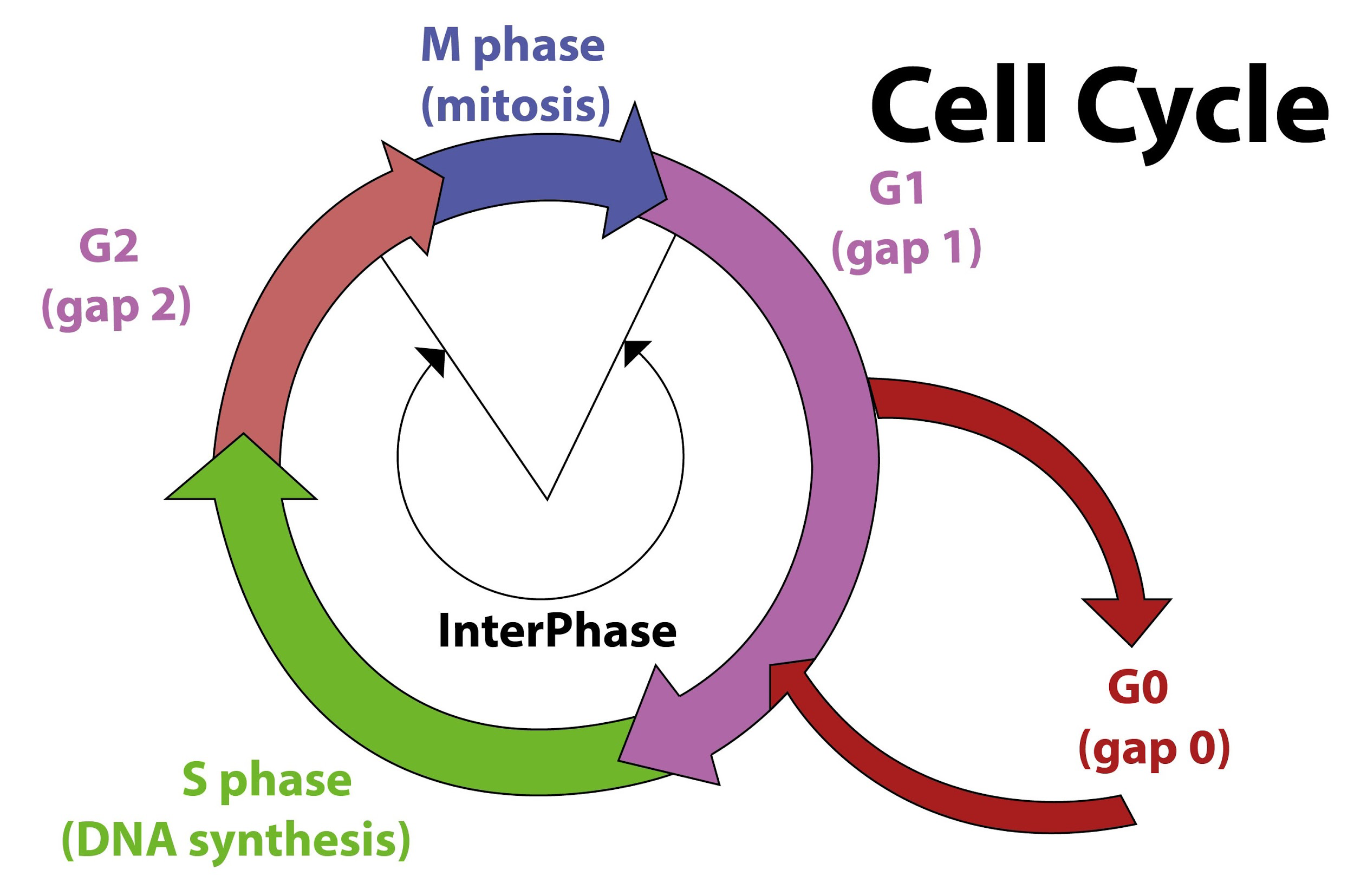
Hint: The cell cycle is divided into two parts - interphase and the mitotic phase. The mitotic phase is the event of the nuclear division and is represented by mitosis and meiosis. The daughter cells have the same chromosome number as the parent cell in mitosis and half the chromosome number in meiosis.
Complete step by step answer:
M-phase in the cell cycle represents the phase of nuclear division in the cell. The nucleus may divide by mitosis or meiosis. Mitosis is divided into 4 phases namely Prophase, metaphase, anaphase, and telophase. Among them, metaphase is the stage where chromosomes move to the spindle equator. While in anaphase, the daughter chromosome separates into individual chromatids along with the splitting of the centromere.
Meiosis is a two-stage process with meiosis-i and meiosis-iI. In meiosis-i, the pairing between homologous chromosomes occurs in the zygotene stage of prophase-i. The zygotene is followed by the pachytene stage, where crossing over between homologous chromosomes takes place.
- All three phases ${ G }_{ 1 }$, S phase, and ${ G }_{ 2 }$ together constitute interphase.
- ${ G }_{ 1 }$ phase: In this phase, the cell mainly grows in size and synthesizes protein. This growth is an increase in the number of cell organelles and an increase in the volume of the cytoplasm.
- S Phase: In the synthesis phase, the cell spends all its energy on doubling the DNA. Though the DNA is doubled, the number of chromosomes remains the same.
- ${ G }_{ 2 }$Phase: This is also called the gap phase. Here the cell resumes its growth and prepares for cell division. Mitochondria and chloroplast divide during this phase.
Note::
- A cell may temporarily or permanently exit the cell cycle and enters a stage designated as ${ G }_{ 0 }$. It is also known as the quiescent stage.
- They are not dormant as they are busy carrying out their functions like excretion, secretion, synthesis, etc in the organisms.
Complete step by step answer:
M-phase in the cell cycle represents the phase of nuclear division in the cell. The nucleus may divide by mitosis or meiosis. Mitosis is divided into 4 phases namely Prophase, metaphase, anaphase, and telophase. Among them, metaphase is the stage where chromosomes move to the spindle equator. While in anaphase, the daughter chromosome separates into individual chromatids along with the splitting of the centromere.
Meiosis is a two-stage process with meiosis-i and meiosis-iI. In meiosis-i, the pairing between homologous chromosomes occurs in the zygotene stage of prophase-i. The zygotene is followed by the pachytene stage, where crossing over between homologous chromosomes takes place.
- All three phases ${ G }_{ 1 }$, S phase, and ${ G }_{ 2 }$ together constitute interphase.
- ${ G }_{ 1 }$ phase: In this phase, the cell mainly grows in size and synthesizes protein. This growth is an increase in the number of cell organelles and an increase in the volume of the cytoplasm.
- S Phase: In the synthesis phase, the cell spends all its energy on doubling the DNA. Though the DNA is doubled, the number of chromosomes remains the same.
- ${ G }_{ 2 }$Phase: This is also called the gap phase. Here the cell resumes its growth and prepares for cell division. Mitochondria and chloroplast divide during this phase.
Note::
- A cell may temporarily or permanently exit the cell cycle and enters a stage designated as ${ G }_{ 0 }$. It is also known as the quiescent stage.
- They are not dormant as they are busy carrying out their functions like excretion, secretion, synthesis, etc in the organisms.
Recently Updated Pages
The given figure shows two endocrine glands marked class 11 biology NEET_UG

Match columnI with columnII and select the correct class 11 biology NEET
Match column I with column II and select the correct class 11 biology NEET_UG
Which floral family has left 9 right + 1 arrangement class 11 biology NEET_UG
Which is not a variety of sheep A Lohi B Beetal C Nellore class 11 biology NEET_UG
Match column I with column II and select the correct class 11 biology NEET_UG
Trending doubts
One Metric ton is equal to kg A 10000 B 1000 C 100 class 11 physics CBSE
Draw a diagram of a plant cell and label at least eight class 11 biology CBSE
Difference Between Prokaryotic Cells and Eukaryotic Cells
Draw a well labelled diagram of reflex arc and explain class 11 biology CBSE
Two of the body parts which do not appear in MRI are class 11 biology CBSE
1 ton equals to A 100 kg B 1000 kg C 10 kg D 10000 class 11 physics CBSE