




Name a cell organelle found only in a plant cell.
(a)Plastid
(b)Chromosome
(c)Ribosome
(d)None of the above
Answer
 Verified
607.8k+ views
Hint: Plants cells are mostly autotrophic, it means they make their own food through the process of photosynthesis. This is possible because plants have an extra cell organelle in their cells that other eukaryotic cells do not possess.
Complete answer:
The cell organelle found only in plant cells is plastid. They are divided into many types on the basis of their function:
Chloroplast: It has green pigments stored in it and thus performs photosynthesis.
Chromoplast: It stores all other pigments except for green.
Leucoplast: Colorless plastid responsible for the synthesis of fatty acids and amino acids
Amyloplast: Storage of starch and sugars
Elaioplast: Storage of lipids and oils
Additional Information: Plastids are cell organelles that are unique to plant cells and enable plants to make their own food. Food is prepared inside the chloroplast by the process of photophosphorylation. It is the process of trapping the energy of the sun and converting it into chemical energy by forming chemical bonds in the form of glucose. This glucose was formed by raw inorganic materials such as carbon dioxide and water.
This process is further divided into two steps known as the light reaction and dark reaction. Light reaction as the name suggests requires the presence of sunlight to take place. And dark reaction depends on the products of light reaction to take place.
So, the correct option is ‘Plastid’.
Note: -Chloroplast along with mitochondria is known as semi-autonomous organelles because they function on their own and require directions from the nucleus only in some cases.
-This is because they both have their own DNA and 70s ribosomes.
-It is believed that chloroplast and mitochondria were prokaryotic bacteria who started living symbiotically inside the eukaryotic cells and thus are known as endosymbionts.
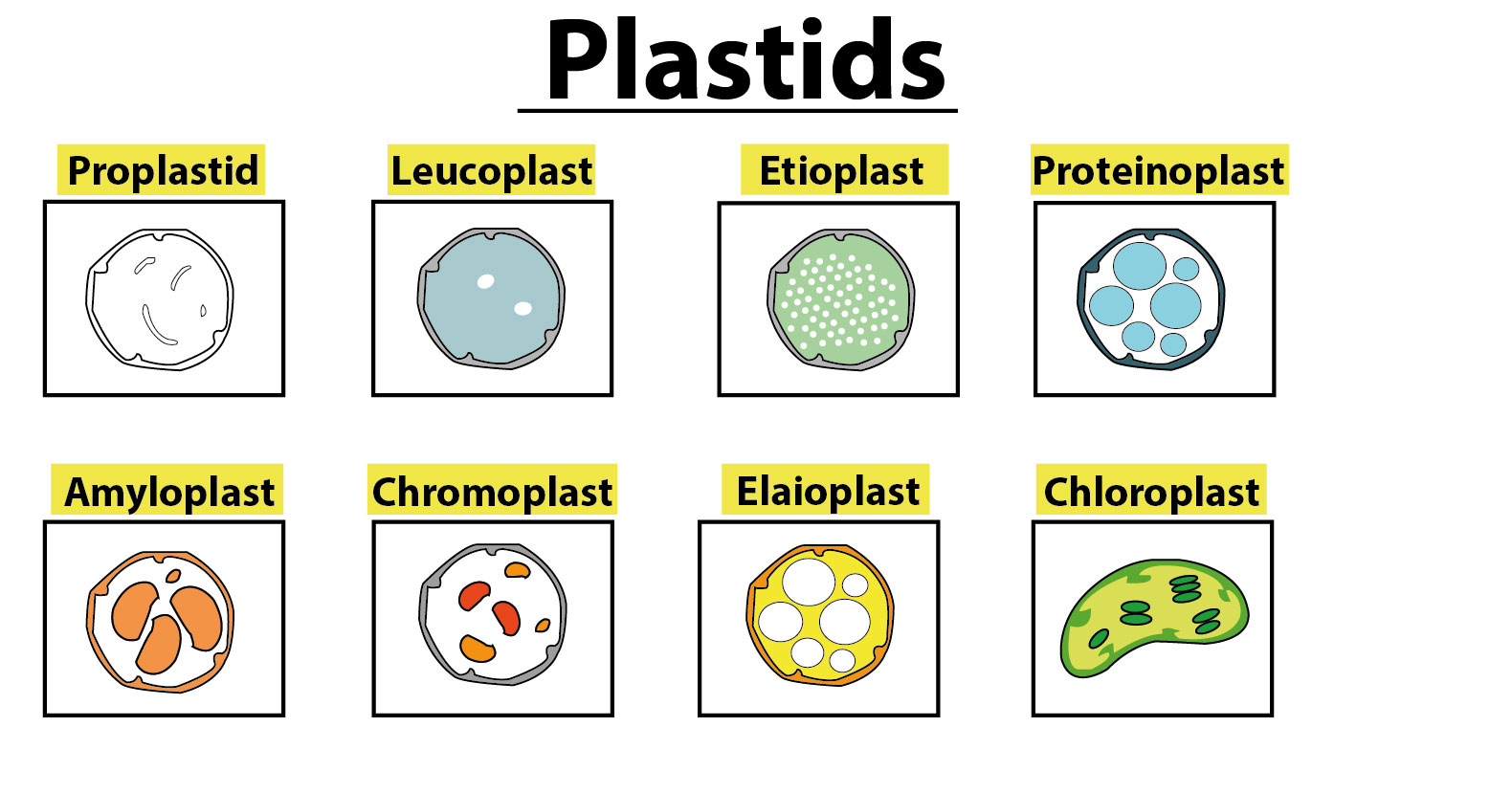
Complete answer:
The cell organelle found only in plant cells is plastid. They are divided into many types on the basis of their function:
Chloroplast: It has green pigments stored in it and thus performs photosynthesis.
Chromoplast: It stores all other pigments except for green.
Leucoplast: Colorless plastid responsible for the synthesis of fatty acids and amino acids
Amyloplast: Storage of starch and sugars
Elaioplast: Storage of lipids and oils
Additional Information: Plastids are cell organelles that are unique to plant cells and enable plants to make their own food. Food is prepared inside the chloroplast by the process of photophosphorylation. It is the process of trapping the energy of the sun and converting it into chemical energy by forming chemical bonds in the form of glucose. This glucose was formed by raw inorganic materials such as carbon dioxide and water.
This process is further divided into two steps known as the light reaction and dark reaction. Light reaction as the name suggests requires the presence of sunlight to take place. And dark reaction depends on the products of light reaction to take place.
So, the correct option is ‘Plastid’.
Note: -Chloroplast along with mitochondria is known as semi-autonomous organelles because they function on their own and require directions from the nucleus only in some cases.
-This is because they both have their own DNA and 70s ribosomes.
-It is believed that chloroplast and mitochondria were prokaryotic bacteria who started living symbiotically inside the eukaryotic cells and thus are known as endosymbionts.
Recently Updated Pages
Master Class 9 General Knowledge: Engaging Questions & Answers for Success

Master Class 9 Maths: Engaging Questions & Answers for Success
Master Class 9 Science: Engaging Questions & Answers for Success
Master Class 9 English: Engaging Questions & Answers for Success
Master Class 9 Social Science: Engaging Questions & Answers for Success
Class 9 Question and Answer - Your Ultimate Solutions Guide
Trending doubts
One Metric ton is equal to kg A 10000 B 1000 C 100 class 11 physics CBSE
Difference Between Prokaryotic Cells and Eukaryotic Cells
Two of the body parts which do not appear in MRI are class 11 biology CBSE
1 ton equals to A 100 kg B 1000 kg C 10 kg D 10000 class 11 physics CBSE
10 examples of friction in our daily life
Name the Largest and the Smallest Cell in the Human Body ?