




NADH and ${ FADH }_{ 2 }$ carry high energy electrons to the electron transport chain in cellular respiration. NADPH carries high-energy electrons to the electron transport chain in photosynthesis.
What are the terminal electron acceptors in the electron transport chain of cellular respiration and photosynthesis, respectively?
(a) Oxygen, ${ NADP }^{ + }$
(b) Carbon dioxide, ${ NAD }^{ + }$
(c) Oxygen, ATP
(d) Water, oxygen
Answer
 Verified
619.2k+ views
Hint: It's the last segment of cellular respiration and is the main piece of glucose digestion that utilizes air oxygen. Oxygen continuously diffuses into plants; in animals, it enters the body through the systema respiratorium.
Complete answer:
1. During respiration, the electron transported through the series of co-enzymes and cytochromes is accepted by oxygen and thus becomes the terminal acceptor of the electron.
2. In photosynthesis, NADP is reduced to NADPH by accepting the electron from Photosystem1 (PS1). Thus becoming the terminal electron acceptor.
Additional Information: The electron transport chain is that bit of cellular respiration that utilizes free oxygen on the grounds that the last electron acceptor of the electrons faraway from the moderate mixes in glucose catabolism. The electron transport chain includes 4 large, multiprotein structures introduced inside the internal mitochondrial layer and two minimal diffusible electron carriers moving electrons between them. The electrons are talented in a progression of redox responses, with a little measure of free energy utilized at three focuses to move hydrogen particles over a layer. This cycle adds to the angle used in chemiosmosis. The extent of free energy of the electrons drops from about 60 kcal/mol in NADH or 45 kcal/mol in ${ FADH }_{ 2 }$ to about 0 kcal/mol in water.
So the correct answer is ‘Oxygen, ${ NADP }^{ + }$ ’.
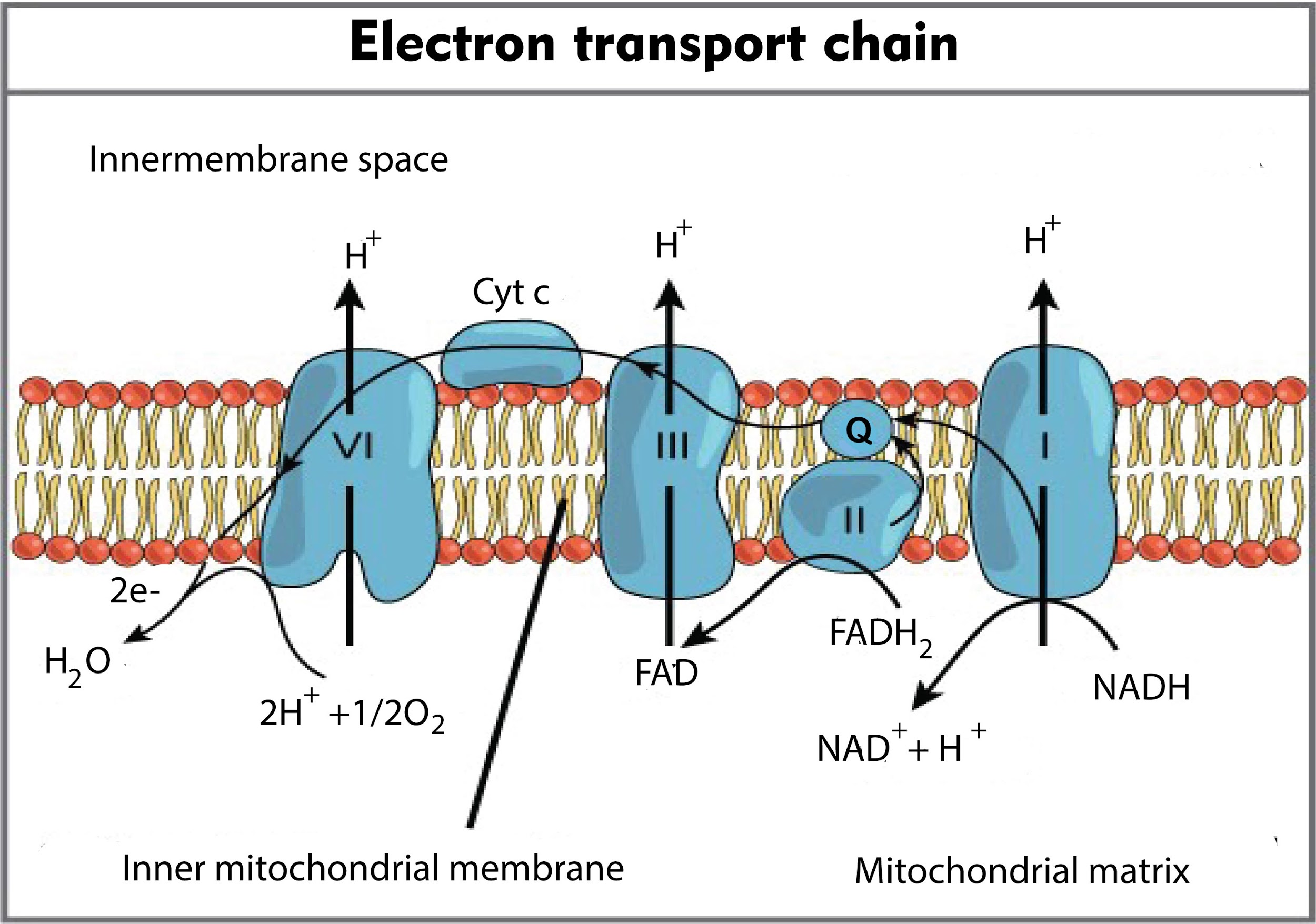
Note: The electron transport chain may be a series of molecules that accept or donate electrons easily. By moving bit by bit through these, electrons are moved a particular way over a film. The movement of hydrogen ions is including this. This suggests that when electrons are moved, hydrogen ions move too.
Complete answer:
1. During respiration, the electron transported through the series of co-enzymes and cytochromes is accepted by oxygen and thus becomes the terminal acceptor of the electron.
2. In photosynthesis, NADP is reduced to NADPH by accepting the electron from Photosystem1 (PS1). Thus becoming the terminal electron acceptor.
Additional Information: The electron transport chain is that bit of cellular respiration that utilizes free oxygen on the grounds that the last electron acceptor of the electrons faraway from the moderate mixes in glucose catabolism. The electron transport chain includes 4 large, multiprotein structures introduced inside the internal mitochondrial layer and two minimal diffusible electron carriers moving electrons between them. The electrons are talented in a progression of redox responses, with a little measure of free energy utilized at three focuses to move hydrogen particles over a layer. This cycle adds to the angle used in chemiosmosis. The extent of free energy of the electrons drops from about 60 kcal/mol in NADH or 45 kcal/mol in ${ FADH }_{ 2 }$ to about 0 kcal/mol in water.
So the correct answer is ‘Oxygen, ${ NADP }^{ + }$ ’.
Note: The electron transport chain may be a series of molecules that accept or donate electrons easily. By moving bit by bit through these, electrons are moved a particular way over a film. The movement of hydrogen ions is including this. This suggests that when electrons are moved, hydrogen ions move too.
Recently Updated Pages
Basicity of sulphurous acid and sulphuric acid are

Master Class 11 English: Engaging Questions & Answers for Success
Master Class 11 Physics: Engaging Questions & Answers for Success
Master Class 11 Computer Science: Engaging Questions & Answers for Success
Master Class 11 Chemistry: Engaging Questions & Answers for Success
Master Class 11 Social Science: Engaging Questions & Answers for Success
Trending doubts
Difference Between Prokaryotic Cells and Eukaryotic Cells
Two of the body parts which do not appear in MRI are class 11 biology CBSE
One Metric ton is equal to kg A 10000 B 1000 C 100 class 11 physics CBSE
10 examples of friction in our daily life
Draw a diagram of nephron and explain its structur class 11 biology CBSE
What will happen if the mucus is not secreted by the class 11 biology CBSE