




Most abundant antibodies are
(a)IgG
(b)IgA
(c)IgM
(d)IgE
Answer
 Verified
628.8k+ views
Hint: It helps in controlling the infection of body tissues against various microorganisms. They are large proteins that are produced by plasma cells to be used by the immune system for the neutralization of pathogens. It requires an antigen which is a unique molecule of the pathogen and the type of antibody consists of a paratope that is specific for a particular epitope on an antigen.
Complete answer:
IgG stands for Immunoglobulin G which are the most abundant antibodies which makes the 75% of the serum antibodies in humans. The molecules of IgG are released by plasma B cells and it is the most common type of antibody which is found in blood circulation. It consists of two antigen-binding sites and is the major component of humoral immunity. It controls the infection of body tissues by binding with different kinds of pathogens such as viruses, fungi, and bacteria. The pathogens cause its immobilization and bind together with agglutination which coats the pathogen surface known as opsonization. It allows the elimination of the pathogen by recognition and ingestion of phagocytic immune cells.
Additional Information: IgA: IgA stands for Immunoglobulin A which is an antibody important for the immune function of mucus membranes. It is produced in association with the mucosal membranes and other types of antibody combined. Three and five grams are secreted into the intestinal lumen which constitutes 15% of the total immunoglobulins that are produced throughout the body. Immunoglobulin is present in the mucosal secretions which include tears, colostrum, saliva, and sweat which are from the gastrointestinal tract, respiratory epithelium, and prostate.
IgM: IgM stands for Immunoglobulin M that is produced by vertebrates and is the first antibody to appear for the initial exposure to an antigen. Spleen where the plasma blast helps in the production of antibodies is the major site for IgM. It includes light chains and heavy chains which are composed of variable domains and constant domains. It binds to the complement component C1 and gets activated which leads to the opsonization of antigens and cytolysis. It binds to the poly immunoglobulin which is responsible for the mucosal surfaces like to get lumen and breast milk.
IgE: IgE stands for Immunoglobulin E which is only found in mammals and is synthesized by the plasma cells. It has two heavy chains and two light chains containing constant domains that function to give immunity to parasites. It gets utilized during the immune defense which is against certain protozoan parasites. It protects against venoms and is crucial for hypersensitivity which many faced allergic diseases such as asthma, allergic rhinitis, and sinusitis.
So, the correct answer is ‘IgG'.
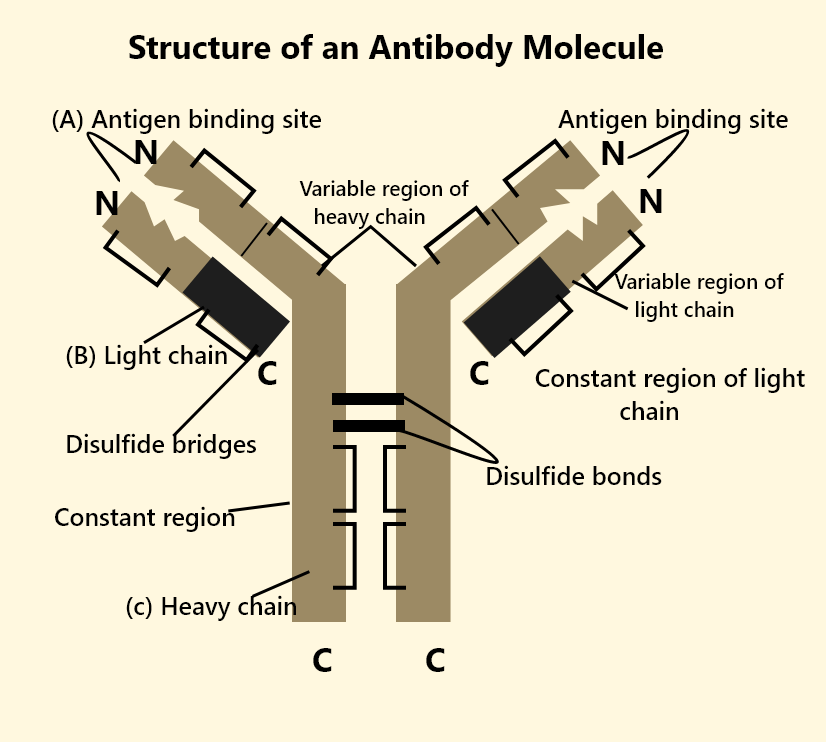
Note: Immunoglobulins are antibodies that are used by our body made by our immune system to fight against foreign substances. It can lead to additional diseases in some cases. During the blood test, IgE gets measured and the skin testing measures IgE.
Complete answer:
IgG stands for Immunoglobulin G which are the most abundant antibodies which makes the 75% of the serum antibodies in humans. The molecules of IgG are released by plasma B cells and it is the most common type of antibody which is found in blood circulation. It consists of two antigen-binding sites and is the major component of humoral immunity. It controls the infection of body tissues by binding with different kinds of pathogens such as viruses, fungi, and bacteria. The pathogens cause its immobilization and bind together with agglutination which coats the pathogen surface known as opsonization. It allows the elimination of the pathogen by recognition and ingestion of phagocytic immune cells.
Additional Information: IgA: IgA stands for Immunoglobulin A which is an antibody important for the immune function of mucus membranes. It is produced in association with the mucosal membranes and other types of antibody combined. Three and five grams are secreted into the intestinal lumen which constitutes 15% of the total immunoglobulins that are produced throughout the body. Immunoglobulin is present in the mucosal secretions which include tears, colostrum, saliva, and sweat which are from the gastrointestinal tract, respiratory epithelium, and prostate.
IgM: IgM stands for Immunoglobulin M that is produced by vertebrates and is the first antibody to appear for the initial exposure to an antigen. Spleen where the plasma blast helps in the production of antibodies is the major site for IgM. It includes light chains and heavy chains which are composed of variable domains and constant domains. It binds to the complement component C1 and gets activated which leads to the opsonization of antigens and cytolysis. It binds to the poly immunoglobulin which is responsible for the mucosal surfaces like to get lumen and breast milk.
IgE: IgE stands for Immunoglobulin E which is only found in mammals and is synthesized by the plasma cells. It has two heavy chains and two light chains containing constant domains that function to give immunity to parasites. It gets utilized during the immune defense which is against certain protozoan parasites. It protects against venoms and is crucial for hypersensitivity which many faced allergic diseases such as asthma, allergic rhinitis, and sinusitis.
So, the correct answer is ‘IgG'.
Note: Immunoglobulins are antibodies that are used by our body made by our immune system to fight against foreign substances. It can lead to additional diseases in some cases. During the blood test, IgE gets measured and the skin testing measures IgE.
Recently Updated Pages
Master Class 11 Social Science: Engaging Questions & Answers for Success

Master Class 11 English: Engaging Questions & Answers for Success
Master Class 11 Accountancy: Engaging Questions & Answers for Success
Master Class 11 Physics: Engaging Questions & Answers for Success
Master Class 11 Computer Science: Engaging Questions & Answers for Success
Master Class 11 Business Studies: Engaging Questions & Answers for Success
Trending doubts
One Metric ton is equal to kg A 10000 B 1000 C 100 class 11 physics CBSE
Find the value of the expression given below sin 30circ class 11 maths CBSE
Draw a diagram of nephron and explain its structur class 11 biology CBSE
10 examples of friction in our daily life
Proton was discovered by A Thomson B Rutherford C Chadwick class 11 chemistry CBSE
The teeth used for biting and cutting food are called class 11 biology CBSE