




Microvilli of the intestinal epithelium are similar in function with -
(a)Typhlosole of earthworm
(b)Hepatic caecum in cockroach
(c)Intestinal caecum in earthworm
(d)Malpighian tubules in cockroach
Answer
 Verified
634.2k+ views
Hint: The function of the microvilli is to aid in the absorption of nutrients in the small intestine efficiently. Their anatomy aids in maximum absorption of all nutrients from the digestive tract. Hence, we must find organs that carry out a similar system in the given organisms.
Complete answer:
- The microvilli of the intestine are small and finger-like projections present on the intestinal villus and are made of columnar epithelium.
- They increase the surface area of the intestinal walls hence increasing its surface area for absorption.
- Thousands of microvilli form a structure called the brush border that is present on the apical area of the epithelium intestines.
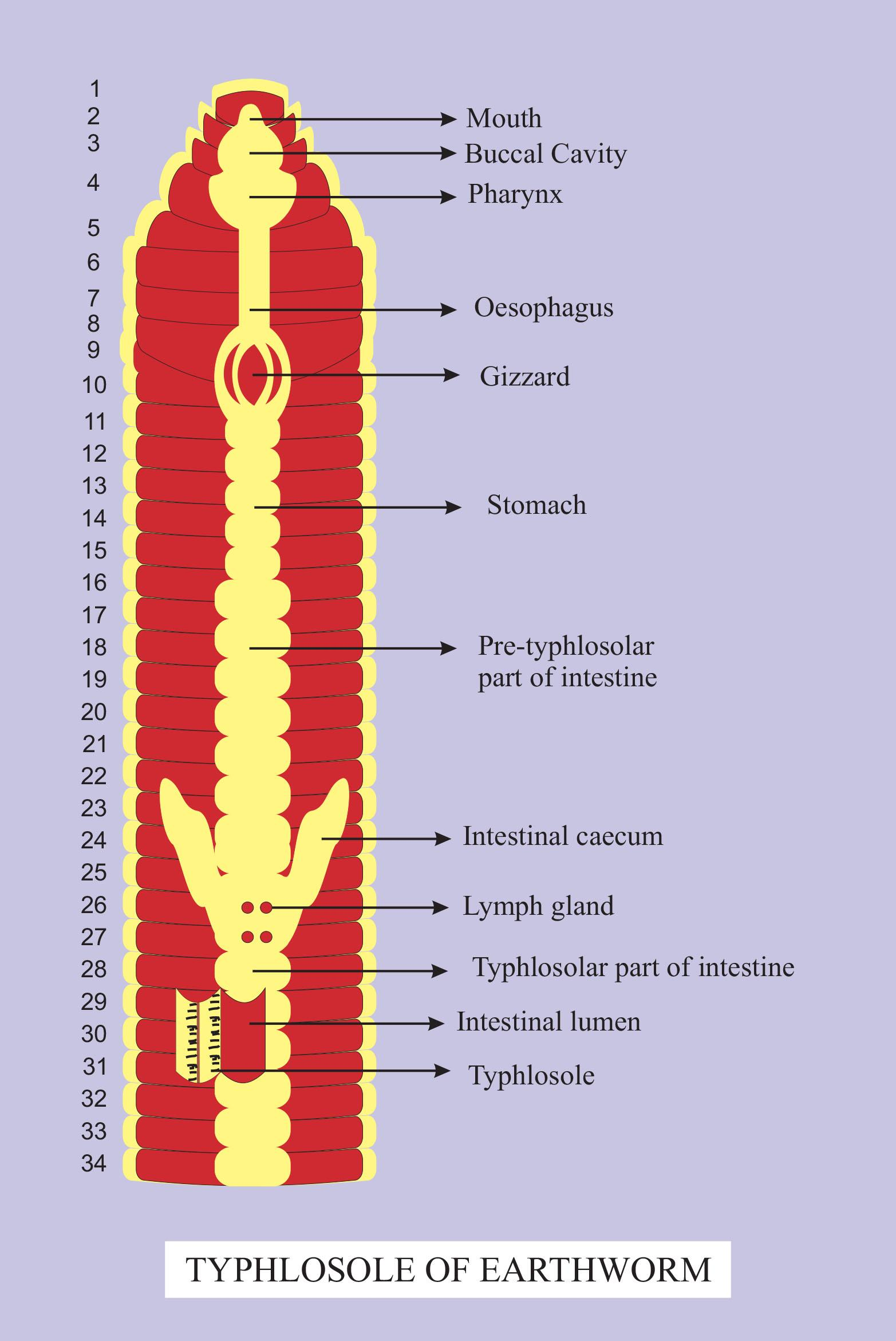
- In the digestive system of the earthworm is the intestine where instead of coiling, the mid-dorsal wall of the intestine forms a longitudinal, tongue-like fold which is known as typhlosole. The structure helps in making the absorption of nutrients more efficient.
Additional Information: - Microvilli of other tissues carry out processes such as absorption, secretion, cellular adhesion, and mechanotransduction.
- The difference between villi and microvilli is that villi are made of many cells and each cell has numerous microvilli.
- The hepatic caecum of the cockroach secretes digestive juices to help in digestion. Hence, they can be compared to the liver and the pancreas in humans.
- The intestinal caecum of the earthworm is present in the pre-typhlosolar region of the intestine. It specifically secretes amylase to digest carbohydrates.
- The Malpighian tubules in cockroach are the excretory units.
So, the correct answer is ‘typhlosole of earthworm’.
Note: - The increased surface area of the intestine aids in more effective diffusion of nutrients that pass through the villi and enter the blood vessels.
- In coeliac (celiac) disease and other inflammatory diseases of the intestines, the villi may flatten or entirely disappear.
- Microvilli are also present on the surface of white blood cells to aid in their movement.
Complete answer:
- The microvilli of the intestine are small and finger-like projections present on the intestinal villus and are made of columnar epithelium.
- They increase the surface area of the intestinal walls hence increasing its surface area for absorption.
- Thousands of microvilli form a structure called the brush border that is present on the apical area of the epithelium intestines.
- In the digestive system of the earthworm is the intestine where instead of coiling, the mid-dorsal wall of the intestine forms a longitudinal, tongue-like fold which is known as typhlosole. The structure helps in making the absorption of nutrients more efficient.
Additional Information: - Microvilli of other tissues carry out processes such as absorption, secretion, cellular adhesion, and mechanotransduction.
- The difference between villi and microvilli is that villi are made of many cells and each cell has numerous microvilli.
- The hepatic caecum of the cockroach secretes digestive juices to help in digestion. Hence, they can be compared to the liver and the pancreas in humans.
- The intestinal caecum of the earthworm is present in the pre-typhlosolar region of the intestine. It specifically secretes amylase to digest carbohydrates.
- The Malpighian tubules in cockroach are the excretory units.
So, the correct answer is ‘typhlosole of earthworm’.
Note: - The increased surface area of the intestine aids in more effective diffusion of nutrients that pass through the villi and enter the blood vessels.
- In coeliac (celiac) disease and other inflammatory diseases of the intestines, the villi may flatten or entirely disappear.
- Microvilli are also present on the surface of white blood cells to aid in their movement.
Recently Updated Pages
Which will be the least stable resonating structure class 11 chemistry CBSE

How many 5 digit telephone numbers can be construc-class-11-maths-CBSE
How do you find the angle of the resultant vector class 11 physics CBSE
Draw labelled diagram of the following i Gram seed class 11 biology CBSE
1 Quintal is equal to a 110 kg b 10 kg c 100kg d 1000 class 11 physics CBSE
What is the need and importance of classification class 11 biology CBSE
Trending doubts
One Metric ton is equal to kg A 10000 B 1000 C 100 class 11 physics CBSE
Find the value of the expression given below sin 30circ class 11 maths CBSE
Draw a diagram of nephron and explain its structur class 11 biology CBSE
10 examples of friction in our daily life
Proton was discovered by A Thomson B Rutherford C Chadwick class 11 chemistry CBSE
The teeth used for biting and cutting food are called class 11 biology CBSE