




Matrix of cartilage is secreted by
(a) Chondrocytes
(b) Chondroblasts
(c) Osteocytes
(d) Histiocytes
Answer
 Verified
615.9k+ views
Hint: These cells are known as cartilage forming cells. These cells are small in size, flattened, and have many surface projections.
Complete step by step answer:
The matrix of cartilage is secreted by chondroblasts. Chondrioblasts are the precursor of the chondrocytes and metabolically active in nature. The growth of the cartilage is always from the periphery that is unidirectional.
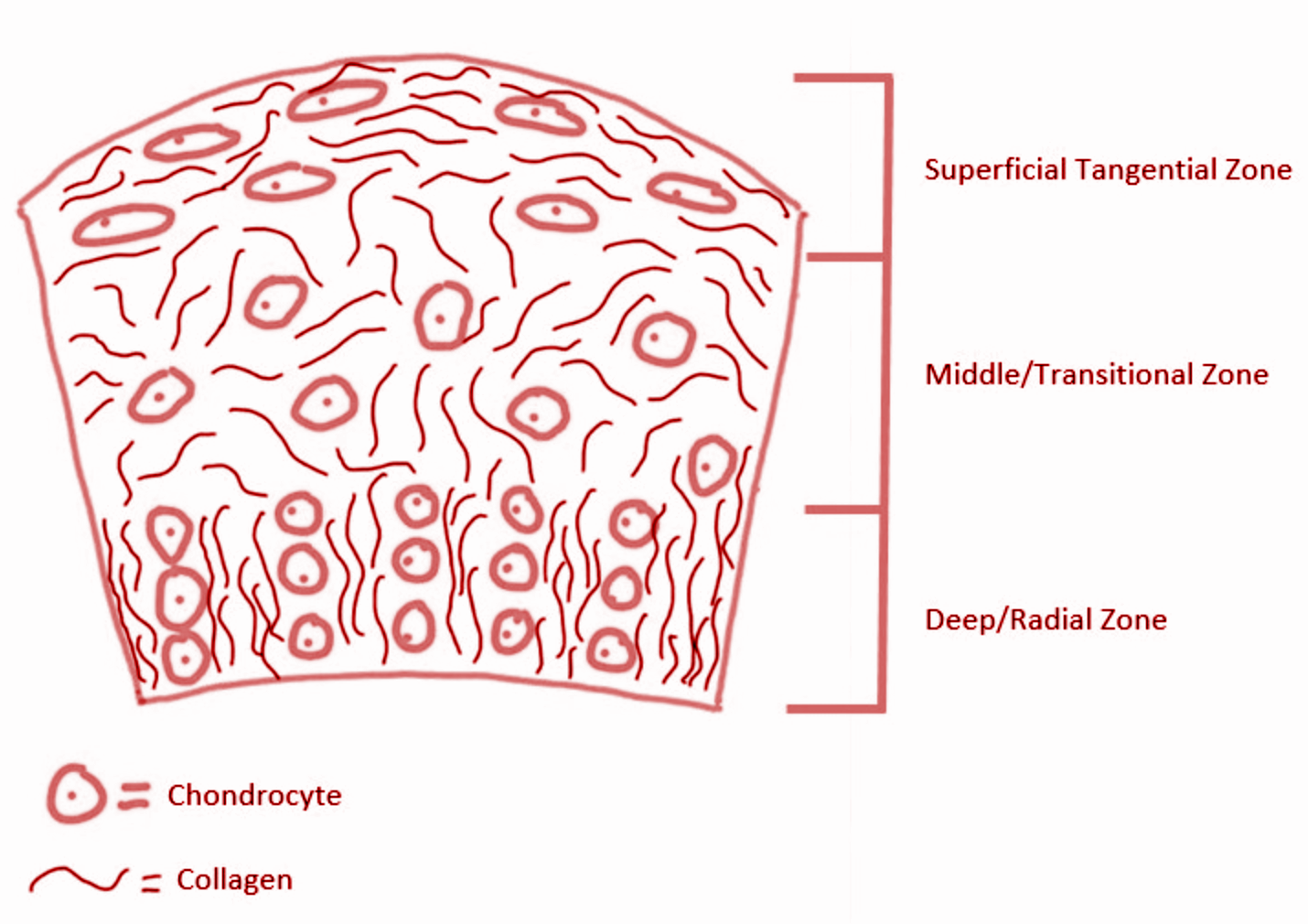
So, the correct answer is ‘Chondroblasts’.
Additional information:
- Cartilage is also known as Gristle.
- Cartilage is soft skeletal tissue. This is not rigid like bone.
- The matrix consists of water, proteoglycans, some lipids, collagens, non- collagenous protein, and collagen fibers. The core protein is aggrecan. It has a flexible material called chondrin.
- Cartilage also includes chondroitin sulfate, keratin sulfate, and hyaluronic acid.
- Through cartilage canals, blood vessels may enter into cartilage.
- Cartilage canals may play a role in the ossification of cartilage by carrying bone- forming cells.
- The cartilage is of three types named as hyaline, fibrous (white fibrous and yellow elastin), calcified.
- White fibrous cartilage is the strongest cartilage.
- In vertebrate embryos, most of the bones forming the skeleton are cartilaginous in the early stage.
- These tissues support the body, protect the various organs, and help in locomotion.
- Osteocytes are the inactive bone cells that are formed from osteoblasts.
- Histiocytes are a type of white blood cells. These cells are also known as macrophages. These are phagocytic in nature.
Note:
- Bone marrow is present in bone and such type of structure is absent in cartilage.
- Chondroblasts are multinucleated cells involved in the reabsorption of calcified cartilage.
- Most radiosensitive tissue of the body is bone marrow.
Complete step by step answer:
The matrix of cartilage is secreted by chondroblasts. Chondrioblasts are the precursor of the chondrocytes and metabolically active in nature. The growth of the cartilage is always from the periphery that is unidirectional.
So, the correct answer is ‘Chondroblasts’.
Additional information:
- Cartilage is also known as Gristle.
- Cartilage is soft skeletal tissue. This is not rigid like bone.
- The matrix consists of water, proteoglycans, some lipids, collagens, non- collagenous protein, and collagen fibers. The core protein is aggrecan. It has a flexible material called chondrin.
- Cartilage also includes chondroitin sulfate, keratin sulfate, and hyaluronic acid.
- Through cartilage canals, blood vessels may enter into cartilage.
- Cartilage canals may play a role in the ossification of cartilage by carrying bone- forming cells.
- The cartilage is of three types named as hyaline, fibrous (white fibrous and yellow elastin), calcified.
- White fibrous cartilage is the strongest cartilage.
- In vertebrate embryos, most of the bones forming the skeleton are cartilaginous in the early stage.
- These tissues support the body, protect the various organs, and help in locomotion.
- Osteocytes are the inactive bone cells that are formed from osteoblasts.
- Histiocytes are a type of white blood cells. These cells are also known as macrophages. These are phagocytic in nature.
Note:
- Bone marrow is present in bone and such type of structure is absent in cartilage.
- Chondroblasts are multinucleated cells involved in the reabsorption of calcified cartilage.
- Most radiosensitive tissue of the body is bone marrow.
Recently Updated Pages
Master Class 11 English: Engaging Questions & Answers for Success

Master Class 11 Social Science: Engaging Questions & Answers for Success
Master Class 11 Maths: Engaging Questions & Answers for Success
Master Class 11 Biology: Engaging Questions & Answers for Success
Master Class 11 Physics: Engaging Questions & Answers for Success
Master Class 11 Chemistry: Engaging Questions & Answers for Success
Trending doubts
One Metric ton is equal to kg A 10000 B 1000 C 100 class 11 physics CBSE
Difference Between Prokaryotic Cells and Eukaryotic Cells
Find the value of the expression given below sin 30circ class 11 maths CBSE
1 ton equals to A 100 kg B 1000 kg C 10 kg D 10000 class 11 physics CBSE
Two of the body parts which do not appear in MRI are class 11 biology CBSE
What are hard magnetic materials class 11 physics CBSE