




Mammals have negative-pressure breathing.
Answer
 Verified
602.7k+ views
Hint: The lungs are used by all mammals for breathing. Breathing is all about making a difference between the lungs and the atmosphere in terms of air pressure. As gases (like air) often pass from areas of high pressure to areas of lower pressure, air can then flow down the pressure gradient. Breathing via positive pressure is done by frogs.
Complete answer:
The lungs, diaphragm, intercostal muscles, and ribs are the organs involved in respiration.
In addition to birds and reptiles, mammals such as humans have adverse breathing pressure. For both food and breathing, they use their mouths. A pressure gradient is necessary to breathe. Using their diaphragms, mammals establish pressure gradients. In the lung cavity, the high volume and low pressure result in the air being drawn in. At once, they do not chew and breathe. It is possible, however, for them to eat while breathing.
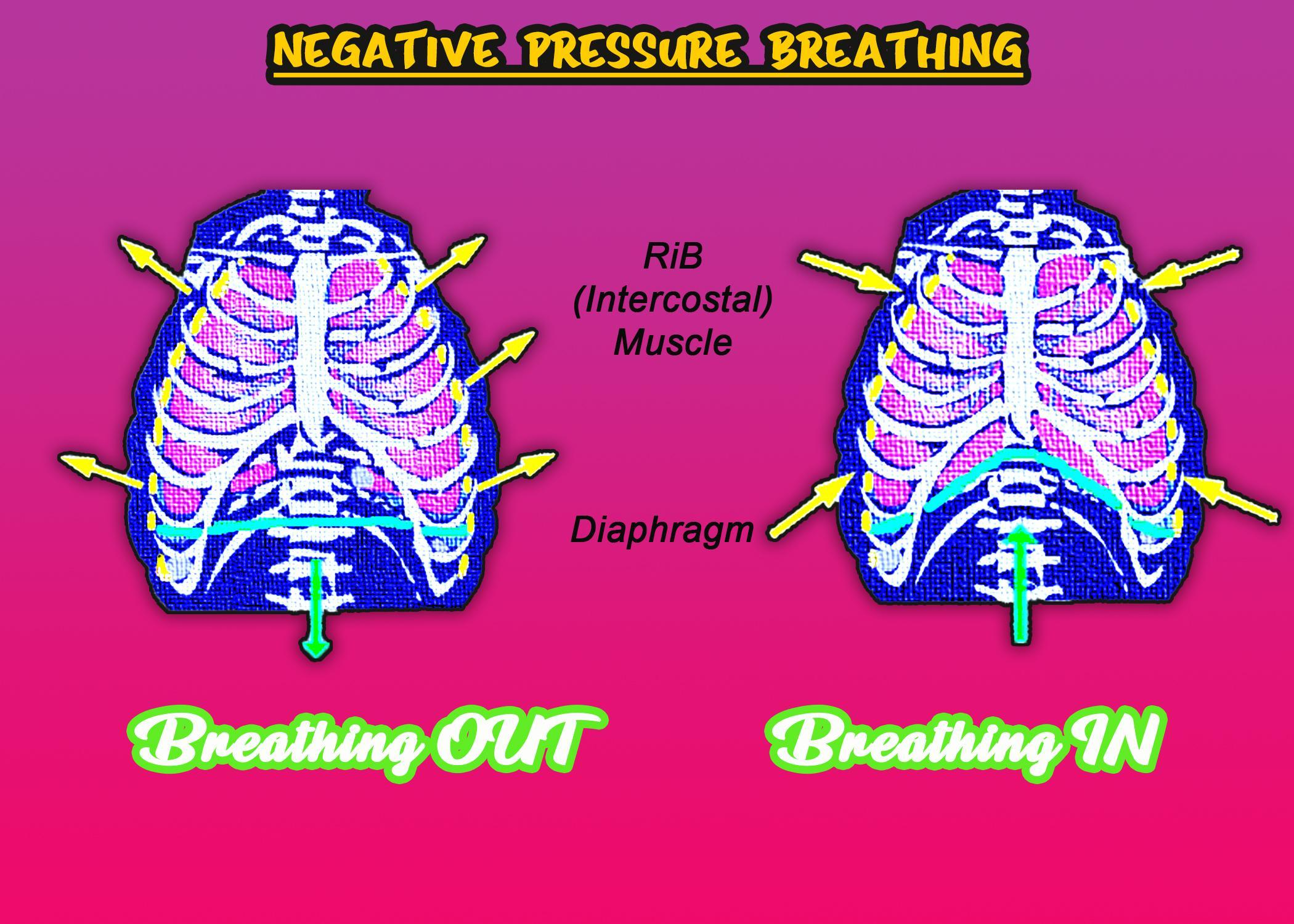
The air within the lung must be inhaled during inhalation. The muscles of the intercostals contract and, as the diaphragm contracts and takes a dome shape, the lung cavity expands. As a result, the space inside the lung cavity increases, and the pressure in the lungs decreases as the air from the atmosphere passes to the lungs, as the flow of air from its high pressure to its low pressure decreases.
It can also be said that, due to the development of low pressure in the lungs, breathing in mammals is possible.
Therefore, mammals have negative breathing pressure.
Note: Breathing calls for the formation of a pressure gradient. By using their diaphragms, mammals and reptiles produce this gradient in the lungs. This produces a high volume; low pressure allows air to be sucked into the lung cavity. This removes the need to gulp air through the mouth as in frogs.
And when mammals (like us) breathe, a similar pressure gradient is created, it is created by pushing the diaphragm downwards and the ribs upwards and out (using the intercostal muscles). This is not the way a frog (and other amphibians) can breathe because they have no ribs. This allows the lungs to expand and decreases the air pressure inside them (because there is now more space for the same volume of air).
In their mouths, frogs deliberately generate higher pressure (positive breathing pressure), while mammals use their diaphragm to generate low pressure (negative breathing pressure) within their lungs. The end result is the same, whatever the process.
Complete answer:
The lungs, diaphragm, intercostal muscles, and ribs are the organs involved in respiration.
In addition to birds and reptiles, mammals such as humans have adverse breathing pressure. For both food and breathing, they use their mouths. A pressure gradient is necessary to breathe. Using their diaphragms, mammals establish pressure gradients. In the lung cavity, the high volume and low pressure result in the air being drawn in. At once, they do not chew and breathe. It is possible, however, for them to eat while breathing.
The air within the lung must be inhaled during inhalation. The muscles of the intercostals contract and, as the diaphragm contracts and takes a dome shape, the lung cavity expands. As a result, the space inside the lung cavity increases, and the pressure in the lungs decreases as the air from the atmosphere passes to the lungs, as the flow of air from its high pressure to its low pressure decreases.
It can also be said that, due to the development of low pressure in the lungs, breathing in mammals is possible.
Therefore, mammals have negative breathing pressure.
Note: Breathing calls for the formation of a pressure gradient. By using their diaphragms, mammals and reptiles produce this gradient in the lungs. This produces a high volume; low pressure allows air to be sucked into the lung cavity. This removes the need to gulp air through the mouth as in frogs.
And when mammals (like us) breathe, a similar pressure gradient is created, it is created by pushing the diaphragm downwards and the ribs upwards and out (using the intercostal muscles). This is not the way a frog (and other amphibians) can breathe because they have no ribs. This allows the lungs to expand and decreases the air pressure inside them (because there is now more space for the same volume of air).
In their mouths, frogs deliberately generate higher pressure (positive breathing pressure), while mammals use their diaphragm to generate low pressure (negative breathing pressure) within their lungs. The end result is the same, whatever the process.
Recently Updated Pages
Master Class 12 Economics: Engaging Questions & Answers for Success

Master Class 12 English: Engaging Questions & Answers for Success
Master Class 12 Social Science: Engaging Questions & Answers for Success
Master Class 12 Maths: Engaging Questions & Answers for Success
Master Class 12 Physics: Engaging Questions & Answers for Success
Master Class 9 General Knowledge: Engaging Questions & Answers for Success
Trending doubts
One Metric ton is equal to kg A 10000 B 1000 C 100 class 11 physics CBSE
Difference Between Prokaryotic Cells and Eukaryotic Cells
Two of the body parts which do not appear in MRI are class 11 biology CBSE
1 ton equals to A 100 kg B 1000 kg C 10 kg D 10000 class 11 physics CBSE
Draw a diagram of nephron and explain its structur class 11 biology CBSE
10 examples of friction in our daily life