




Lysosomes contains
(a) Carbohydrates
(b) Hormones
(c) Nucleic acids
(d) Hydrolases
Answer
 Verified
635.4k+ views
Hint: The lysosome is essentially a bag containing digestive enzymes. The enzymes may be released within the cell itself or outside the cell. It is also known as the suicide bag of cells.
Complete step by step answer:
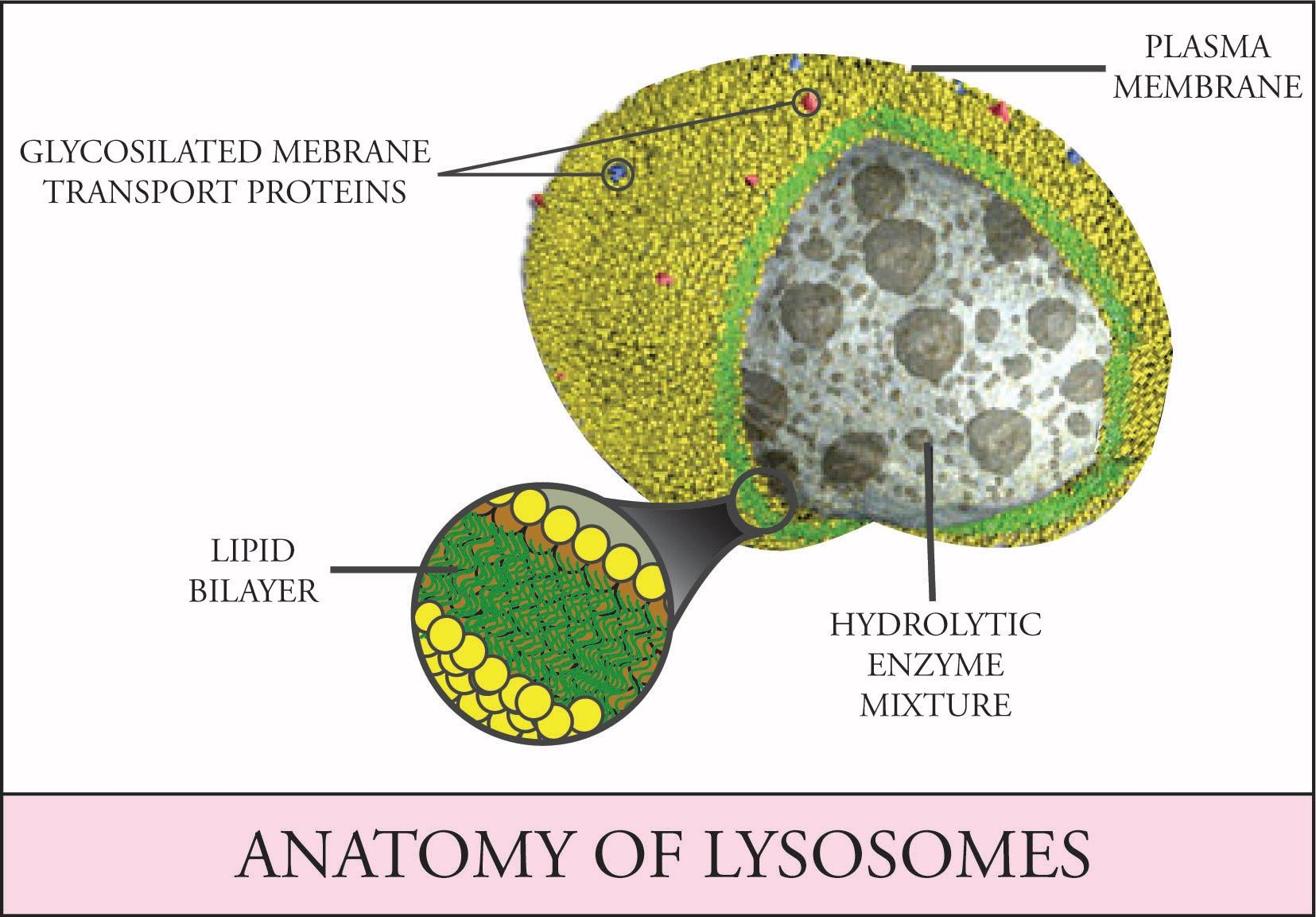
The lysosomal enzymes are collectively called hydrolases. The hydrolases cleavage of the substrate by the addition of water molecules. Most of the lysosomal enzymes function in the acid medium. Hence they are called acid hydrolases. All enzymes are acid hydrolases because for the optimal activity they require an acid environment and the lysosome provides a pH of about 5.0 in its interior.
So, the correct answer is, ‘hydrolases.’
Additional Information:
- Hydrolytic enzymes and lysosomal membranes are made by RER and then transferred to the Golgi apparatus for processing.
- Lysosomes contain the following type of enzymes:
Nucleases: which include ribonuclease and deoxyribonuclease, break down polynucleotides into nitrogen bases, phosphates, and pentose sugars.
Phosphatases: acid phosphates, break down phosphate ester to monophosphates.
Lipases: lipids, breakdown them into the fragment.
Protease: protein, breakdown into their constituent amino acid.
Glycosidases: beta- galactosidase, beta- glucuronidase, alpha- mannosidase, breakdown into polysaccharides to monosaccharides.
Sulfates: act on sulfate ester, breaking down into fragments.
Note:
- Lysosomes abundantly found in cells related to enzymatic reactions such as liver cells, pancreatic cells, kidney cells, spleen cells, etc.
The prime function of lysosome ids breakdown molecules because they contain hydrolytic enzymes, but these enzymes are harmful to the cell.
- A membrane seals off the lysosome’s acidic environment, preventing its enzymes from harming the rest of the cell.
Complete step by step answer:
The lysosomal enzymes are collectively called hydrolases. The hydrolases cleavage of the substrate by the addition of water molecules. Most of the lysosomal enzymes function in the acid medium. Hence they are called acid hydrolases. All enzymes are acid hydrolases because for the optimal activity they require an acid environment and the lysosome provides a pH of about 5.0 in its interior.
So, the correct answer is, ‘hydrolases.’
Additional Information:
- Hydrolytic enzymes and lysosomal membranes are made by RER and then transferred to the Golgi apparatus for processing.
- Lysosomes contain the following type of enzymes:
Nucleases: which include ribonuclease and deoxyribonuclease, break down polynucleotides into nitrogen bases, phosphates, and pentose sugars.
Phosphatases: acid phosphates, break down phosphate ester to monophosphates.
Lipases: lipids, breakdown them into the fragment.
Protease: protein, breakdown into their constituent amino acid.
Glycosidases: beta- galactosidase, beta- glucuronidase, alpha- mannosidase, breakdown into polysaccharides to monosaccharides.
Sulfates: act on sulfate ester, breaking down into fragments.
Note:
- Lysosomes abundantly found in cells related to enzymatic reactions such as liver cells, pancreatic cells, kidney cells, spleen cells, etc.
The prime function of lysosome ids breakdown molecules because they contain hydrolytic enzymes, but these enzymes are harmful to the cell.
- A membrane seals off the lysosome’s acidic environment, preventing its enzymes from harming the rest of the cell.
Recently Updated Pages
Basicity of sulphurous acid and sulphuric acid are

Master Class 11 English: Engaging Questions & Answers for Success
Master Class 11 Physics: Engaging Questions & Answers for Success
Master Class 11 Computer Science: Engaging Questions & Answers for Success
Master Class 11 Chemistry: Engaging Questions & Answers for Success
Master Class 11 Social Science: Engaging Questions & Answers for Success
Trending doubts
Difference Between Prokaryotic Cells and Eukaryotic Cells
Two of the body parts which do not appear in MRI are class 11 biology CBSE
One Metric ton is equal to kg A 10000 B 1000 C 100 class 11 physics CBSE
10 examples of friction in our daily life
Draw a diagram of nephron and explain its structur class 11 biology CBSE
What will happen if the mucus is not secreted by the class 11 biology CBSE