




Is $Mg{H_2}$ ionic?
Answer
 Verified
526.8k+ views
Hint: To gain stability, to complete the octet rule all the atoms share electrons to gain the noble gas configuration. Also called the eighteen electrons to rule. The sharing of this electron is called a bond. However, it is not mandatory that both the atoms donate equal numbers of electrons like in the case of coordination bond.
Complete answer:
After the sharing of electrons, the constituents are held together by a force of attraction, these attractive forces are termed as chemical bonds. The successful explanation of the chemical bond was for the first time explained by Kossel and Lewis. Then later on both of them gave their combined theory of octet rule. However, this law found many limitations.
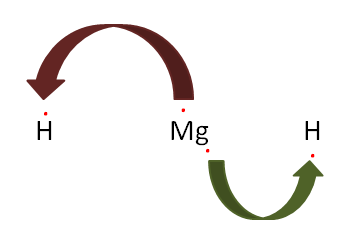
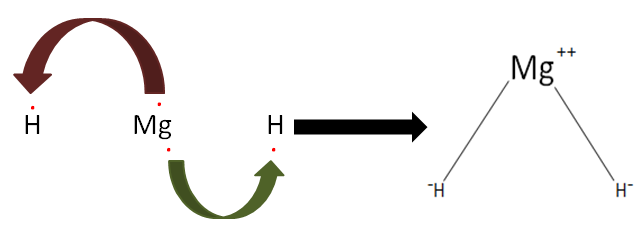
When in a bond there is a complete transfer of electrons from one atom to another, then it is called an Ionic bond. But if the complete transfer of electrons is not observed and there is sharing of electrons then they are said to be covalent bonds. But if in this sharing all the electrons are contributed by one atom only and another atom just accepts it only is said to be a covalent bond.
Note:
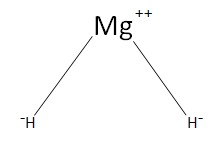
$Mg{H_2}$ in ionic in nature with two ionic bonds and zero covalent bonds. The formation of an ionic bond depends on the ionization enthalpy, electron gain enthalpy, lattice enthalpy respectively. Though it is complicated to make an ion like this only, we need to provide very high energy to the atom so that it is converted to an ion. However, ions play a vital role in the growth and development of an organism, sodium-potassium pump is an example.
Complete answer:
After the sharing of electrons, the constituents are held together by a force of attraction, these attractive forces are termed as chemical bonds. The successful explanation of the chemical bond was for the first time explained by Kossel and Lewis. Then later on both of them gave their combined theory of octet rule. However, this law found many limitations.
When in a bond there is a complete transfer of electrons from one atom to another, then it is called an Ionic bond. But if the complete transfer of electrons is not observed and there is sharing of electrons then they are said to be covalent bonds. But if in this sharing all the electrons are contributed by one atom only and another atom just accepts it only is said to be a covalent bond.
Note:
$Mg{H_2}$ in ionic in nature with two ionic bonds and zero covalent bonds. The formation of an ionic bond depends on the ionization enthalpy, electron gain enthalpy, lattice enthalpy respectively. Though it is complicated to make an ion like this only, we need to provide very high energy to the atom so that it is converted to an ion. However, ions play a vital role in the growth and development of an organism, sodium-potassium pump is an example.
Recently Updated Pages
Master Class 11 English: Engaging Questions & Answers for Success

Master Class 11 Maths: Engaging Questions & Answers for Success
Class 11 Question and Answer - Your Ultimate Solutions Guide
Master Class 11 Biology: Engaging Questions & Answers for Success
Master Class 11 Physics: Engaging Questions & Answers for Success
Master Class 11 Accountancy: Engaging Questions & Answers for Success
Trending doubts
Differentiate between an exothermic and an endothermic class 11 chemistry CBSE
One Metric ton is equal to kg A 10000 B 1000 C 100 class 11 physics CBSE
In what year Guru Nanak Dev ji was born A15 April 1469 class 11 social science CBSE
Difference Between Prokaryotic Cells and Eukaryotic Cells
Draw a diagram of a plant cell and label at least eight class 11 biology CBSE
1 Quintal is equal to a 110 kg b 10 kg c 100kg d 1000 class 11 physics CBSE