




In which of the following organisms, its excretory organs are correctly stated
A) Cockroach-Malpighian tubules and enteric caeca
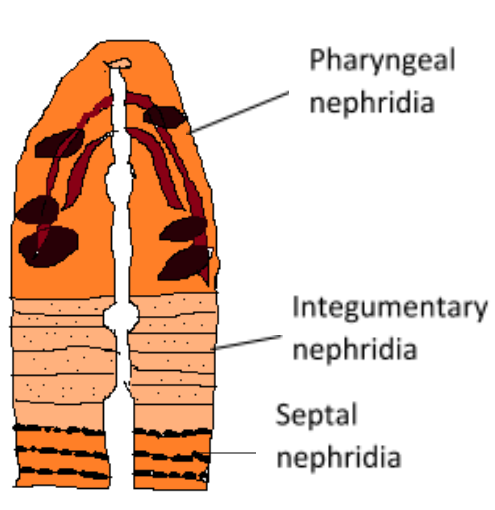
B) Earthworm-Pharyngeal, integumentary and septal nephridia
C) Frog-kidneys, skin, and buccal epithelium
D) Humans- kidneys, sebaceous glands and tear glands
Answer
 Verified
621k+ views
Hint: They belong to the category of annelids which have more evolved excretory organs. They are the terrestrial invertebrates that are externally segmented and contain setae on all the segments.
Complete Answer:
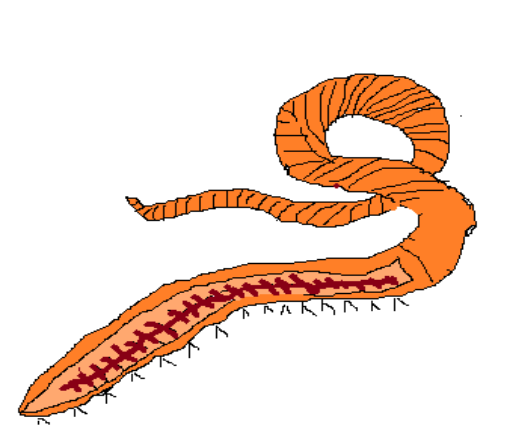
- The excretory organs of earthworm occur as segmentally arranged coiled like tubes which are called nephridia. There are three types of nephridia which includes septal nephridia, integumentary nephridia and pharyngeal nephridia.
- Two nephridia are present on each of the earthworm segments. Excretion occurs in earthworms through a pore which is called nephridiopore. These nephridia filter the dead cells and other types of waste that are stuck in blood. Wastes from the worms excreted through the same opening as the digestive waste.
Thus, the correct answer is option is B i.e., Earthworm-Pharyngeal, integumentary and septal nephridia.
Additional information:
- In cockroaches, Malpighian tubules are the part of excretory organs but enteric caeca plays a role in the digestion of food. On the other hand, excretory organs of frogs include kidney, pair of ureters, urinary bladder and cloaca.
- Skin is used in the absorption whereas buccal epithelium is used in the elimination of carbonic acid. In humans, excretory organs consist of sweat glands, liver, lungs, kidney. Sebaceous glands found in the skin of humans. Tear glands found in the eyes.
Note: Earthworms are the terrestrial invertebrates that have evolved excretory organs. Earthworm has three types of nephridia which helps in filtering the dead cells and waste from the worms. Nephridia are coiled like tubules.
Complete Answer:
- The excretory organs of earthworm occur as segmentally arranged coiled like tubes which are called nephridia. There are three types of nephridia which includes septal nephridia, integumentary nephridia and pharyngeal nephridia.
- Two nephridia are present on each of the earthworm segments. Excretion occurs in earthworms through a pore which is called nephridiopore. These nephridia filter the dead cells and other types of waste that are stuck in blood. Wastes from the worms excreted through the same opening as the digestive waste.
Thus, the correct answer is option is B i.e., Earthworm-Pharyngeal, integumentary and septal nephridia.
Additional information:
- In cockroaches, Malpighian tubules are the part of excretory organs but enteric caeca plays a role in the digestion of food. On the other hand, excretory organs of frogs include kidney, pair of ureters, urinary bladder and cloaca.
- Skin is used in the absorption whereas buccal epithelium is used in the elimination of carbonic acid. In humans, excretory organs consist of sweat glands, liver, lungs, kidney. Sebaceous glands found in the skin of humans. Tear glands found in the eyes.
Note: Earthworms are the terrestrial invertebrates that have evolved excretory organs. Earthworm has three types of nephridia which helps in filtering the dead cells and waste from the worms. Nephridia are coiled like tubules.
Recently Updated Pages
Master Class 12 Economics: Engaging Questions & Answers for Success

Master Class 12 English: Engaging Questions & Answers for Success
Master Class 12 Social Science: Engaging Questions & Answers for Success
Master Class 12 Maths: Engaging Questions & Answers for Success
Master Class 12 Physics: Engaging Questions & Answers for Success
Master Class 9 General Knowledge: Engaging Questions & Answers for Success
Trending doubts
One Metric ton is equal to kg A 10000 B 1000 C 100 class 11 physics CBSE
Difference Between Prokaryotic Cells and Eukaryotic Cells
Two of the body parts which do not appear in MRI are class 11 biology CBSE
1 ton equals to A 100 kg B 1000 kg C 10 kg D 10000 class 11 physics CBSE
Draw a diagram of nephron and explain its structur class 11 biology CBSE
10 examples of friction in our daily life