




In the structure given below, how many heteroatoms are present?

Answer
 Verified
636.9k+ views
Hint:
Heteroatoms are defined as the atoms other than carbon and hydrogen in a given compound. There are limited number of hetero atom in a compound. In a compound there cannot be more than three heteroatoms.
Complete answer:
-Heteroatoms are non hydrogen or non carbon atoms that have replaced carbon or hydrogen in the molecular structure.
-These atoms will have lesser or greater attraction for the electrons than the carbon atom.
-The bond that is present between carbon and the heteroatom is polar in nature.
-Heteroatoms affect the reactivity of the organic molecule.
-The examples of heteroatoms are: oxygen, nitrogen, bromine, chlorine, sulphur, phosphorus, iodine, lithium and magnesium.
-In the diagram given below:
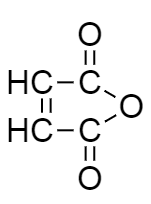
There is only one heteroatom present in a compound and that is oxygen.
Therefore, the compound given in the diagram consists of only one heteroatom.
Additional information:
Example of a compound which consists of two heteroatoms and that is acetamide.
The structure of acetamide is given below as follows:
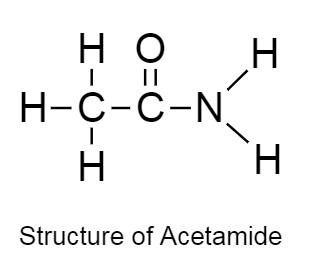
In the given structure there are two heteroatoms present namely: oxygen and nitrogen.
Likewise , we can identify heteroatoms on the basis of the molecular formula also.
Note:The polarity between carbon and oxygen bonds depends on the electron attracting properties of these atoms. For example if there are 2 oxygen atoms in a compound, it will still be considered as one heteroatom because we are only supposed to know which atom is there and not the number of the same heteroatom in a compound.
Heteroatoms are defined as the atoms other than carbon and hydrogen in a given compound. There are limited number of hetero atom in a compound. In a compound there cannot be more than three heteroatoms.
Complete answer:
-Heteroatoms are non hydrogen or non carbon atoms that have replaced carbon or hydrogen in the molecular structure.
-These atoms will have lesser or greater attraction for the electrons than the carbon atom.
-The bond that is present between carbon and the heteroatom is polar in nature.
-Heteroatoms affect the reactivity of the organic molecule.
-The examples of heteroatoms are: oxygen, nitrogen, bromine, chlorine, sulphur, phosphorus, iodine, lithium and magnesium.
-In the diagram given below:
There is only one heteroatom present in a compound and that is oxygen.
Therefore, the compound given in the diagram consists of only one heteroatom.
Additional information:
Example of a compound which consists of two heteroatoms and that is acetamide.
The structure of acetamide is given below as follows:
In the given structure there are two heteroatoms present namely: oxygen and nitrogen.
Likewise , we can identify heteroatoms on the basis of the molecular formula also.
Note:The polarity between carbon and oxygen bonds depends on the electron attracting properties of these atoms. For example if there are 2 oxygen atoms in a compound, it will still be considered as one heteroatom because we are only supposed to know which atom is there and not the number of the same heteroatom in a compound.
Recently Updated Pages
Write any three differences between metals and nonmetals class 10 social science CBSE

Amit standing on a horizontal plane finds a bird flying class 10 maths CBSE
Two circles of radii 5 cm and 3 cm intersect at two class 10 maths CBSE
Solve the following i John and Jivanti together have class 10 maths CBSE
What is the relation between orthocenter circumcentre class 10 maths CBSE
Two plane mirrors are inclined at 70circ A ray incident class 10 physics CBSE
Trending doubts
Explain the Treaty of Vienna of 1815 class 10 social science CBSE
1 GB equals how many MB?
10 examples of evaporation in daily life with explanations
What is the full form of POSCO class 10 social science CBSE
Which is the hottest planet in the Solar system A Earth class 10 social science CBSE
Name any four life processes in living things class 10 biology CBSE