




In the stomach gastric acid is secreted by
A. Gastric secreting cells
B. Parietal cells
C. Peptic cells
D. Acidic cell
Answer
 Verified
601.2k+ views
Hint: Gastric secreting cells secrete gastrin, which is a peptide which induces gastric acid secretion. Parietal cells are also called oxyntic cells present in the stomach which secrete gastric acid. Parietal cells secrete gastric acid against histamine, acetylcholine and gastrin. Peptic cells release proenzyme pepsinogen.
Complete answer:
Gastric acid is important to facilitate digestion of protein and the absorption of calcium, iron and vitamin B12. Gastric acid also suppresses growth of bacteria, which can help prevent enteric infections and small intestinal bacterial overgrowth.
There are three phases of gastric secretion: cephalic, gastric and intestinal. Activation of the Cephalic phase is started by thought, taste, and smell or by watching food. Gastric phase activated due to some chemical effects of food and distension of the stomach.
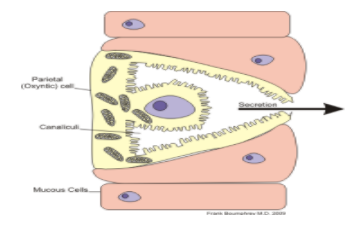
Intestinal phases activate for a small proportion of the acid secretory response to a meal. Gastric acid secretion from parietal cells is regulated by redundant, overlapping pathways such as: endocrine, paracrine, neural and autocrine.
The hydrogen ion concentration in parietal cell secretions is roughly 3 million fold higher than in blood. Parietal cells' ability to secrete acid is dependent on active transport. Regulation of gastric acid secretion is regulated by autonomic nervous system and several hormones.
Hence, the correct answer is option (B).
Note: Hydrochloric acid, potassium chloride, and NaCl are the main constituents of gastric acid. Gastric juices are the stomach fluids formed in the stomach lining. The pH of gastric acid ranges from 1.5 – 3.5 in human stomach lumen and this pH level is maintained by the proton pump.
Complete answer:
Gastric acid is important to facilitate digestion of protein and the absorption of calcium, iron and vitamin B12. Gastric acid also suppresses growth of bacteria, which can help prevent enteric infections and small intestinal bacterial overgrowth.
There are three phases of gastric secretion: cephalic, gastric and intestinal. Activation of the Cephalic phase is started by thought, taste, and smell or by watching food. Gastric phase activated due to some chemical effects of food and distension of the stomach.
Intestinal phases activate for a small proportion of the acid secretory response to a meal. Gastric acid secretion from parietal cells is regulated by redundant, overlapping pathways such as: endocrine, paracrine, neural and autocrine.
The hydrogen ion concentration in parietal cell secretions is roughly 3 million fold higher than in blood. Parietal cells' ability to secrete acid is dependent on active transport. Regulation of gastric acid secretion is regulated by autonomic nervous system and several hormones.
Hence, the correct answer is option (B).
Note: Hydrochloric acid, potassium chloride, and NaCl are the main constituents of gastric acid. Gastric juices are the stomach fluids formed in the stomach lining. The pH of gastric acid ranges from 1.5 – 3.5 in human stomach lumen and this pH level is maintained by the proton pump.
Recently Updated Pages
Master Class 12 Economics: Engaging Questions & Answers for Success

Master Class 12 English: Engaging Questions & Answers for Success
Master Class 12 Social Science: Engaging Questions & Answers for Success
Master Class 12 Maths: Engaging Questions & Answers for Success
Master Class 12 Physics: Engaging Questions & Answers for Success
Master Class 11 Social Science: Engaging Questions & Answers for Success
Trending doubts
One Metric ton is equal to kg A 10000 B 1000 C 100 class 11 physics CBSE
Difference Between Prokaryotic Cells and Eukaryotic Cells
Two of the body parts which do not appear in MRI are class 11 biology CBSE
1 ton equals to A 100 kg B 1000 kg C 10 kg D 10000 class 11 physics CBSE
Draw a diagram of nephron and explain its structur class 11 biology CBSE
10 examples of friction in our daily life