




In the rabbit, optic lobes are small because the eyesight is controlled by
(a) Temporal lobe
(b) Occipital lobe
(c) Frontal lobe
(d) Parietal lobe
Answer
 Verified
575.4k+ views
Hint: It is one of the major lobes of the cortex of the cerebrum found in the mammals of the brain. This lobe is responsible for sending the impulses to generate the visual signals resulting in the vision of the person’s eye.
Complete answer:
The cerebrum performs higher functions such as processing touch, vision, and hearing, as well as thinking, reasoning, feeling, learning, and fine movement regulation.
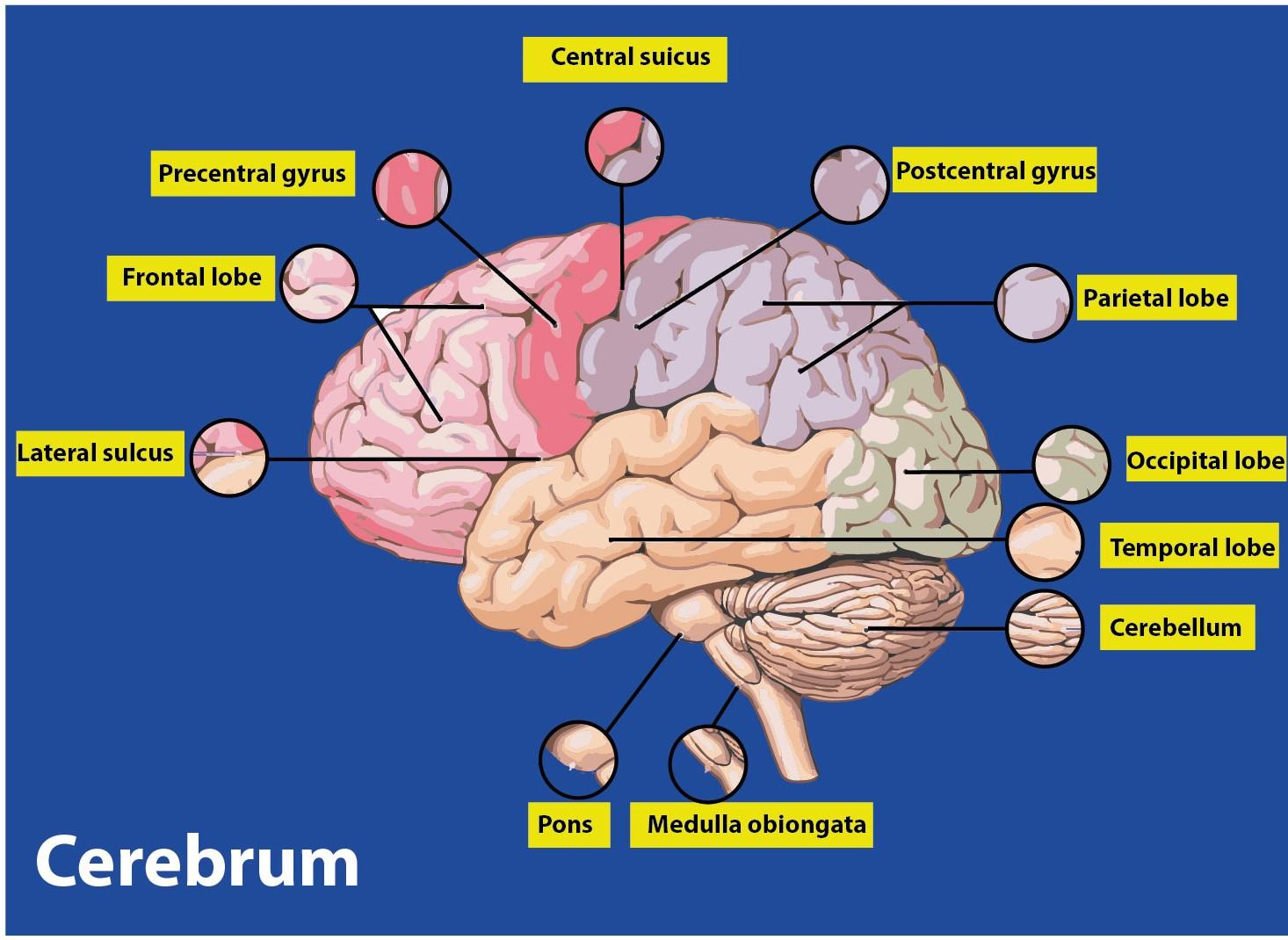
The cerebrum is further divided into four parts, which are
Frontal lobe: It is related to sections of voice, preparation, thinking, problem-solving, and movement.
Parietal lobe: Helps in the movement and orientation along with the sensory processing.
Occipital lobe: It helps in the generation of the visual perception.
Temporal lobe: This area is responsible for the person’s memory, recognition, speech perception, and auditory input.
Additional information:
The parietal cortex is considered as one of the most complex regions of the human brain which is responsible for the integration of various stimuli.
-The parietal cortex receives, correlates, analyzes primary sensory information to interpret stimulus and aid in discrimination and recognition.
The cerebrum contains,
-Sensory areas: To receive the messages
-Association areas: Incoming sensory information is introduced into those areas. It forms a bridge of network between motor, and sensory spaces.
-Motor areas: This region helps in the movement of muscles voluntarily.
So, the correct answer is ‘Occipital lobe’.
Note:
The frictionless blinking in the eyes of the rabbit is due to the presence of meibomian glands. The meibomian gland helps in the secretion of the oil-like substance which lubricates the cornea and provides frictionless blinking. It also helps the eyes to remain lubricated without any dryness.
Complete answer:
The cerebrum performs higher functions such as processing touch, vision, and hearing, as well as thinking, reasoning, feeling, learning, and fine movement regulation.
The cerebrum is further divided into four parts, which are
Frontal lobe: It is related to sections of voice, preparation, thinking, problem-solving, and movement.
Parietal lobe: Helps in the movement and orientation along with the sensory processing.
Occipital lobe: It helps in the generation of the visual perception.
Temporal lobe: This area is responsible for the person’s memory, recognition, speech perception, and auditory input.
Additional information:
The parietal cortex is considered as one of the most complex regions of the human brain which is responsible for the integration of various stimuli.
-The parietal cortex receives, correlates, analyzes primary sensory information to interpret stimulus and aid in discrimination and recognition.
The cerebrum contains,
-Sensory areas: To receive the messages
-Association areas: Incoming sensory information is introduced into those areas. It forms a bridge of network between motor, and sensory spaces.
-Motor areas: This region helps in the movement of muscles voluntarily.
So, the correct answer is ‘Occipital lobe’.
Note:
The frictionless blinking in the eyes of the rabbit is due to the presence of meibomian glands. The meibomian gland helps in the secretion of the oil-like substance which lubricates the cornea and provides frictionless blinking. It also helps the eyes to remain lubricated without any dryness.
Recently Updated Pages
Master Class 11 Social Science: Engaging Questions & Answers for Success

Master Class 11 English: Engaging Questions & Answers for Success
Master Class 11 Maths: Engaging Questions & Answers for Success
Master Class 11 Chemistry: Engaging Questions & Answers for Success
Master Class 11 Biology: Engaging Questions & Answers for Success
Class 11 Question and Answer - Your Ultimate Solutions Guide
Trending doubts
One Metric ton is equal to kg A 10000 B 1000 C 100 class 11 physics CBSE
Difference Between Prokaryotic Cells and Eukaryotic Cells
Find the value of the expression given below sin 30circ class 11 maths CBSE
1 ton equals to A 100 kg B 1000 kg C 10 kg D 10000 class 11 physics CBSE
Two of the body parts which do not appear in MRI are class 11 biology CBSE
Draw a diagram of nephron and explain its structur class 11 biology CBSE