




In Riccia,
A.The sporophyte is parasitic over gametophyte
B.The gametophyte is parasitic over sporophyte
C.The sporophyte is independent of gametophyte
D.Sporophyte is semi-parasitic
Answer
 Verified
610.8k+ views
Hint:In Bryophytes, the zygote divides by mitosis and produces a multicellular diploid body called the sporophyte. Sporophyte in most cases is differentiated into foot, seta, and capsule. Haploid gametes formed in the capsule, germinate to produce gametophyte.
Complete answer:Sexual reproduction in Bryophytes is oogamous. Male sex organ- Antheridium is differentiated into stalk and body. It produces flagellated motile antherozoids. Female sex organ- Archegonium, is flask-shaped, stalked with venter and neck. Neck encloses the variable number of neck canal cells and venter encloses venter canal cells and a single large egg.
The neck canal cells, ventral canal cells of archegonia, degenerate, and gelatinize. It has a chemical to attract antherozoids. Antherozoids fuse with the egg to produce a zygote. The zygote divides by mitosis and produces a multicellular diploid body called sporophyte or sporogonium.
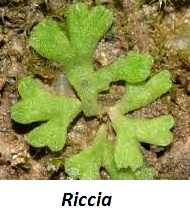
Riccia is mostly monoecious (antheridia and archegonia are formed in the same plant). Sporophyte in Riccia is represented by capsule only. The sporophyte is not free-living and remains attached to photosynthetic gametophyte and derives nourishment from it.
Some cells of sporogonium, produced inside the capsule undergo reduction division to produce haploid spores. Haploid spores, when released, germinate to produce gametophyte either directly or through a juvenile stage called Protonema.
So, the correct option is A. Sporophyte is parasitic over gametophyte.
Note:Marchantia is dioecious (antheridia develop on male plants and archegonia develop on the female plant). The sporophyte is represented by three parts called the foot, seta, and capsule.
Funaria is monoecious, autoicous(male and female receptacles are borne on separate branches of the same plant). The sporophyte is differentiated into foot, seta, and capsule.
In Anthoceros, the sporophyte is differentiated into the foot and capsule.
Complete answer:Sexual reproduction in Bryophytes is oogamous. Male sex organ- Antheridium is differentiated into stalk and body. It produces flagellated motile antherozoids. Female sex organ- Archegonium, is flask-shaped, stalked with venter and neck. Neck encloses the variable number of neck canal cells and venter encloses venter canal cells and a single large egg.
The neck canal cells, ventral canal cells of archegonia, degenerate, and gelatinize. It has a chemical to attract antherozoids. Antherozoids fuse with the egg to produce a zygote. The zygote divides by mitosis and produces a multicellular diploid body called sporophyte or sporogonium.
Riccia is mostly monoecious (antheridia and archegonia are formed in the same plant). Sporophyte in Riccia is represented by capsule only. The sporophyte is not free-living and remains attached to photosynthetic gametophyte and derives nourishment from it.
Some cells of sporogonium, produced inside the capsule undergo reduction division to produce haploid spores. Haploid spores, when released, germinate to produce gametophyte either directly or through a juvenile stage called Protonema.
So, the correct option is A. Sporophyte is parasitic over gametophyte.
Note:Marchantia is dioecious (antheridia develop on male plants and archegonia develop on the female plant). The sporophyte is represented by three parts called the foot, seta, and capsule.
Funaria is monoecious, autoicous(male and female receptacles are borne on separate branches of the same plant). The sporophyte is differentiated into foot, seta, and capsule.
In Anthoceros, the sporophyte is differentiated into the foot and capsule.
Recently Updated Pages
Master Class 5 English: Engaging Questions & Answers for Success

Master Class 5 Maths: Engaging Questions & Answers for Success
Master Class 5 Social Science: Engaging Questions & Answers for Success
Master Class 5 Science: Engaging Questions & Answers for Success
Class 5 Question and Answer - Your Ultimate Solutions Guide
Master Class 9 General Knowledge: Engaging Questions & Answers for Success
Trending doubts
One Metric ton is equal to kg A 10000 B 1000 C 100 class 11 physics CBSE
What is cell theory Who formulated it class 11 biology CBSE
Phyllotaxy is the arrangement of ALeaflets BLeaves class 11 biology CBSE
Difference Between Prokaryotic Cells and Eukaryotic Cells
The symbiotic association of fungi and algae is called class 11 biology CBSE
Cell theory was formulated by A Schleiden and Schwann class 11 biology CBSE