




In mammals, the digestion of starch starts from
a) Mouth
b) Stomach
c) Oesophagus
d) Duodenum
Answer
 Verified
597.9k+ views
Hint: The food is ingested or taken in by the mouth and then is ejected out through the anus. During this whole route taken by the food, it gets digested and is broken down into small compounds that are easily digestible. The digestion of food starts from the starting point itself.
Complete answer:
In the mouth, the food is taken in small amounts. This food is coated with the salivary amylase which helps in the digestion of starch. The digestion of starch starts in the mouth and then continues in the intestine. The food in the mouth is chewed and mixed with the salivary amylase to help in the easy movement of the food in the esophagus.
Additional information: In the esophagus, the digestion of food does not occur only the transportation of food occurs from the mouth to the stomach. The movement of the bolus in the esophagus is known as a peristaltic movement.
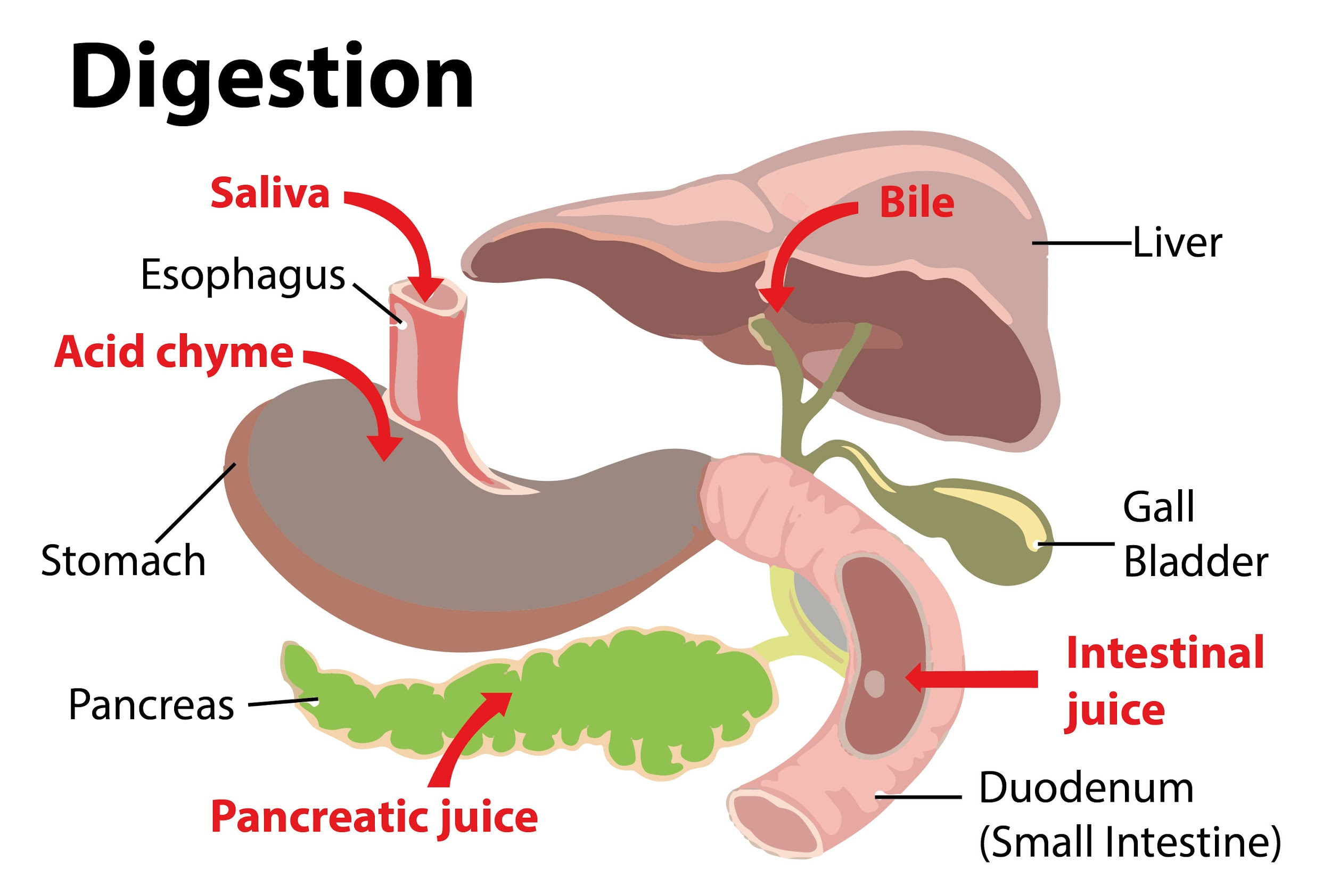
The digestion of food occurs in the stomach where the hydrochloric acid helps in the breakdown of the food substances into smaller compounds. The acid also helps in maintaining the acidic ph of the stomach. The part of the small intestine is the duodenum. The small intestine is composed of three parts: the duodenum, jejunum, and ileum. The duodenum is the first part of the small intestine. It is a connecting link between the stomach and intestine. Major digestion usually occurs in the intestine.
So, the answer is 'a) Mouth'. <.b>
Note: The digestion of starch starts in the mouth where the starch particles are broken down into maltose. The juices in the stomach stop the activity of salivary amylase. The maltose present in the food then gets digested when it reaches the small intestine. The enzymes released from the pancreas help in the breakdown of the disaccharides into monosaccharides.
Complete answer:
In the mouth, the food is taken in small amounts. This food is coated with the salivary amylase which helps in the digestion of starch. The digestion of starch starts in the mouth and then continues in the intestine. The food in the mouth is chewed and mixed with the salivary amylase to help in the easy movement of the food in the esophagus.
Additional information: In the esophagus, the digestion of food does not occur only the transportation of food occurs from the mouth to the stomach. The movement of the bolus in the esophagus is known as a peristaltic movement.
The digestion of food occurs in the stomach where the hydrochloric acid helps in the breakdown of the food substances into smaller compounds. The acid also helps in maintaining the acidic ph of the stomach. The part of the small intestine is the duodenum. The small intestine is composed of three parts: the duodenum, jejunum, and ileum. The duodenum is the first part of the small intestine. It is a connecting link between the stomach and intestine. Major digestion usually occurs in the intestine.
So, the answer is 'a) Mouth'. <.b>
Note: The digestion of starch starts in the mouth where the starch particles are broken down into maltose. The juices in the stomach stop the activity of salivary amylase. The maltose present in the food then gets digested when it reaches the small intestine. The enzymes released from the pancreas help in the breakdown of the disaccharides into monosaccharides.
Recently Updated Pages
Master Class 12 Economics: Engaging Questions & Answers for Success

Master Class 12 English: Engaging Questions & Answers for Success
Master Class 12 Social Science: Engaging Questions & Answers for Success
Master Class 12 Maths: Engaging Questions & Answers for Success
Master Class 12 Physics: Engaging Questions & Answers for Success
Master Class 9 General Knowledge: Engaging Questions & Answers for Success
Trending doubts
One Metric ton is equal to kg A 10000 B 1000 C 100 class 11 physics CBSE
Difference Between Prokaryotic Cells and Eukaryotic Cells
Two of the body parts which do not appear in MRI are class 11 biology CBSE
Find the value of the expression given below sin 30circ class 11 maths CBSE
1 ton equals to A 100 kg B 1000 kg C 10 kg D 10000 class 11 physics CBSE
Draw a diagram of nephron and explain its structur class 11 biology CBSE