




In mammals, pleural membranes cover the lungs as well as insides of the rib cage. The pleural fluid in between the two membranes
A. Dissolves oxygen for transfer to the alveoli
B. Dissolved carbon dioxide for transfer to the blood
C. Provides partial pressure
D. Reduces the friction between the ribs and the lungs
Answer
 Verified
586.8k+ views
Hint: Lungs are the respiratory organ of vertebrates. It is covered by pleura layers and the layers are separated by a fluid-filled cavity. The fluid acts as a lubricant.
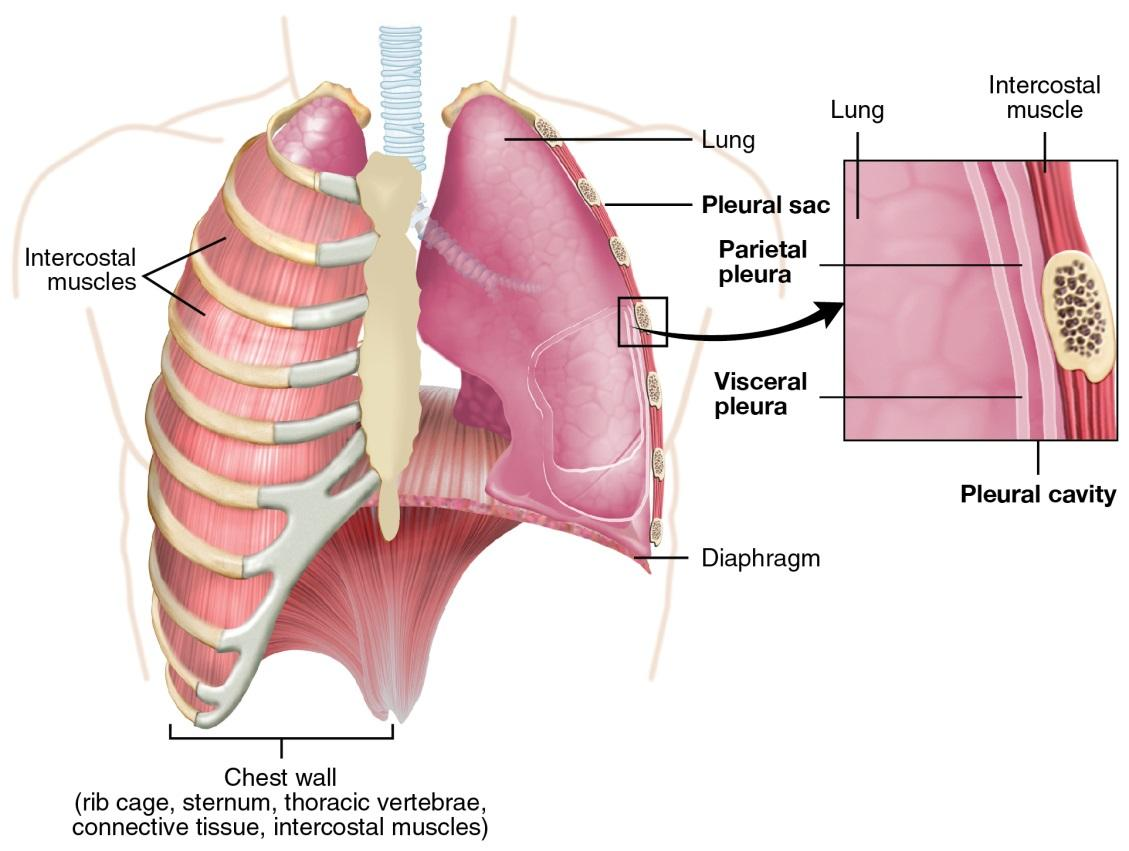
Complete answer: The respiratory organs of vertebrates are the lungs. It lies in the chest's thoracic cavity. It is present in the rib-cage (surrounding the thoracic cavity) that protects it from mechanical damage. The pleural membrane which lines the lungs and the rib cage protects the lungs. It has a membranous double layer coating. The parietal pleura is known as the outer while the visceral pleura is the inner. The visceral pleura protects the outside of the lungs and the interior of the thorax, mediastinum, and diaphragm are covered by the parietal pleura. A pleural cavity refers to the space between the two pleural membranes. It consists of a thin film of serous fluid. The cavity is filled with the pleural fluid. The fluid provides the lungs with protection and reduces friction during the respiration process between the rib cage and the lungs.
So, the correct answer is option D.
Additional information: The blood travels to the lungs via the pulmonary vein and carries out the process of gaseous exchange. Exchange of gases occurs in the alveoli by diffusion.
Note: Pleural fluid’s surface tension contributes to its function. Higher inflation of the alveoli occurs during respiration. The fluid is created (by exudation) and is reabsorbed by the lymphatic system continuously.
Complete answer: The respiratory organs of vertebrates are the lungs. It lies in the chest's thoracic cavity. It is present in the rib-cage (surrounding the thoracic cavity) that protects it from mechanical damage. The pleural membrane which lines the lungs and the rib cage protects the lungs. It has a membranous double layer coating. The parietal pleura is known as the outer while the visceral pleura is the inner. The visceral pleura protects the outside of the lungs and the interior of the thorax, mediastinum, and diaphragm are covered by the parietal pleura. A pleural cavity refers to the space between the two pleural membranes. It consists of a thin film of serous fluid. The cavity is filled with the pleural fluid. The fluid provides the lungs with protection and reduces friction during the respiration process between the rib cage and the lungs.
So, the correct answer is option D.
Additional information: The blood travels to the lungs via the pulmonary vein and carries out the process of gaseous exchange. Exchange of gases occurs in the alveoli by diffusion.
Note: Pleural fluid’s surface tension contributes to its function. Higher inflation of the alveoli occurs during respiration. The fluid is created (by exudation) and is reabsorbed by the lymphatic system continuously.
Recently Updated Pages
Master Class 11 Social Science: Engaging Questions & Answers for Success

Master Class 11 Physics: Engaging Questions & Answers for Success
Master Class 11 Maths: Engaging Questions & Answers for Success
Master Class 11 Economics: Engaging Questions & Answers for Success
Master Class 11 Computer Science: Engaging Questions & Answers for Success
Master Class 11 Chemistry: Engaging Questions & Answers for Success
Trending doubts
One Metric ton is equal to kg A 10000 B 1000 C 100 class 11 physics CBSE
There are 720 permutations of the digits 1 2 3 4 5 class 11 maths CBSE
1 Quintal is equal to a 110 kg b 10 kg c 100kg d 1000 class 11 physics CBSE
State and prove Bernoullis theorem class 11 physics CBSE
Difference Between Prokaryotic Cells and Eukaryotic Cells
Which among the following are examples of coming together class 11 social science CBSE