




In human beings heartbeat is initiated by
(a) Purkinje fibers
(b) AV node
(c) SA node
(d) Bundles
Answer
 Verified
645.6k+ views
Hint: This is a small mass of specialized cells lying in the wall of the right atrium near the opening of the superior vena cava. It is referred to as the natural pacemaker of the heart.
Complete answer:
In human beings, the heartbeat is initiated by the SA node (sinoatrial node) because they are electrically unstable. It is also known as the heart’s natural pacemaker. The impulse starts during a small bundle of specialized cells located within the right atrium of the heart, called the SA node. The electrical activity spreads across the walls of the atria and causes them to contract. This forces blood into the ventricles. The sinoatrial node sets the speed and rhythm of your heartbeat. Normal cardiac rhythm is usually called normal sinus rhythm because the SA (sinus) node fires regularly.
AV node (atrioventricular node) : The AV node is a cluster of cells in the center of the heart between the atria and ventricles, and acts like a gate that slows the electrical signal before it enters the ventricles. This interval gives the atria time to contract before the ventricles do.
Atrioventricular bundle (AV bundle or bundle of his) : This is the mass of specialized fibers that originate from the AV node. The AV bundle crosses the fibrous ring that divides atria and ventricles. They transmit the impulse to the muscular walls of the ventricles and cause them to contract and by this, the blood comes out of the heart and goes to the lungs and body.
Purkinje fibers: They are located in the inner ventricular walls of the heart, just beneath the endocardium in a space. The Purkinje fibers are specialized conducting fibers composed of electrically excitable cells and conduct cardiac action potentials more quickly and efficiently than any other cells in the heart.
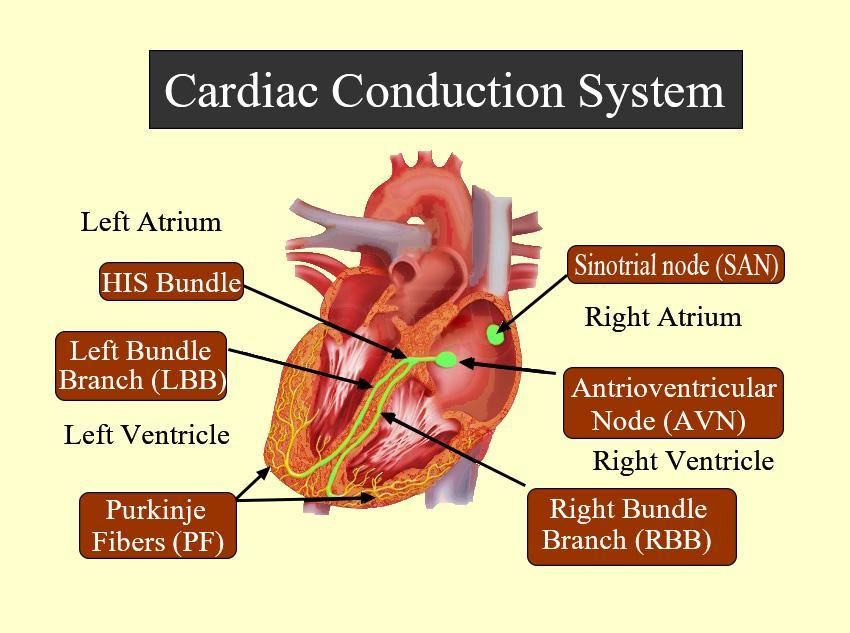
So, the correct answer is ‘SA node’.
Note: At rest, the SA node causes your heart to beat about 60 to 100 times each minute. During activity or excitement, our body needs more oxygen-rich blood, the heart rate rises to well over 100 beats per minute.
Complete answer:
In human beings, the heartbeat is initiated by the SA node (sinoatrial node) because they are electrically unstable. It is also known as the heart’s natural pacemaker. The impulse starts during a small bundle of specialized cells located within the right atrium of the heart, called the SA node. The electrical activity spreads across the walls of the atria and causes them to contract. This forces blood into the ventricles. The sinoatrial node sets the speed and rhythm of your heartbeat. Normal cardiac rhythm is usually called normal sinus rhythm because the SA (sinus) node fires regularly.
AV node (atrioventricular node) : The AV node is a cluster of cells in the center of the heart between the atria and ventricles, and acts like a gate that slows the electrical signal before it enters the ventricles. This interval gives the atria time to contract before the ventricles do.
Atrioventricular bundle (AV bundle or bundle of his) : This is the mass of specialized fibers that originate from the AV node. The AV bundle crosses the fibrous ring that divides atria and ventricles. They transmit the impulse to the muscular walls of the ventricles and cause them to contract and by this, the blood comes out of the heart and goes to the lungs and body.
Purkinje fibers: They are located in the inner ventricular walls of the heart, just beneath the endocardium in a space. The Purkinje fibers are specialized conducting fibers composed of electrically excitable cells and conduct cardiac action potentials more quickly and efficiently than any other cells in the heart.
So, the correct answer is ‘SA node’.
Note: At rest, the SA node causes your heart to beat about 60 to 100 times each minute. During activity or excitement, our body needs more oxygen-rich blood, the heart rate rises to well over 100 beats per minute.
Recently Updated Pages
Lysosomes are known as suicidal bags of cell why class 11 biology CBSE

Father s age is three times the sum of the ages of-class-11-maths-CBSE
Give a comparative account of the classes of kingdom class 11 biology CBSE
The ceiling of a long hall is 25m high What is the class 11 physics CBSE
Proton was discovered by A Thomson B Rutherford C Chadwick class 11 chemistry CBSE
Name the Largest and the Smallest Cell in the Human Body ?
Trending doubts
Difference Between Prokaryotic Cells and Eukaryotic Cells
Find the value of the expression given below sin 30circ class 11 maths CBSE
One Metric ton is equal to kg A 10000 B 1000 C 100 class 11 physics CBSE
Two of the body parts which do not appear in MRI are class 11 biology CBSE
10 examples of friction in our daily life
Draw a diagram of nephron and explain its structur class 11 biology CBSE