




In cacti, the succulent is mostly in
A) Stem
B) Leaves
C) Roots
D) All of the above
Answer
 Verified
610.8k+ views
Hint: It has numerous cushions or pit-like structures in cactus plants. They also have modified leaves in the form of thorns. It is typically succulent and is adapted to store water and mostly occurs in xerophytic plants.
Complete step by step answer:
- Cactus are perennial plants. They have fleshy stems. Their stems are usually cylindrical or flat in shape. Their stems are green in color and perform photosynthesis. Cactus plants have sharper bristles or spines on their stems, which protect the plant from many grazing animals.
- The stem contains large numbers of pit- like structures on their surface (also known as areoles) . From those pits, spines come out. The spines on the stem of the cactus plant are basically the modified leaves.
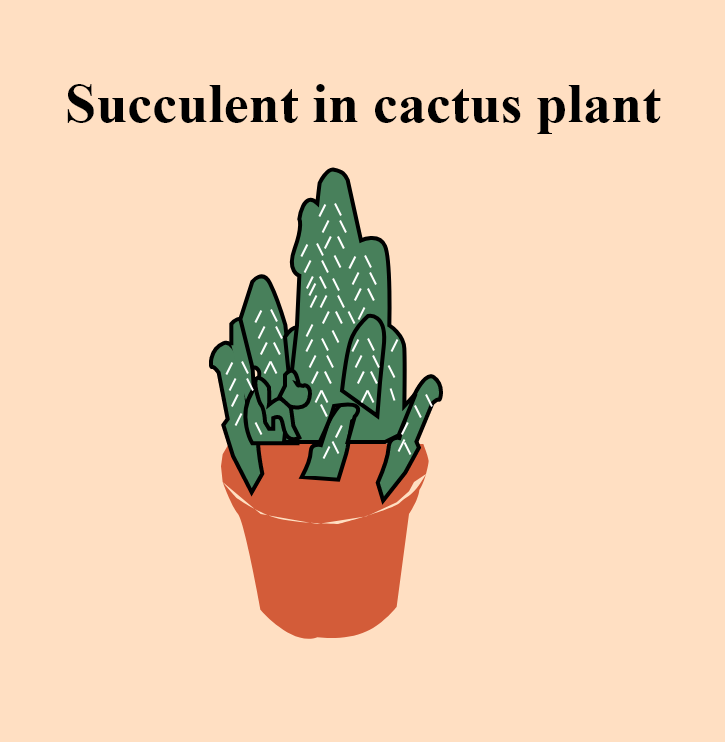
- Almost every cactus plant is succulent which means they have adapted to store water. In cacti, the succulence is mostly in the stem because the leaves are modified into spines to reduce the evaporation of water from them.
- Cactus don't have leaves so the enlarged stem does photosynthesis.
So, the correct answer is, "Stem".
Additional information:
Roots: All cactus plants have roots and they perform essential functions. The roots of the cactus plant take water and nutrients from the soil and also store food and water. The roots of cactus are varied from deep taproot to fine roots.
Leaves: Cactus don't have true leaves instead they modified their leaves into spines(which are highly modified leaves). Spines help in reducing the loss of water and also defend themselves from herbivorous animals.
- The flowers are bisexual contain both male and female reproductive organs. The flowers are mostly large and showy.they have a rich scented nectar- producing flower.
Note:
- Cactus are xerophytic plants, adapted to cope up with extreme hot climates.
- They are morphologically adapted to cope up with water deficiency in extremely hot places like Desserts.
- Adaptations include - Succulents in the stem, waxy cuticle, and no leaves to reduce transpiration, photosynthetic stems, stems are cylindrical to reduce the surface to volume ratio.
Complete step by step answer:
- Cactus are perennial plants. They have fleshy stems. Their stems are usually cylindrical or flat in shape. Their stems are green in color and perform photosynthesis. Cactus plants have sharper bristles or spines on their stems, which protect the plant from many grazing animals.
- The stem contains large numbers of pit- like structures on their surface (also known as areoles) . From those pits, spines come out. The spines on the stem of the cactus plant are basically the modified leaves.
- Almost every cactus plant is succulent which means they have adapted to store water. In cacti, the succulence is mostly in the stem because the leaves are modified into spines to reduce the evaporation of water from them.
- Cactus don't have leaves so the enlarged stem does photosynthesis.
So, the correct answer is, "Stem".
Additional information:
Roots: All cactus plants have roots and they perform essential functions. The roots of the cactus plant take water and nutrients from the soil and also store food and water. The roots of cactus are varied from deep taproot to fine roots.
Leaves: Cactus don't have true leaves instead they modified their leaves into spines(which are highly modified leaves). Spines help in reducing the loss of water and also defend themselves from herbivorous animals.
- The flowers are bisexual contain both male and female reproductive organs. The flowers are mostly large and showy.they have a rich scented nectar- producing flower.
Note:
- Cactus are xerophytic plants, adapted to cope up with extreme hot climates.
- They are morphologically adapted to cope up with water deficiency in extremely hot places like Desserts.
- Adaptations include - Succulents in the stem, waxy cuticle, and no leaves to reduce transpiration, photosynthetic stems, stems are cylindrical to reduce the surface to volume ratio.
Recently Updated Pages
Master Class 12 Economics: Engaging Questions & Answers for Success

Master Class 12 English: Engaging Questions & Answers for Success
Master Class 12 Social Science: Engaging Questions & Answers for Success
Master Class 12 Maths: Engaging Questions & Answers for Success
Master Class 12 Physics: Engaging Questions & Answers for Success
Master Class 11 Social Science: Engaging Questions & Answers for Success
Trending doubts
One Metric ton is equal to kg A 10000 B 1000 C 100 class 11 physics CBSE
Difference Between Prokaryotic Cells and Eukaryotic Cells
Two of the body parts which do not appear in MRI are class 11 biology CBSE
1 ton equals to A 100 kg B 1000 kg C 10 kg D 10000 class 11 physics CBSE
Draw a diagram of nephron and explain its structur class 11 biology CBSE
10 examples of friction in our daily life