




In an ECG, the depolarization of atria is indicated by
a) P-wave
b) Q-wave
c) R-wave
d) S-wave
e) T-wave
Answer
 Verified
543.3k+ views
Hint: Electrocardiograph, normally known as the ECG is a graphical representation of the electrical activity of the heart during a cardiac cycle. A cardiac cycle is defined as the pumping of blood by all four chambers at once.
Complete answer:
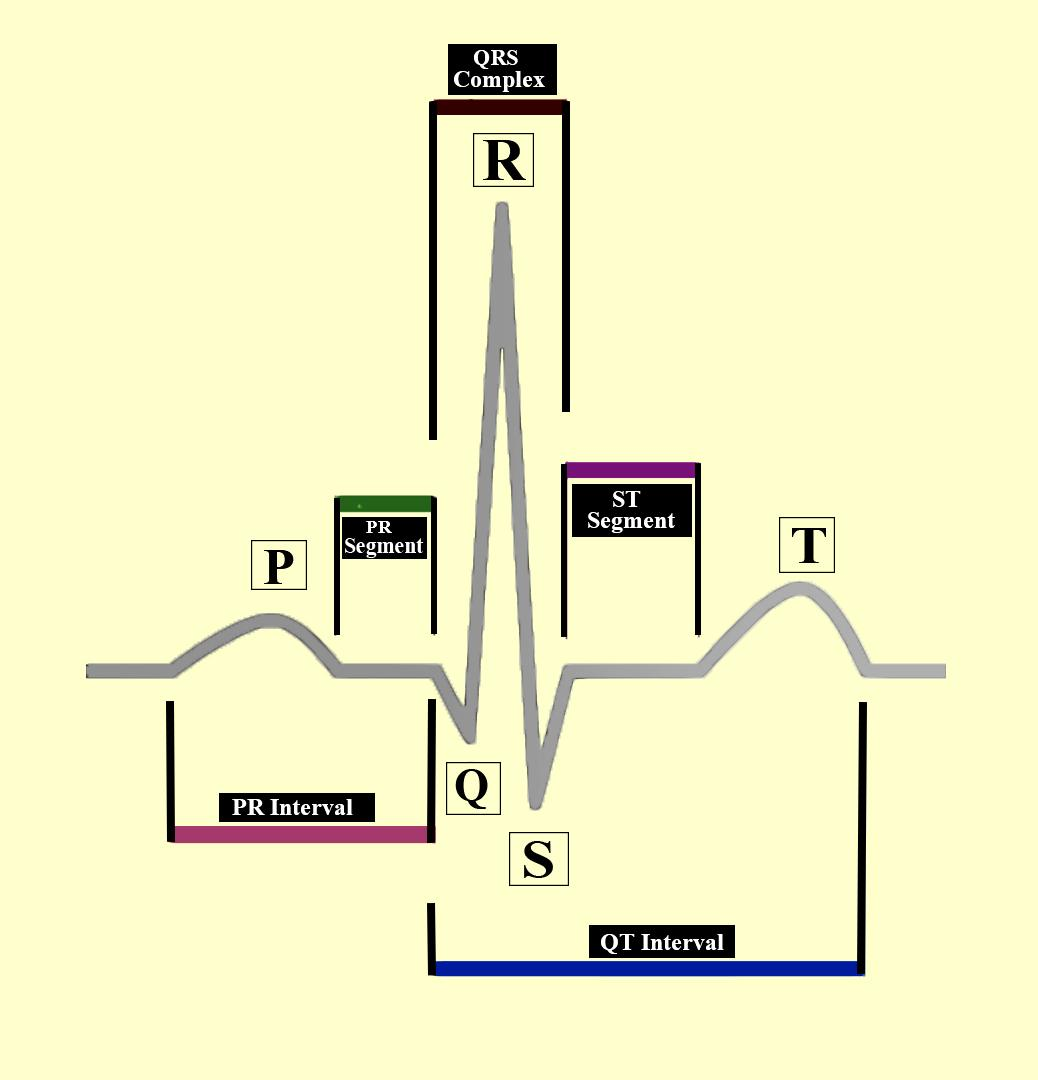
The singular wave of ECG is from the P wave to the T wave. The p wave is the electrical excitation of the atria. This is also known as depolarization. It leads to the contraction of both atria. Q, R, and S waves- depolarize ventricles. These waves initiate ventricular contraction. It starts after the Q wave and begins the systole. T wave facilitates repolarisation of the ventricles, i.e., excites them to normal. It is termed as the end of systole.
Hence, the correct answer is option A.
Additional information:
Other than the cardiac cycle, the body also involves double circulation.
Pulmonary circulation: it involves the blood pumped by the right ventricle enters into the heart through the pulmonary artery and enters into the aorta through the left ventricle. The deoxygenated blood enters through the pulmonary artery to the lungs. Oxygenated blood travels through the lungs to the pulmonary veins ending in the left atrium.
Systemic circulation: oxygenated blood enters the aorta and is transported by arteries, arteries, and capillaries to the different tissues of the body. Deoxygenated blood is collected by veins and vena cava from the tissues and travels to the right atrium.
Coronary circulation: this involves coronary blood vessels that circulate blood to and fro from cardiac muscles.
Note:
Cardiac activity is auto-regulated normal activities by nodal tissues. Medulla oblongata moderate cardiac function through the autonomic nervous system. Neural signals increase the rate of heartbeat to strengthen ventricular contraction and cardiac output. Adrenal medullary hormones aid in increasing cardiac outputs.
Complete answer:
The singular wave of ECG is from the P wave to the T wave. The p wave is the electrical excitation of the atria. This is also known as depolarization. It leads to the contraction of both atria. Q, R, and S waves- depolarize ventricles. These waves initiate ventricular contraction. It starts after the Q wave and begins the systole. T wave facilitates repolarisation of the ventricles, i.e., excites them to normal. It is termed as the end of systole.
Hence, the correct answer is option A.
Additional information:
Other than the cardiac cycle, the body also involves double circulation.
Pulmonary circulation: it involves the blood pumped by the right ventricle enters into the heart through the pulmonary artery and enters into the aorta through the left ventricle. The deoxygenated blood enters through the pulmonary artery to the lungs. Oxygenated blood travels through the lungs to the pulmonary veins ending in the left atrium.
Systemic circulation: oxygenated blood enters the aorta and is transported by arteries, arteries, and capillaries to the different tissues of the body. Deoxygenated blood is collected by veins and vena cava from the tissues and travels to the right atrium.
Coronary circulation: this involves coronary blood vessels that circulate blood to and fro from cardiac muscles.
Note:
Cardiac activity is auto-regulated normal activities by nodal tissues. Medulla oblongata moderate cardiac function through the autonomic nervous system. Neural signals increase the rate of heartbeat to strengthen ventricular contraction and cardiac output. Adrenal medullary hormones aid in increasing cardiac outputs.
Recently Updated Pages
Master Class 12 Economics: Engaging Questions & Answers for Success

Master Class 12 English: Engaging Questions & Answers for Success
Master Class 12 Social Science: Engaging Questions & Answers for Success
Master Class 12 Maths: Engaging Questions & Answers for Success
Master Class 12 Physics: Engaging Questions & Answers for Success
Master Class 9 General Knowledge: Engaging Questions & Answers for Success
Trending doubts
One Metric ton is equal to kg A 10000 B 1000 C 100 class 11 physics CBSE
Difference Between Prokaryotic Cells and Eukaryotic Cells
Two of the body parts which do not appear in MRI are class 11 biology CBSE
Find the value of the expression given below sin 30circ class 11 maths CBSE
1 ton equals to A 100 kg B 1000 kg C 10 kg D 10000 class 11 physics CBSE
Draw a diagram of nephron and explain its structur class 11 biology CBSE