




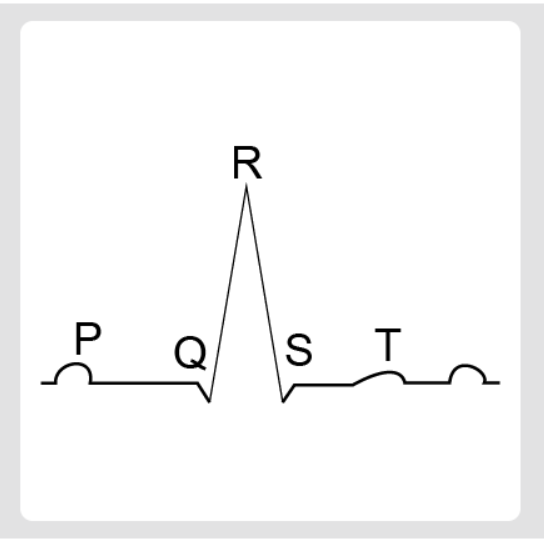
Given below is the ECG of a normal human. Which one of its components are correctly interpreted below?
(a) Complex QRS-One complete pulse
(b) Peak T-Initiation of total cardiac contraction
(c) Peak P and Peak R together- systolic and diastolic blood pressure
(d) Peak P- Initiation of left atrial contraction only
Answer
 Verified
632.4k+ views
Hint: Ten electrodes are placed on the patient's limbs and the chest for a 12-lead ECG. After this, a human heart's electrical potential is measured from twelve different angles and is recorded over a while which can be 10 seconds.
Complete answer:
The process of obtaining a graph of voltage versus time showing the electrical activity of the heart is known as electrocardiography and the graph is known as an electrocardiogram (ECG). The electrical changes that are a consequence of cardiac muscle depolarization and then repolarisation during each heartbeat or cardiac cycle is detected by the electrodes. It is helpful in cardiac electrophysiology.
The depolarization of the ventricles, which initiates the ventricular contraction is represented by the QRS complex, in other words, it is when the ventricles are contracting to pump out blood and is one complete pulse. A human’s heart rate or pulse is determined by the number of QRS complexes occurring in a given time. The normal range is from 120 to 200 ms or 3 to 5 small squares on the ECG paper. The P wave represents the electrical excitation or the depolarization of the atria (the two upper chambers of the heart) which happens just before the atria contract and pumps blood into the ventricles (the two lower chambers of the heart). The peak of the ventricular contraction is represented by R. The Q marks the beginning of the systole. The systole represents contraction and the diastole represents relaxation.
The ST segment tells the end of the contraction of the ventricles and the starting of the rest period prior to the ventricles begins to contract. The T wave represents the repolarization of the ventricles and the resting period of the ventricles. We can say it marks the end of systole.
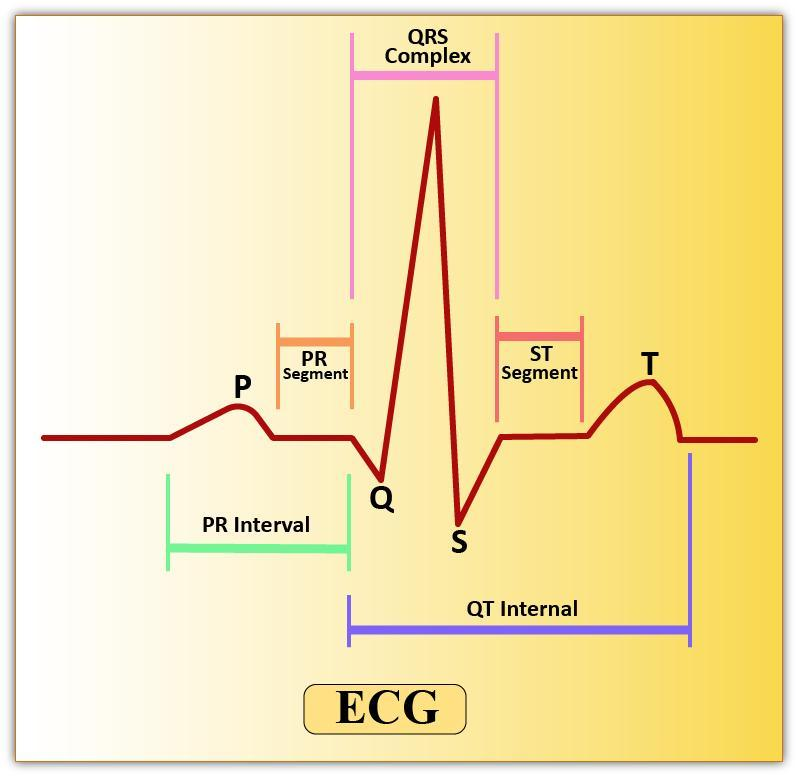
So, the correct answer is ‘Complex QRS-One competes for a pulse’.
Note: EP or cardiac electrophysiology is the study of the conduction system of the heart. It is performed on the right-side cardiac catheterization where a wire with an electrode at the tip is placed inside the right heart chambers. It is placed in various positions in the conduction system so the electrical activity of it can be recorded.
Complete answer:
The process of obtaining a graph of voltage versus time showing the electrical activity of the heart is known as electrocardiography and the graph is known as an electrocardiogram (ECG). The electrical changes that are a consequence of cardiac muscle depolarization and then repolarisation during each heartbeat or cardiac cycle is detected by the electrodes. It is helpful in cardiac electrophysiology.
The depolarization of the ventricles, which initiates the ventricular contraction is represented by the QRS complex, in other words, it is when the ventricles are contracting to pump out blood and is one complete pulse. A human’s heart rate or pulse is determined by the number of QRS complexes occurring in a given time. The normal range is from 120 to 200 ms or 3 to 5 small squares on the ECG paper. The P wave represents the electrical excitation or the depolarization of the atria (the two upper chambers of the heart) which happens just before the atria contract and pumps blood into the ventricles (the two lower chambers of the heart). The peak of the ventricular contraction is represented by R. The Q marks the beginning of the systole. The systole represents contraction and the diastole represents relaxation.
The ST segment tells the end of the contraction of the ventricles and the starting of the rest period prior to the ventricles begins to contract. The T wave represents the repolarization of the ventricles and the resting period of the ventricles. We can say it marks the end of systole.
So, the correct answer is ‘Complex QRS-One competes for a pulse’.
Note: EP or cardiac electrophysiology is the study of the conduction system of the heart. It is performed on the right-side cardiac catheterization where a wire with an electrode at the tip is placed inside the right heart chambers. It is placed in various positions in the conduction system so the electrical activity of it can be recorded.
Recently Updated Pages
Master Class 9 General Knowledge: Engaging Questions & Answers for Success

Master Class 9 Maths: Engaging Questions & Answers for Success
Master Class 9 Science: Engaging Questions & Answers for Success
Master Class 9 English: Engaging Questions & Answers for Success
Master Class 9 Social Science: Engaging Questions & Answers for Success
Class 9 Question and Answer - Your Ultimate Solutions Guide
Trending doubts
One Metric ton is equal to kg A 10000 B 1000 C 100 class 11 physics CBSE
What is cell theory Who formulated it class 11 biology CBSE
Phyllotaxy is the arrangement of ALeaflets BLeaves class 11 biology CBSE
Difference Between Prokaryotic Cells and Eukaryotic Cells
The symbiotic association of fungi and algae is called class 11 biology CBSE
Cell theory was formulated by A Schleiden and Schwann class 11 biology CBSE