




Given an example of a biological kingdom which exhibits gametic meiosis.
(A)Animalia
(B)Plantae
(C)Both A and B
(D)All of the above
Answer
 Verified
594k+ views
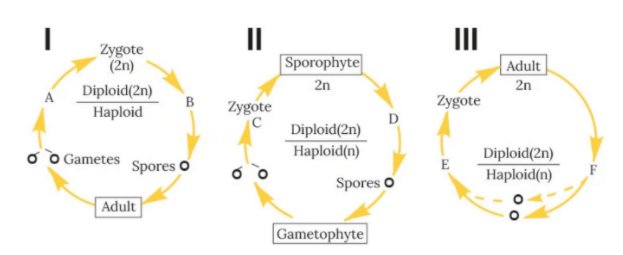
Hint: The image given above is of the gametic meiosis and this type of cycle is seen in all types of sexually reproducing organisms. Meiosis occurs during gamete formation in these types of organisms.
Complete answer:
Gametic meiosis is seen in all sexually reproductive organisms whether they are animals or seed-producing plants. It is known that humans have a diplontic life cycle because the multicellular stage is diploid. The zygote grows by mitosis into a diploid, multicellular organism. a part of this multicellular organism undergoes meiosis to supply haploid cells called gametes within structures called gametangia (gametangium, singular). These gametes fuse to make a diploid zygote. Because gametes are produced by meiosis during this life cycle, each gamete is exclusive.
This is also sometimes called gametic meiosis because meiosis leads to the assembly of gametes. within the life cycle diagram, the gametes are alone on the haploid portion.
Additional Information: Other than the diplontic life cycle, two more cycles are present. Which are:-
-Haplontic:-The organisms that have a haplontic life cycle, such as fungi and some of the green algae, the multicellular stage is haploid. In this case, as soon as the diploid zygote is formed, it undergoes meiosis to produce haploid spores inside structures called sporangia (sporangium, singular). Spores can be distinguished from gametes, not by how they are produced, but based on what they do afterward: spores grow, gametes fuse.
-Haplodiplontic: In this, there are two multicellular stages, one haploid and one diploid
For some of the marine algae and all plants, the haplodiplontic life cycle becomes more complex. To complete one life cycle, there are at least two multicellular individuals. The diploid zygote grows by mitosis to become a multicellular diploid organism, the sporophyte. A sporophyte produces haploid spores through meiosis in sporangia. These spores then grow by mitosis into multicellular haploid organisms, the gametophyte. During mitosis haploid gametes are produced by a gametophyte in gametangia. A diploid zygote is formed by the fusion of gametes.
So, the correct answer is ‘Both A and B’.
Note: Haplodiplontic Life Cycle is a very complex life cycle and this life cycle is also referred to as alternation of generations and, according to some scientists it is also known as sporic meiosis because meiosis produces spores.
Complete answer:
Gametic meiosis is seen in all sexually reproductive organisms whether they are animals or seed-producing plants. It is known that humans have a diplontic life cycle because the multicellular stage is diploid. The zygote grows by mitosis into a diploid, multicellular organism. a part of this multicellular organism undergoes meiosis to supply haploid cells called gametes within structures called gametangia (gametangium, singular). These gametes fuse to make a diploid zygote. Because gametes are produced by meiosis during this life cycle, each gamete is exclusive.
This is also sometimes called gametic meiosis because meiosis leads to the assembly of gametes. within the life cycle diagram, the gametes are alone on the haploid portion.
Additional Information: Other than the diplontic life cycle, two more cycles are present. Which are:-
-Haplontic:-The organisms that have a haplontic life cycle, such as fungi and some of the green algae, the multicellular stage is haploid. In this case, as soon as the diploid zygote is formed, it undergoes meiosis to produce haploid spores inside structures called sporangia (sporangium, singular). Spores can be distinguished from gametes, not by how they are produced, but based on what they do afterward: spores grow, gametes fuse.
-Haplodiplontic: In this, there are two multicellular stages, one haploid and one diploid
For some of the marine algae and all plants, the haplodiplontic life cycle becomes more complex. To complete one life cycle, there are at least two multicellular individuals. The diploid zygote grows by mitosis to become a multicellular diploid organism, the sporophyte. A sporophyte produces haploid spores through meiosis in sporangia. These spores then grow by mitosis into multicellular haploid organisms, the gametophyte. During mitosis haploid gametes are produced by a gametophyte in gametangia. A diploid zygote is formed by the fusion of gametes.
So, the correct answer is ‘Both A and B’.
Note: Haplodiplontic Life Cycle is a very complex life cycle and this life cycle is also referred to as alternation of generations and, according to some scientists it is also known as sporic meiosis because meiosis produces spores.
Recently Updated Pages
Master Class 12 Social Science: Engaging Questions & Answers for Success

Master Class 12 Physics: Engaging Questions & Answers for Success
Master Class 12 Maths: Engaging Questions & Answers for Success
Master Class 12 Economics: Engaging Questions & Answers for Success
Master Class 12 Chemistry: Engaging Questions & Answers for Success
Master Class 12 Business Studies: Engaging Questions & Answers for Success
Trending doubts
Which are the Top 10 Largest Countries of the World?
Draw a labelled sketch of the human eye class 12 physics CBSE
Explain the structure of megasporangium class 12 biology CBSE
What are the major means of transport Explain each class 12 social science CBSE
How many chromosomes are found in human ovum a 46 b class 12 biology CBSE
The diagram of the section of a maize grain is given class 12 biology CBSE