




Geocarpic fruit is a
(a) Carrot
(b) Radish
(c) Groundnut
(d) Turnip
Answer
 Verified
674.7k+ views
Hint: It is a kind of false fruit arising from some parts of the plants other than the ovary.
Complete answer:
Geocarpic fruit is groundnut. Geocarpy refers to an extremely rare means of plant reproduction. Here the plants produce via diaspores within the soil. This has evolved as an effective means of ensuring a suitable environment for the plant's offspring.
Geocarpic means production or ripening of the fruit beneath the surface of the ground like the peanuts. Peanut is also named Hypogea, which means under the earth. After pollination, the flower stalk elongates, and then it bends until the ovary touches the ground. Stalk growth continues and then it pushes the ovary underground, where the mature fruit develops into a legume pod. Thus peanut a classical example of geocarpic fruit. Geocarpy is generally seen in tropical or semi-desert areas. Some geocarpic species are found in the families Convolvulaceae, Moraceae, Cucurbitaceae, Araceae, Begoniaceae, Brassicaceae (Cruciferae), Fabaceae (Leguminosae), and Rubiaceae. The best-known example of Geocarpy is the peanut, that is, Arachis hypogaea.
So, the correct answer is ‘Groundnut’.
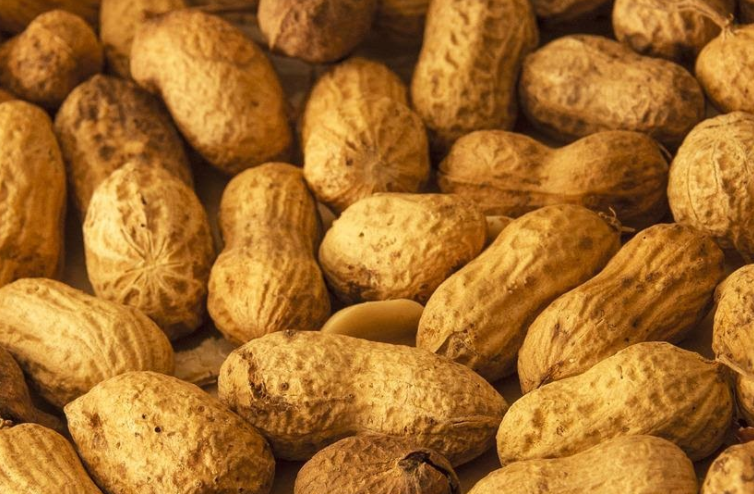
Note: For reproduction, geocarpic plants bend their stems so that the fruit can be embedded in the soil but the fruit remains attached to the plant. Peanuts are self-pollinating plants, they do not require outside aid, like bees or other insects to carry their pollen from one plant to another during reproduction. After the seed is planted, the first flowers begin to appear within four to six weeks and then they continue blooming for six or more weeks.
Complete answer:
Geocarpic fruit is groundnut. Geocarpy refers to an extremely rare means of plant reproduction. Here the plants produce via diaspores within the soil. This has evolved as an effective means of ensuring a suitable environment for the plant's offspring.
Geocarpic means production or ripening of the fruit beneath the surface of the ground like the peanuts. Peanut is also named Hypogea, which means under the earth. After pollination, the flower stalk elongates, and then it bends until the ovary touches the ground. Stalk growth continues and then it pushes the ovary underground, where the mature fruit develops into a legume pod. Thus peanut a classical example of geocarpic fruit. Geocarpy is generally seen in tropical or semi-desert areas. Some geocarpic species are found in the families Convolvulaceae, Moraceae, Cucurbitaceae, Araceae, Begoniaceae, Brassicaceae (Cruciferae), Fabaceae (Leguminosae), and Rubiaceae. The best-known example of Geocarpy is the peanut, that is, Arachis hypogaea.
So, the correct answer is ‘Groundnut’.
Note: For reproduction, geocarpic plants bend their stems so that the fruit can be embedded in the soil but the fruit remains attached to the plant. Peanuts are self-pollinating plants, they do not require outside aid, like bees or other insects to carry their pollen from one plant to another during reproduction. After the seed is planted, the first flowers begin to appear within four to six weeks and then they continue blooming for six or more weeks.
Recently Updated Pages
Master Class 10 Computer Science: Engaging Questions & Answers for Success

Differentiate between voluntary action and reflex class 10 biology CBSE
The uses of bleaching powder are A It is used bleaching class 10 chemistry CBSE
Fill in the blanks with abstract nouns of the words class 10 english CBSE
How many threedigit numbers are there class 10 maths CBSE
What is a reflex arc class 10 biology CBSE
Trending doubts
Explain the Treaty of Vienna of 1815 class 10 social science CBSE
10 examples of evaporation in daily life with explanations
Which country is known as "The land of Fire and Ice"?
What is the full form of POSCO class 10 social science CBSE
Make a sketch of the human nerve cell What function class 10 biology CBSE
In which year voting age was reduced from 21 to 18?