



Gemmules take part in
A) Sexual reproduction
B) Asexual reproduction
C) Digestion
D) Development of water current in sponges
Answer
 Verified
613.8k+ views
Hint: It is a type of reproduction in which organisms make their own type without interchanging their genetic information with other organisms. It is done by single-celled organisms and their population growth is rapid.
Complete step by step answer:
The Sponges are found to be involved in both sexual and asexual reproduction.
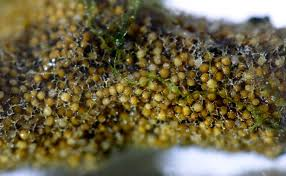
- Gemmules are the structure, which takes part in the asexual reproduction of sponges.
Gemmules: It is a group of cells that surrounds a protective covering that has the ability to divide and grow into a new organism or adult freshwater sponge.
- It is a type of internal budding and generally takes place because of the formation of internal buds to hold out against unfavorable environmental conditions( harsh climate, drought).
- Gemmules can be seen as a ball- like structure that has a thick layer of small spicules made up of silica with a central mass of amoeboid cells.
- This structure is found in the freshwater sponge-like Spongilla including some marine species like sea sponges and ficulina ficus.
So, the correct answer is, "Asexual reproduction".
Additional information:
- Gemmules are usually normal size, look like a hardball, and loaded with food mass along with reproductive cells.
- During development, gemmule cells come out through a small opening called micropyle for reproducing asexually in favorable condition.
Sexual reproduction: Sponges are mainly hermaphrodite means they produce both eggs and sperms and their fusion leads to the development of new offspring.
- Asexual reproduction in sponges also takes through budding mainly known as external budding in which some parts of the sponge break and regenerate into a new organism.
Note:
- Sponges are able to make only one type of gamete at a time and they were able to reproduce both sexually and asexually.
- Two types of asexual reproduction take place in Sponges- external budding and internal budding.
Complete step by step answer:
The Sponges are found to be involved in both sexual and asexual reproduction.
- Gemmules are the structure, which takes part in the asexual reproduction of sponges.
Gemmules: It is a group of cells that surrounds a protective covering that has the ability to divide and grow into a new organism or adult freshwater sponge.
- It is a type of internal budding and generally takes place because of the formation of internal buds to hold out against unfavorable environmental conditions( harsh climate, drought).
- Gemmules can be seen as a ball- like structure that has a thick layer of small spicules made up of silica with a central mass of amoeboid cells.
- This structure is found in the freshwater sponge-like Spongilla including some marine species like sea sponges and ficulina ficus.
So, the correct answer is, "Asexual reproduction".
Additional information:
- Gemmules are usually normal size, look like a hardball, and loaded with food mass along with reproductive cells.
- During development, gemmule cells come out through a small opening called micropyle for reproducing asexually in favorable condition.
Sexual reproduction: Sponges are mainly hermaphrodite means they produce both eggs and sperms and their fusion leads to the development of new offspring.
- Asexual reproduction in sponges also takes through budding mainly known as external budding in which some parts of the sponge break and regenerate into a new organism.
Note:
- Sponges are able to make only one type of gamete at a time and they were able to reproduce both sexually and asexually.
- Two types of asexual reproduction take place in Sponges- external budding and internal budding.
Recently Updated Pages
Master Class 12 Economics: Engaging Questions & Answers for Success

Master Class 12 English: Engaging Questions & Answers for Success
Master Class 12 Social Science: Engaging Questions & Answers for Success
Master Class 12 Maths: Engaging Questions & Answers for Success
Master Class 12 Physics: Engaging Questions & Answers for Success
Master Class 11 Social Science: Engaging Questions & Answers for Success
Trending doubts
One Metric ton is equal to kg A 10000 B 1000 C 100 class 11 physics CBSE
Difference Between Prokaryotic Cells and Eukaryotic Cells
Find the value of the expression given below sin 30circ class 11 maths CBSE
1 ton equals to A 100 kg B 1000 kg C 10 kg D 10000 class 11 physics CBSE
Two of the body parts which do not appear in MRI are class 11 biology CBSE
Draw a diagram of nephron and explain its structur class 11 biology CBSE