




What is the function of the adrenaline hormone in the body?
Answer
 Verified
595.5k+ views
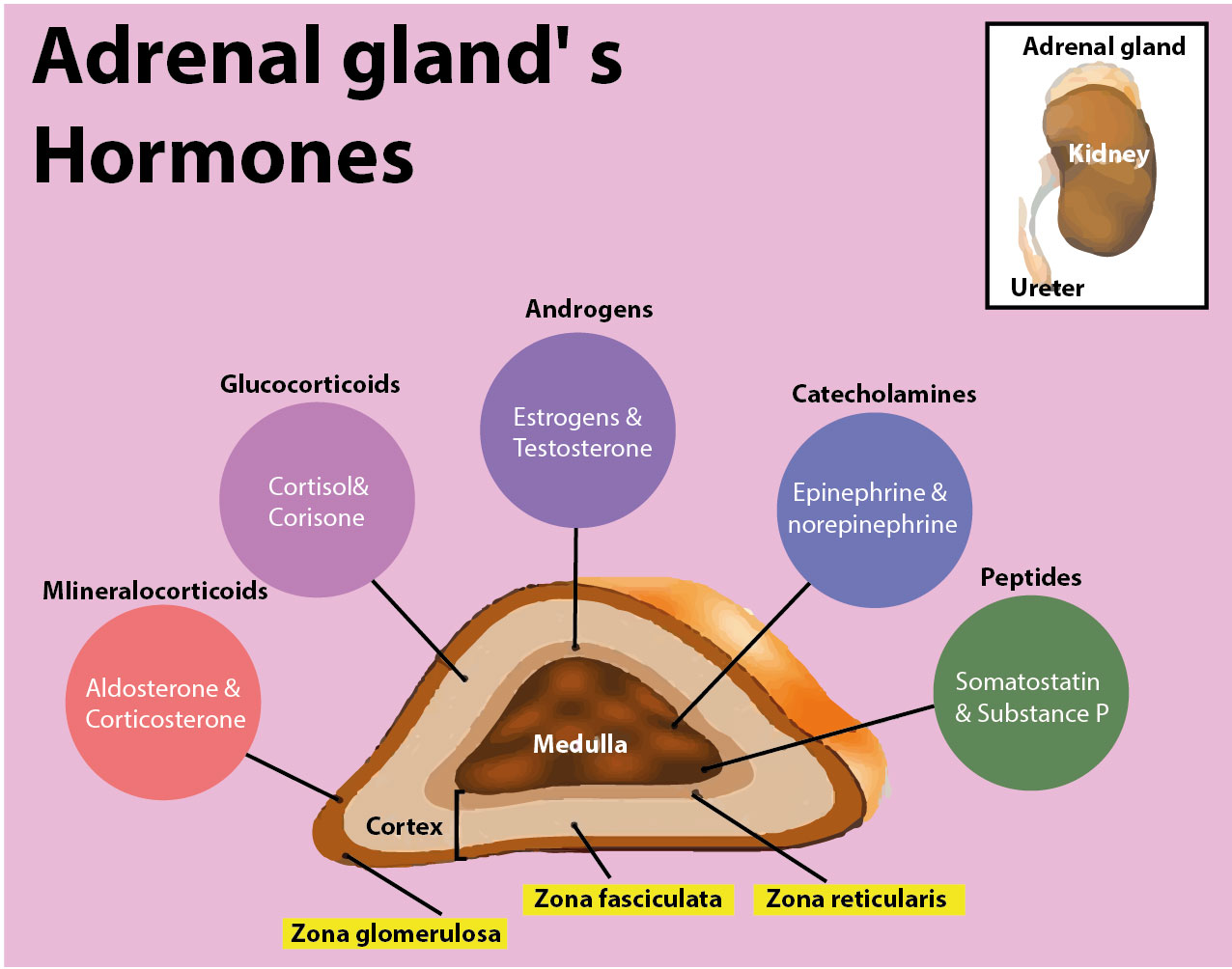
Hint: Epinephrine, also called adrenaline, a hormone that is secreted mainly by the medulla of the adrenal glands. Epinephrine is very closely related to the structure of norepinephrine,, differing only in the presence of a methyl group on the nitrogen side chain.
Complete answer:
Adrenaline hormone which is commonly known as an emergency hormone or triple F hormone (FFF- Fight, Fright, Flight). This hormone is produced within the medulla within the adrenal glands and also in the number of the central nervous system's neurons. Within a few minutes during a stressful situation, it's quickly released into the blood, sending impulses to organs to make a selected response. The impact of adrenaline which releases in our body are as follows:
Adrenaline triggers the body's fight-or-flight response. Due to this reaction, air passages dilate to supply the muscles with the oxygen they have to either fight the danger or flee.
It also triggers the blood vessels to contract to re-direct blood toward major muscle groups, including the guts and lungs.
The body's ability to feel pain will surely decrease as a result of adrenaline.
Blood vessels dilate (enlarge) in our muscles.
Blood vessels constrict in our alimentary canal to slow digestion.
Kidneys make more renin (to increase blood pressure).
Glucose production increases, for energy.
After the strain has subsided, adrenaline’s effect can last for up to an hour.
Note: The human being has two adrenal glands, out of which the right gland is pyramidal in shape and the left gland is semilunar in shape and also the left adrenal gland is usually comparatively larger than the right adrenal gland.
Complete answer:
Adrenaline hormone which is commonly known as an emergency hormone or triple F hormone (FFF- Fight, Fright, Flight). This hormone is produced within the medulla within the adrenal glands and also in the number of the central nervous system's neurons. Within a few minutes during a stressful situation, it's quickly released into the blood, sending impulses to organs to make a selected response. The impact of adrenaline which releases in our body are as follows:
Adrenaline triggers the body's fight-or-flight response. Due to this reaction, air passages dilate to supply the muscles with the oxygen they have to either fight the danger or flee.
It also triggers the blood vessels to contract to re-direct blood toward major muscle groups, including the guts and lungs.
The body's ability to feel pain will surely decrease as a result of adrenaline.
Blood vessels dilate (enlarge) in our muscles.
Blood vessels constrict in our alimentary canal to slow digestion.
Kidneys make more renin (to increase blood pressure).
Glucose production increases, for energy.
After the strain has subsided, adrenaline’s effect can last for up to an hour.
Note: The human being has two adrenal glands, out of which the right gland is pyramidal in shape and the left gland is semilunar in shape and also the left adrenal gland is usually comparatively larger than the right adrenal gland.
Recently Updated Pages
Master Class 11 English: Engaging Questions & Answers for Success

Master Class 11 Social Science: Engaging Questions & Answers for Success
Master Class 11 Maths: Engaging Questions & Answers for Success
Master Class 11 Biology: Engaging Questions & Answers for Success
Master Class 11 Physics: Engaging Questions & Answers for Success
Master Class 11 Chemistry: Engaging Questions & Answers for Success
Trending doubts
One Metric ton is equal to kg A 10000 B 1000 C 100 class 11 physics CBSE
Difference Between Prokaryotic Cells and Eukaryotic Cells
Find the value of the expression given below sin 30circ class 11 maths CBSE
1 ton equals to A 100 kg B 1000 kg C 10 kg D 10000 class 11 physics CBSE
Two of the body parts which do not appear in MRI are class 11 biology CBSE
What are hard magnetic materials class 11 physics CBSE