




For self-pollination, flower must be
A.Unisexual
B.Bisexual
C.Monosexual
D.Asexual
Answer
 Verified
603.9k+ views
Hint: Pollination is a process in which pollen grains are transferred from anther to stigma. It results in fertilization of female gamete with male gamete. There are two types i.e. Self-pollination and cross pollination. Self-pollination takes place within the flower. Cross pollination occurs from one to another flower.
Complete answer:
Pollination is of two types.
(a) Self-pollination (autogamy): It takes place within a flower
(b) Cross-pollination (allogamy): It occurs from one flower to another flower.
It is of two subtypes:
(i) Geitonogamy: It is from one flower to another flower on the same plant. Genetically, it is a self-pollination ecologically a cross-pollination
(ii) Xenogamy: It is a true cross-pollination that occurs from one plant to another plant.
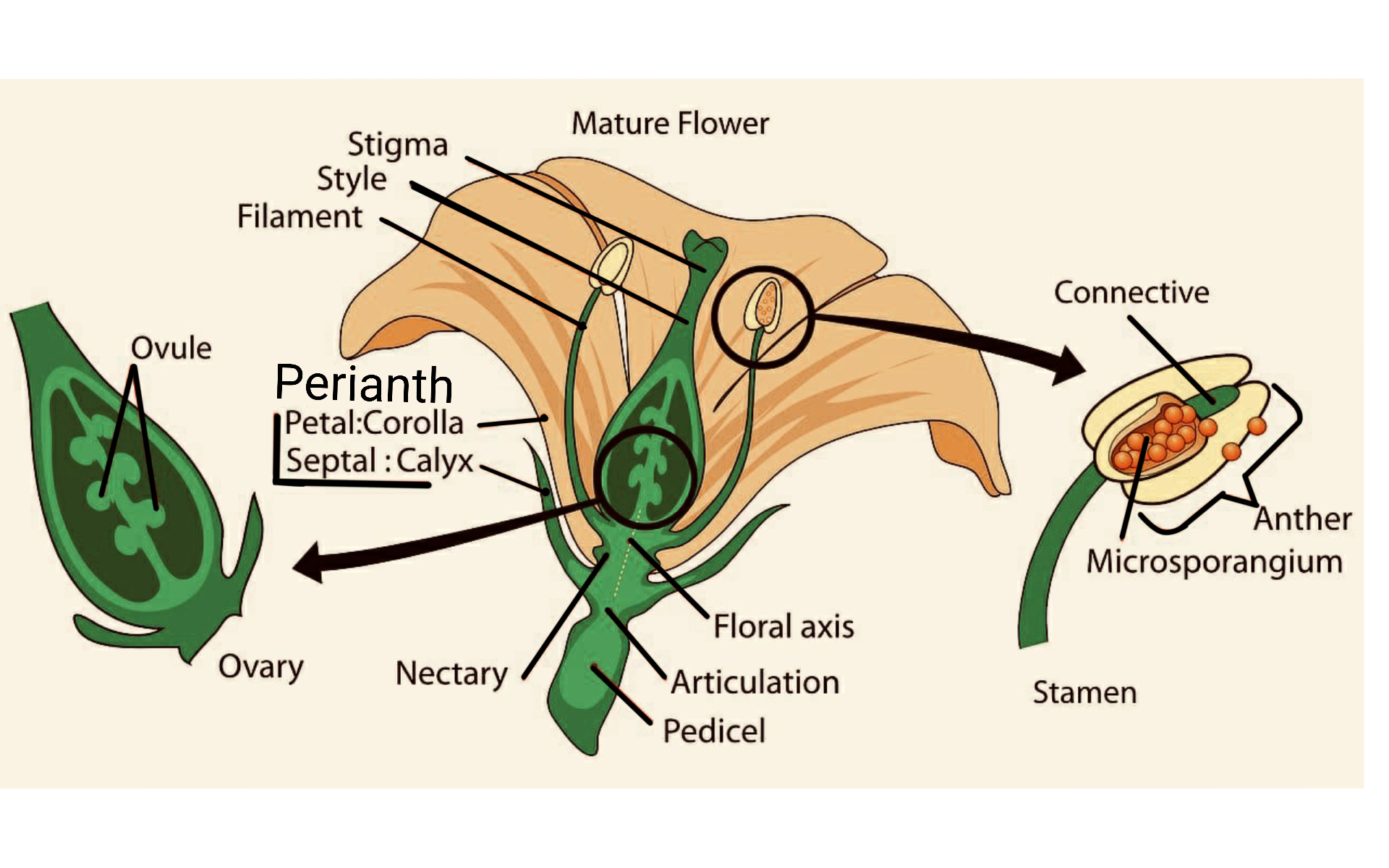
self-pollination : It is true pollination. The pollen grains are tranfered from anther to stigma within same flower which means they need to be bisexual. It does not require pollination.
Adaptations for self-pollination: The most favourable conditions for self-pollination are as under:
(i) Bisexuality: Bisexual flowers ensures self-pollination.
(ii) Homogamy : It is a condition where stamen and carpel mature at the same time.
(iii) Cleistogamy :Cleistogamous flowers never open and seed setting in these flowers occur without the exposition of their sex-organs as these flowers are bisexual. Commelina benghalensis is the striking example of cleistogamy. Other examples include members of family Violaceae, Balsaminaceae and Polygonaceae.
Cleistogamy ensures self-pollination as there are no chances of cross-pollination.
In Commelina benghalensis and Arachis hypogea (groundnut) cleistogamy is accompanied by geocarpy (formation of fruits below the soil).
Hence, the correct answer is option (B)
Note: Advantage/Disadvantage of self-pollination
(a) Self-pollination is almost certain in a bisexual flower. It is an independent process.
(b) Another advantage is purity of generation.
(c) The most distinct disadvantage of self-pollination is that it results in a weaker progeny if it continues for several generations.
Complete answer:
Pollination is of two types.
(a) Self-pollination (autogamy): It takes place within a flower
(b) Cross-pollination (allogamy): It occurs from one flower to another flower.
It is of two subtypes:
(i) Geitonogamy: It is from one flower to another flower on the same plant. Genetically, it is a self-pollination ecologically a cross-pollination
(ii) Xenogamy: It is a true cross-pollination that occurs from one plant to another plant.
self-pollination : It is true pollination. The pollen grains are tranfered from anther to stigma within same flower which means they need to be bisexual. It does not require pollination.
Adaptations for self-pollination: The most favourable conditions for self-pollination are as under:
(i) Bisexuality: Bisexual flowers ensures self-pollination.
(ii) Homogamy : It is a condition where stamen and carpel mature at the same time.
(iii) Cleistogamy :Cleistogamous flowers never open and seed setting in these flowers occur without the exposition of their sex-organs as these flowers are bisexual. Commelina benghalensis is the striking example of cleistogamy. Other examples include members of family Violaceae, Balsaminaceae and Polygonaceae.
Cleistogamy ensures self-pollination as there are no chances of cross-pollination.
In Commelina benghalensis and Arachis hypogea (groundnut) cleistogamy is accompanied by geocarpy (formation of fruits below the soil).
Hence, the correct answer is option (B)
Note: Advantage/Disadvantage of self-pollination
(a) Self-pollination is almost certain in a bisexual flower. It is an independent process.
(b) Another advantage is purity of generation.
(c) The most distinct disadvantage of self-pollination is that it results in a weaker progeny if it continues for several generations.
Recently Updated Pages
Master Class 12 Business Studies: Engaging Questions & Answers for Success

Master Class 12 Biology: Engaging Questions & Answers for Success
Master Class 12 Chemistry: Engaging Questions & Answers for Success
Class 12 Question and Answer - Your Ultimate Solutions Guide
Master Class 11 English: Engaging Questions & Answers for Success
Master Class 11 Social Science: Engaging Questions & Answers for Success
Trending doubts
Differentiate between homogeneous and heterogeneous class 12 chemistry CBSE
What is the Full Form of PVC, PET, HDPE, LDPE, PP and PS ?
Sulphuric acid is known as the king of acids State class 12 chemistry CBSE
The electric field due to a uniformly charged nonconducting class 12 physics CBSE
In a halfwave rectifier the rms value of the ac component class 12 physics CBSE
What is apomixis and what is its importance class 12 biology CBSE