




For reading small letters with a lens
a) one has to keep a convex lens at a distance between F and 2F from the book
b) one has to keep a concave lens at a distance less than the focal length from the book
c) one has to keep a concave lens at a distance between F and 2F from the book
d) one has to keep a convex lens at a distance less than the focal length from the book
e) None of these
Answer
 Verified
586.5k+ views
Hint: Images produced by a concave lens are always virtual, erect, and diminished and the decrease in the size of the image depends on the position of the object. Therefore, the concave lens will shrink the size of the already small letters.
Whereas, a convex lens produces a real and virtual, erect and inverted, diminished, same sized and magnified image of the object, depending upon the position of the object on the principal axis.
So, we need to study the image formation by a convex lens when placed on various positions on the principal axis.
Complete step by step answer:
We have six cases of image formation by a convex lens.
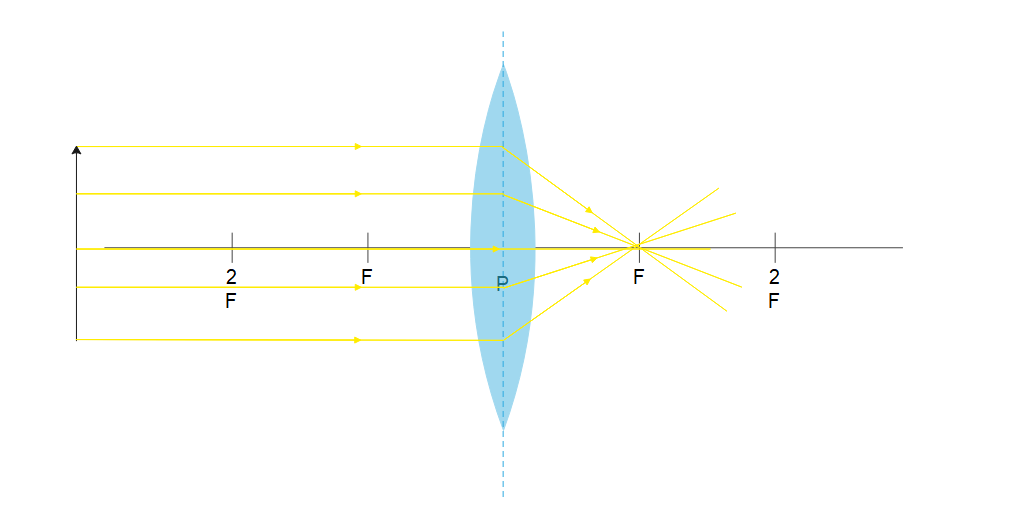
Case-I: When the object is at infinity.
The real image is formed at focus and is much smaller than that of the object.
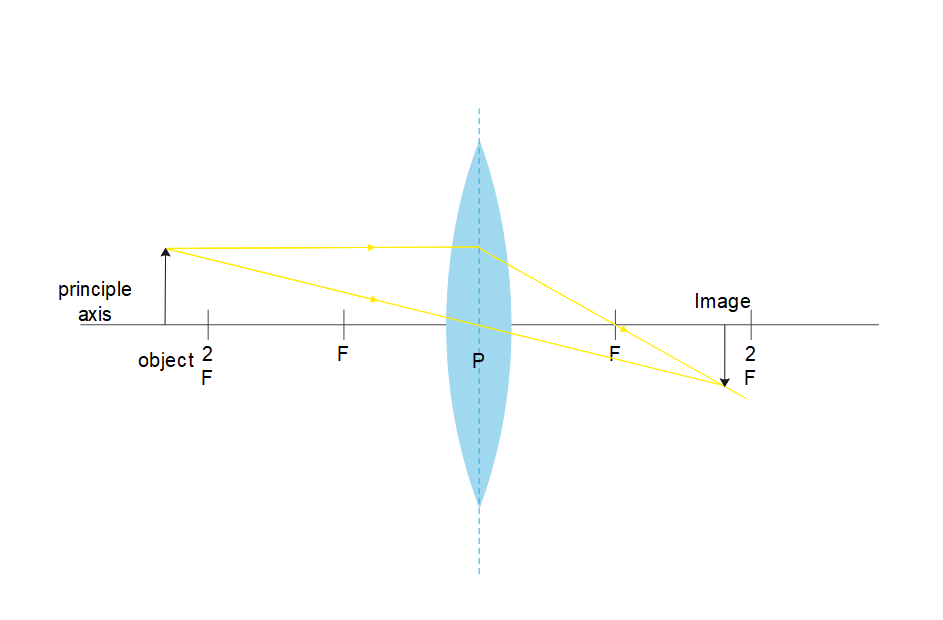
Case-II: When an object is placed after the center of curvature C.
The real image is formed between the center of curvature and focus and is similar to the size of the object.
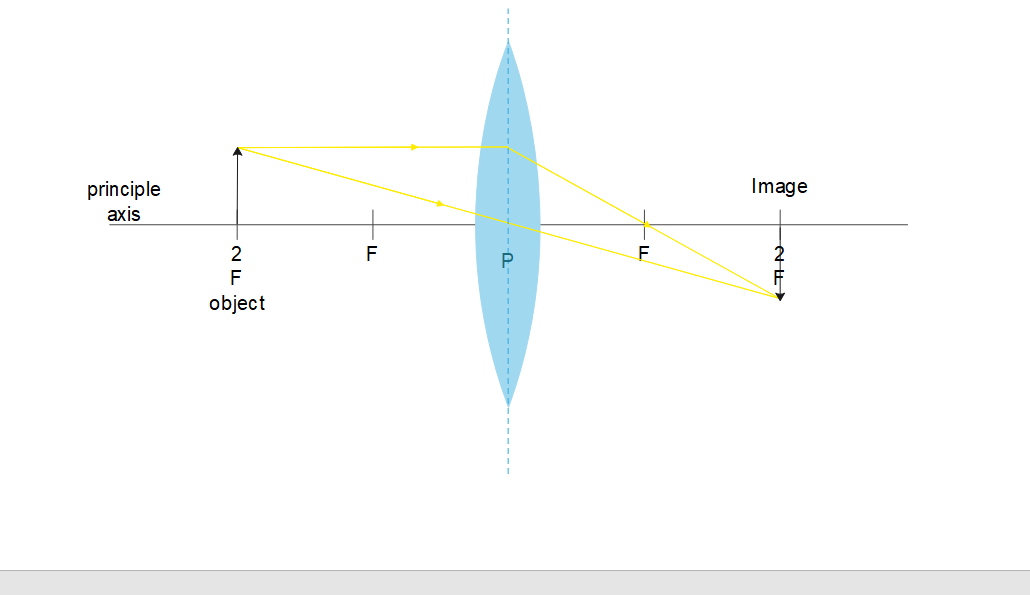
Case-III: When the object is at the center of curvature C.
The real image is formed at the center of curvature and is of the same size as compared to the object.
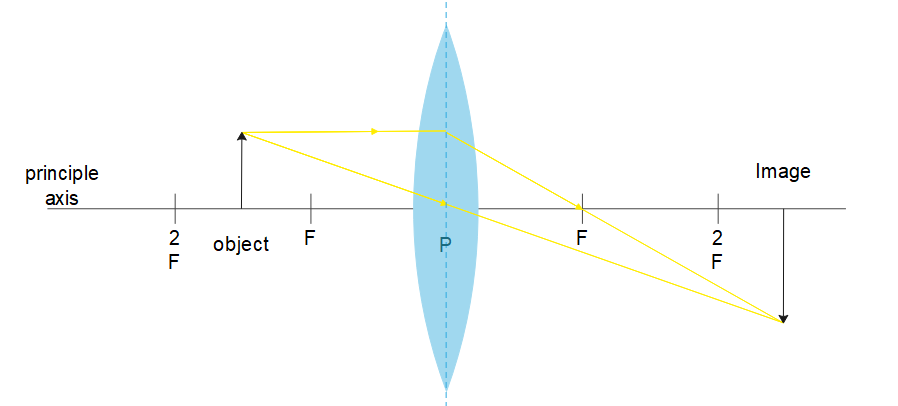
Case-IV: When object is between center of curvature C and focus F.
The real image is formed behind the center of curvature and is larger in size than that of the object.
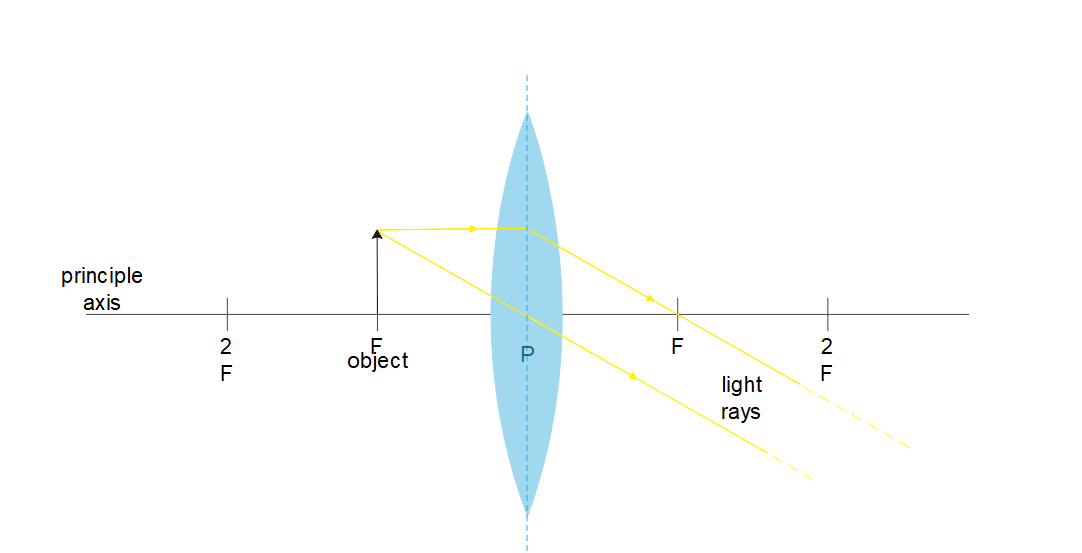
Case-V: When the object is at focus F.
The real image is formed at infinity and is much larger than the object.
Case-VI: When the object is between focus F and pole P.
A virtual image is formed which is much larger than the object.
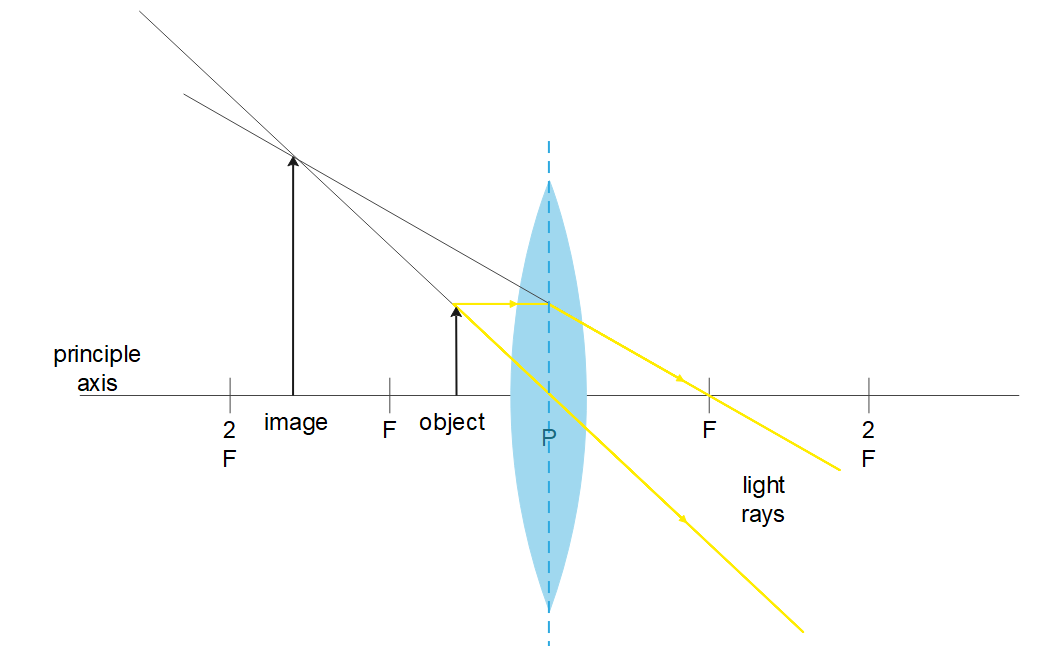
Therefore, we can say that when an object is placed at a distance less than the focal length of a convex lens, an enlarged and erect image is formed.
So, for reading the small letters, we need to place the convex lens at a distance less than its focus from the book.
So, the correct answer is “Option D”.
Note:
Convex lenses are also known as converging lenses since the rays converge after falling on the convex lens while the concave lenses are known as diverging lenses as the rays diverge after falling on the concave lens.
Whereas, a convex lens produces a real and virtual, erect and inverted, diminished, same sized and magnified image of the object, depending upon the position of the object on the principal axis.
So, we need to study the image formation by a convex lens when placed on various positions on the principal axis.
Complete step by step answer:
We have six cases of image formation by a convex lens.
Case-I: When the object is at infinity.
The real image is formed at focus and is much smaller than that of the object.
Case-II: When an object is placed after the center of curvature C.
The real image is formed between the center of curvature and focus and is similar to the size of the object.
Case-III: When the object is at the center of curvature C.
The real image is formed at the center of curvature and is of the same size as compared to the object.
Case-IV: When object is between center of curvature C and focus F.
The real image is formed behind the center of curvature and is larger in size than that of the object.
Case-V: When the object is at focus F.
The real image is formed at infinity and is much larger than the object.
Case-VI: When the object is between focus F and pole P.
A virtual image is formed which is much larger than the object.
Therefore, we can say that when an object is placed at a distance less than the focal length of a convex lens, an enlarged and erect image is formed.
So, for reading the small letters, we need to place the convex lens at a distance less than its focus from the book.
So, the correct answer is “Option D”.
Note:
Convex lenses are also known as converging lenses since the rays converge after falling on the convex lens while the concave lenses are known as diverging lenses as the rays diverge after falling on the concave lens.
Recently Updated Pages
Basicity of sulphurous acid and sulphuric acid are

Master Class 12 English: Engaging Questions & Answers for Success
Master Class 12 Social Science: Engaging Questions & Answers for Success
Master Class 12 Maths: Engaging Questions & Answers for Success
Master Class 12 Economics: Engaging Questions & Answers for Success
Master Class 12 Physics: Engaging Questions & Answers for Success
Trending doubts
Draw a labelled sketch of the human eye class 12 physics CBSE
Which are the Top 10 Largest Countries of the World?
Draw ray diagrams each showing i myopic eye and ii class 12 physics CBSE
Giving reasons state the signs positive or negative class 12 physics CBSE
Explain esterification reaction with the help of a class 12 chemistry CBSE
What is defined as a solenoid Depict a diagram with class 12 physics CBSE