




For a rectangular hyperbola $xy = {c^2}$, what is the length of the transverse axis, length of conjugate axis and length of latus rectum?
Answer
 Verified
647.1k+ views
Hint: In this question use the concept that in a rectangular hyperbola the length of transverse axis, length of conjugate axis and length of latus rectum all are equal and it is along the line y = x. Use this to find the coordinates and therefore apply distance formula to get the respective lengths.
Complete Step-by-Step solution:
Given equation of rectangular hyperbola is $xy = {c^2}$...................... (1)
Now as we know that in a rectangular hyperbola the length of transverse axis, length of conjugate axis and length of latus rectum all are equal and it is along y = x................. (2).
So from equation (1) we have,
$ \Rightarrow x.x = {c^2}$
$ \Rightarrow {x^2} = {c^2}$
Now take square root on both sides we have,
$ \Rightarrow x = \sqrt {{c^2}} = \pm c$
Now from equation (2) we have,
$ \Rightarrow y = \pm c$
Therefore (x, y) = (c, c) and (-c, -c)
Now as we know distance between two points ($x_1$, $y_1$) and ($x_2$, $y_2$) is
$d = \sqrt {{{\left( {{x_2} - {x_1}} \right)}^2} + {{\left( {{y_2} - {y_1}} \right)}^2}} $
Let ($x_1$, $y_1$) = (c, c)
And ($x_2$, $y_2$) = (-c, -c) is
Therefore the distance is
$ \Rightarrow d = \sqrt {{{\left( { - c - c} \right)}^2} + {{\left( { - c - c} \right)}^2}} = \sqrt {4{c^2} + 4{c^2}} = 2c\sqrt 2 $
So the length of transverse axis, length of conjugate axis and length of latus rectum is $2c\sqrt 2 $.
So this is the required answer.
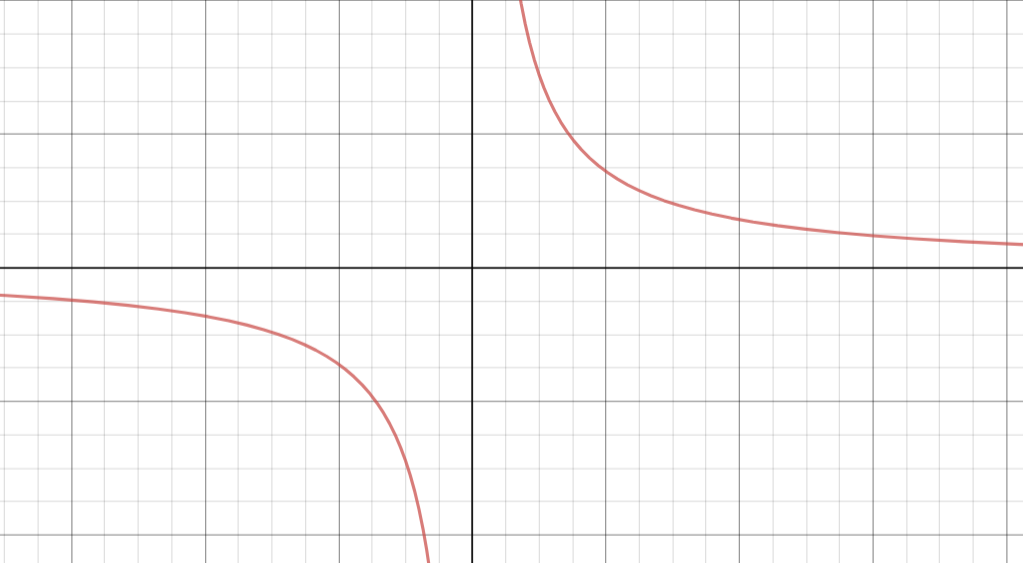
Note: A particular kind of hyperbola in which lengths of transverse and conjugate axis are equal is called a rectangular or an equilateral hyperbola. The eccentricity of the rectangular hyperbola is $\sqrt 2 $. The vertices of a rectangular hyperbola is given as $\left( {c,c} \right){\text{ and }}\left( { - c, - c} \right)$, with foci as $\left( {\sqrt 2 c,\sqrt 2 c} \right){\text{ and }}\left( { - \sqrt 2 c, - \sqrt 2 c} \right)$, the directrices is given as $x + y = \pm c$, for general equation of $xy = {c^2}$. The graphical representation of this hyperbola is shown as
Complete Step-by-Step solution:
Given equation of rectangular hyperbola is $xy = {c^2}$...................... (1)
Now as we know that in a rectangular hyperbola the length of transverse axis, length of conjugate axis and length of latus rectum all are equal and it is along y = x................. (2).
So from equation (1) we have,
$ \Rightarrow x.x = {c^2}$
$ \Rightarrow {x^2} = {c^2}$
Now take square root on both sides we have,
$ \Rightarrow x = \sqrt {{c^2}} = \pm c$
Now from equation (2) we have,
$ \Rightarrow y = \pm c$
Therefore (x, y) = (c, c) and (-c, -c)
Now as we know distance between two points ($x_1$, $y_1$) and ($x_2$, $y_2$) is
$d = \sqrt {{{\left( {{x_2} - {x_1}} \right)}^2} + {{\left( {{y_2} - {y_1}} \right)}^2}} $
Let ($x_1$, $y_1$) = (c, c)
And ($x_2$, $y_2$) = (-c, -c) is
Therefore the distance is
$ \Rightarrow d = \sqrt {{{\left( { - c - c} \right)}^2} + {{\left( { - c - c} \right)}^2}} = \sqrt {4{c^2} + 4{c^2}} = 2c\sqrt 2 $
So the length of transverse axis, length of conjugate axis and length of latus rectum is $2c\sqrt 2 $.
So this is the required answer.
Note: A particular kind of hyperbola in which lengths of transverse and conjugate axis are equal is called a rectangular or an equilateral hyperbola. The eccentricity of the rectangular hyperbola is $\sqrt 2 $. The vertices of a rectangular hyperbola is given as $\left( {c,c} \right){\text{ and }}\left( { - c, - c} \right)$, with foci as $\left( {\sqrt 2 c,\sqrt 2 c} \right){\text{ and }}\left( { - \sqrt 2 c, - \sqrt 2 c} \right)$, the directrices is given as $x + y = \pm c$, for general equation of $xy = {c^2}$. The graphical representation of this hyperbola is shown as
Recently Updated Pages
Master Class 12 Economics: Engaging Questions & Answers for Success

Master Class 12 English: Engaging Questions & Answers for Success
Master Class 12 Social Science: Engaging Questions & Answers for Success
Master Class 12 Maths: Engaging Questions & Answers for Success
Master Class 12 Physics: Engaging Questions & Answers for Success
Master Class 9 General Knowledge: Engaging Questions & Answers for Success
Trending doubts
Explain the Treaty of Vienna of 1815 class 10 social science CBSE
Why is it 530 pm in india when it is 1200 afternoon class 10 social science CBSE
What is the full form of POSCO class 10 social science CBSE
Define Potential, Developed, Stock and Reserved resources
The speaker of the Lok Sabha is elected by the APresident class 10 social science CBSE
Complete the sentence with the most appropriate word class 10 english CBSE