




Find the frequency of ac mains with a sonometer.
Answer
 Verified
543.6k+ views
Hint:A monochord, also known as sonometer, is an ancient musical and scientific laboratory instrument, involving one string. The term monochord is sometimes used as the class-name for any musical stringed instrument having only one string and a stick shaped body, also known as musical bows.
Complete answer:
The goal is to use a sonometer to determine the frequency of the AC mains.
Apparatus: a sonometer (with soft iron wire), eight tuning forks, a half kilogramme hanger, seven half kilogramme slotted weights, a clamp, a stand, a rubber pad, a paper rider, and a metre scale.
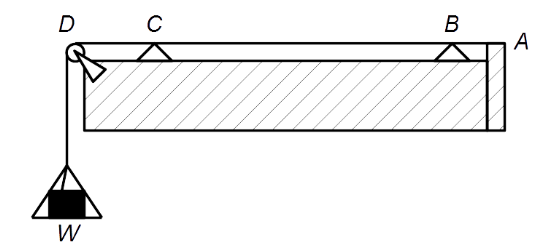
Procedure:As illustrated in the illustration, place the sonometer on the table.
-To make the pulley frictionless, oil it.
-Attach the hanger to an appropriate maximum weight.
-To incorporate the maximum length of wire AB between them, move the wooden bridge P outward.
-From the collection of tuning forks, choose the one with the lowest frequency. Strike its prong on a rubber pad to make it vibrate. Bring the fork up to your ear's level.
-Remove the AB wire from the centre and let it vibrate.
-Listen to both the tuning fork and the wire to determine which has the lower frequency.
-Move the bridges inside and check the frequencies again, as the lengthy wire may have less frequency.
-Continue reducing the length of the wire until the frequency of the wire equals the tuning fork's frequency.
-In the middle of the wire AB, place an inverted V-shaped paper rider. With a sonometer board, vibrate the tuning fork and contact the bottom end of its handle. The paper rider falls when the wire AB vibrates due to resonance.
-In the ‘length decreasing' column, note the length of the wire AB between the margins of two bridges.
-Bring the bridges closer together and gradually increase the length of the wire until the rider falls.
-Make a note of the wire's length in the "length rising column."
-Repeat above steps with the remaining five tuning forks, one by one, in sequence of increasing frequency.
-Make a list of your observations as shown below.
-Using this method one can find the frequency of ac mains with a sonometer.
Note:The number of times a recurring event occurs per unit of time is known as frequency. It's also referred to as temporal frequency to distinguish it from spatial frequency, and ordinary frequency to distinguish it from angular frequency. The unit of frequency is hertz (Hz), which equals one occurrence per second. The period is the reciprocal of the frequency since it represents the length of one cycle in a recurring occurrence.
Complete answer:
The goal is to use a sonometer to determine the frequency of the AC mains.
Apparatus: a sonometer (with soft iron wire), eight tuning forks, a half kilogramme hanger, seven half kilogramme slotted weights, a clamp, a stand, a rubber pad, a paper rider, and a metre scale.
Procedure:As illustrated in the illustration, place the sonometer on the table.
-To make the pulley frictionless, oil it.
-Attach the hanger to an appropriate maximum weight.
-To incorporate the maximum length of wire AB between them, move the wooden bridge P outward.
-From the collection of tuning forks, choose the one with the lowest frequency. Strike its prong on a rubber pad to make it vibrate. Bring the fork up to your ear's level.
-Remove the AB wire from the centre and let it vibrate.
-Listen to both the tuning fork and the wire to determine which has the lower frequency.
-Move the bridges inside and check the frequencies again, as the lengthy wire may have less frequency.
-Continue reducing the length of the wire until the frequency of the wire equals the tuning fork's frequency.
-In the middle of the wire AB, place an inverted V-shaped paper rider. With a sonometer board, vibrate the tuning fork and contact the bottom end of its handle. The paper rider falls when the wire AB vibrates due to resonance.
-In the ‘length decreasing' column, note the length of the wire AB between the margins of two bridges.
-Bring the bridges closer together and gradually increase the length of the wire until the rider falls.
-Make a note of the wire's length in the "length rising column."
-Repeat above steps with the remaining five tuning forks, one by one, in sequence of increasing frequency.
-Make a list of your observations as shown below.
-Using this method one can find the frequency of ac mains with a sonometer.
Note:The number of times a recurring event occurs per unit of time is known as frequency. It's also referred to as temporal frequency to distinguish it from spatial frequency, and ordinary frequency to distinguish it from angular frequency. The unit of frequency is hertz (Hz), which equals one occurrence per second. The period is the reciprocal of the frequency since it represents the length of one cycle in a recurring occurrence.
Recently Updated Pages
Master Class 11 English: Engaging Questions & Answers for Success

Master Class 11 Social Science: Engaging Questions & Answers for Success
Master Class 11 Maths: Engaging Questions & Answers for Success
Master Class 11 Biology: Engaging Questions & Answers for Success
Master Class 11 Physics: Engaging Questions & Answers for Success
Master Class 11 Chemistry: Engaging Questions & Answers for Success
Trending doubts
One Metric ton is equal to kg A 10000 B 1000 C 100 class 11 physics CBSE
What is cell theory Who formulated it class 11 biology CBSE
Phyllotaxy is the arrangement of ALeaflets BLeaves class 11 biology CBSE
Difference Between Prokaryotic Cells and Eukaryotic Cells
The symbiotic association of fungi and algae is called class 11 biology CBSE
Cell theory was formulated by A Schleiden and Schwann class 11 biology CBSE