




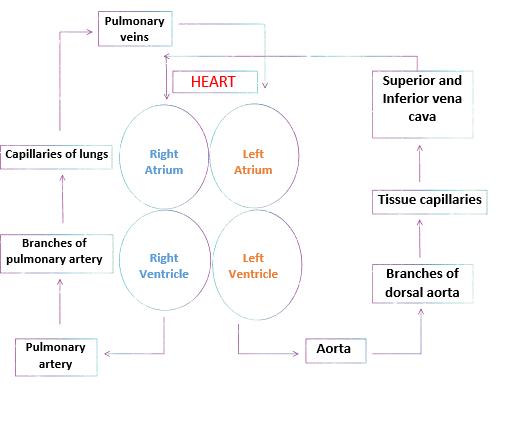
Explain the process of double circulation with the help of a flow chart.
Answer
 Verified
556.9k+ views
Hint:The type of systemic circulation that exists in mammals whereby blood flows through the heart twice prior to the actual total body circuit. Blood is pumped away from the heart at increased blood pressure in the arteries and back to the heart at low blood pressure in the veins. The human circulatory system is a double circulatory system.
Complete answer:The circulatory system in humans is a dual circulatory system. These have two distinct circuits and blood flow through the heart twice: the pulmonary circuit between the heart and lungs and the systemic circuit between the heart as well as the other organs. Blood is pumped from the heart to the lungs and also is redirected to the heart until that is spread to other organs and tissues within the body. The heart in the circulatory system pumps the blood through all heart lobes, including two arteries and two ventricles. The four chambers contained in the heart carry the blood in one way and limit the flow of blood back to the heart. The reason for pointing to the systemic circulation as a double circulatory system is because blood travels through the heart twice. The pump present on the left sends oxygen-rich blood all across the blood, while the right pump transfers deoxygenated blood to the lungs, where this becomes oxygenated blood and then flows directly to the heart. This flow of oxygenated and deoxygenated blood is essential to ensure the body's temperature.
Additional Information:
The exchange of gases that usually occurs in the lungs during the pulmonary circuit entails the diffusion of carbon dioxide from the blood to the alveoli. Oxygen travels into the blood from the environment in the alveoli and also is absorbed by hemoglobin in red blood cells. In reference to other veins and arteries, the pulmonary artery carries oxygen-depleted blood and the pulmonary vein carries oxygen-rich blood. The system circuit carries blood around the body. It delivers oxygen and nutrients to the tissues and organs and removes oxygen-depleted blood containing carbon dioxide and waste products.
Note:A circulatory route is a route taken by blood, which flows through various parts of the body through veins and arteries. This is a closed system in humans since blood flows in closed blood vessels. The circulatory system would be responsible for the transportation of gases, nutrients, by-products, etc. It is really effective because it gives optimal circulation of blood without merging oxygenated and deoxygenated blood. This segregation of oxygenated and deoxygenated blood provides an effective oxygen supply to the body's cells and enhances the blood flow.
Complete answer:The circulatory system in humans is a dual circulatory system. These have two distinct circuits and blood flow through the heart twice: the pulmonary circuit between the heart and lungs and the systemic circuit between the heart as well as the other organs. Blood is pumped from the heart to the lungs and also is redirected to the heart until that is spread to other organs and tissues within the body. The heart in the circulatory system pumps the blood through all heart lobes, including two arteries and two ventricles. The four chambers contained in the heart carry the blood in one way and limit the flow of blood back to the heart. The reason for pointing to the systemic circulation as a double circulatory system is because blood travels through the heart twice. The pump present on the left sends oxygen-rich blood all across the blood, while the right pump transfers deoxygenated blood to the lungs, where this becomes oxygenated blood and then flows directly to the heart. This flow of oxygenated and deoxygenated blood is essential to ensure the body's temperature.
Additional Information:
The exchange of gases that usually occurs in the lungs during the pulmonary circuit entails the diffusion of carbon dioxide from the blood to the alveoli. Oxygen travels into the blood from the environment in the alveoli and also is absorbed by hemoglobin in red blood cells. In reference to other veins and arteries, the pulmonary artery carries oxygen-depleted blood and the pulmonary vein carries oxygen-rich blood. The system circuit carries blood around the body. It delivers oxygen and nutrients to the tissues and organs and removes oxygen-depleted blood containing carbon dioxide and waste products.
Note:A circulatory route is a route taken by blood, which flows through various parts of the body through veins and arteries. This is a closed system in humans since blood flows in closed blood vessels. The circulatory system would be responsible for the transportation of gases, nutrients, by-products, etc. It is really effective because it gives optimal circulation of blood without merging oxygenated and deoxygenated blood. This segregation of oxygenated and deoxygenated blood provides an effective oxygen supply to the body's cells and enhances the blood flow.
Recently Updated Pages
Master Class 11 English: Engaging Questions & Answers for Success

Master Class 11 Social Science: Engaging Questions & Answers for Success
Master Class 11 Maths: Engaging Questions & Answers for Success
Master Class 11 Biology: Engaging Questions & Answers for Success
Master Class 11 Physics: Engaging Questions & Answers for Success
Master Class 11 Chemistry: Engaging Questions & Answers for Success
Trending doubts
One Metric ton is equal to kg A 10000 B 1000 C 100 class 11 physics CBSE
Difference Between Prokaryotic Cells and Eukaryotic Cells
Find the value of the expression given below sin 30circ class 11 maths CBSE
1 ton equals to A 100 kg B 1000 kg C 10 kg D 10000 class 11 physics CBSE
Two of the body parts which do not appear in MRI are class 11 biology CBSE
What are hard magnetic materials class 11 physics CBSE