




How many of the enzymes given below in the block belong to brush border enzymes?
Maltase, Nucleosidase, Enterokinase, Amylopsin, Steapsin, Nucleases, Erepsin, Carboxypeptidase, Lactase, Aminopeptidase.
A. Six
B. Seven
C. Five
D. Four
Answer
 Verified
561.3k+ views
Hint: A set of digestive enzymes are secreted by the simple columnar cells lining the small intestine and these enzymes help in the terminal digestion of carbohydrates proteins and other molecules. They are all digestive enzymes.
Complete answer:
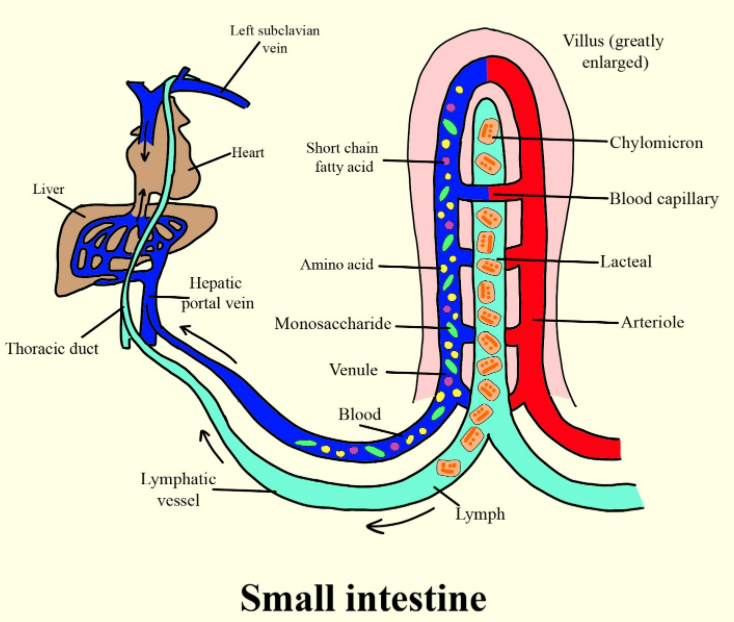
Brush border enzymes are the set of digestive enzymes that are secreted by the simple columnar cells with microvilli lining the small intestine and include the enzymes glucoamylase, maltase, phosphatase, enterokinase, lactase, sucrase, dipeptidase, erepsin, dextrinase, and nucleosidases. These enzymes are responsible for the terminal stage of digestion of dietary carbohydrates, proteins, and some other molecules that occur in the proximity of the small intestinal enterocytes. The enzymes are not secreted freely in the intestinal lumen but are tethered as integral membrane proteins in the plasma membrane of the enterocyte of the small intestine. The apical plasma membrane of these cells that contains these enzymes is composed of numerous microvilli extending from the cell and constituting the "brush border" of the small intestine. The microvilli of the small intestine have been shown below –
The distribution and density of the brush border enzymes are different in the segments of the small intestine and it has also been found that their abundance varies with the age of the animal.
So, the correct answer is ‘Four’.
Note:
In the terminal part of digestion, some dextrins, disaccharides, small peptides, nucleotides, phosphates, etc. are digested so the enzymes secreted will also be related to the digestion of these molecules.
Dextrins are the starch fragments that contain branching points for glucose linked in the 1,4 position while the nucleotides are ribose sugars linked to nitrogenous bases.
Complete answer:
Brush border enzymes are the set of digestive enzymes that are secreted by the simple columnar cells with microvilli lining the small intestine and include the enzymes glucoamylase, maltase, phosphatase, enterokinase, lactase, sucrase, dipeptidase, erepsin, dextrinase, and nucleosidases. These enzymes are responsible for the terminal stage of digestion of dietary carbohydrates, proteins, and some other molecules that occur in the proximity of the small intestinal enterocytes. The enzymes are not secreted freely in the intestinal lumen but are tethered as integral membrane proteins in the plasma membrane of the enterocyte of the small intestine. The apical plasma membrane of these cells that contains these enzymes is composed of numerous microvilli extending from the cell and constituting the "brush border" of the small intestine. The microvilli of the small intestine have been shown below –
The distribution and density of the brush border enzymes are different in the segments of the small intestine and it has also been found that their abundance varies with the age of the animal.
So, the correct answer is ‘Four’.
Note:
In the terminal part of digestion, some dextrins, disaccharides, small peptides, nucleotides, phosphates, etc. are digested so the enzymes secreted will also be related to the digestion of these molecules.
Dextrins are the starch fragments that contain branching points for glucose linked in the 1,4 position while the nucleotides are ribose sugars linked to nitrogenous bases.
Recently Updated Pages
Basicity of sulphurous acid and sulphuric acid are

Master Class 11 English: Engaging Questions & Answers for Success
Master Class 11 Physics: Engaging Questions & Answers for Success
Master Class 11 Computer Science: Engaging Questions & Answers for Success
Master Class 11 Chemistry: Engaging Questions & Answers for Success
Master Class 11 Social Science: Engaging Questions & Answers for Success
Trending doubts
Difference Between Prokaryotic Cells and Eukaryotic Cells
Two of the body parts which do not appear in MRI are class 11 biology CBSE
One Metric ton is equal to kg A 10000 B 1000 C 100 class 11 physics CBSE
10 examples of friction in our daily life
Draw a diagram of nephron and explain its structur class 11 biology CBSE
What will happen if the mucus is not secreted by the class 11 biology CBSE