




Edible part of the lotus plant?
Answer
 Verified
521.4k+ views
Hint: The lotus is a plant that grows in submerged areas. It has a thick stalk, with flat circular leaves. The plant can grow up to a height of 8 feet. The flowers bloom above the surface of the water and the stem and roots remain submerged. The lotus plant has rhizomes that perform the function of roots in this part.
Complete answer:
The scientific name of lotus is Nelumbo nucifera.
The most commonly eaten parts of the roots, seeds, and the young flowers.
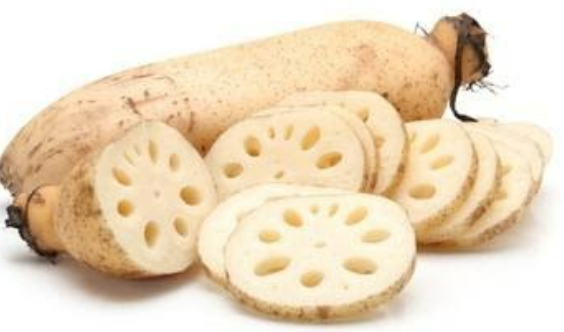
The root of lotus is also known as “Kamal kakdi” locally in India. It is believed to lower down blood pressure, bring a shine and glamour to the skin, and contains a lot of fiber that improves our digesting ability.
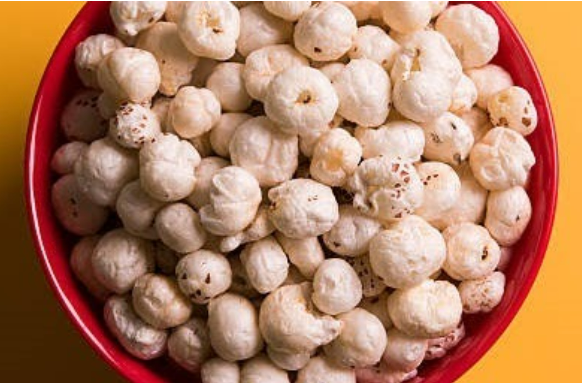
The seeds of lotus (also known locally as “Makhana”), are a very good source of nutrients, antioxidants, and make up an overall good dietary source. It is also known to regulate blood sugar levels.
The young flowers of lotus are used as a sweetening, flavoring, and as an agent to add fragrance to special dishes. Apart from these, it is known to bring relief from coughs, cold and stomach problems.
Note:
The major point to be noted here is that there is no scientific proof yet to prove the above-mentioned utilities of consuming the parts of the lotus plant. All this information is passed onto us by our previous generation for ages and now it is a ‘belief’ following which we consume the parts of the lotus plant rather than a scientific fact. The scientific validity of these facts is yet to be proved.
Complete answer:
The scientific name of lotus is Nelumbo nucifera.
The most commonly eaten parts of the roots, seeds, and the young flowers.
The root of lotus is also known as “Kamal kakdi” locally in India. It is believed to lower down blood pressure, bring a shine and glamour to the skin, and contains a lot of fiber that improves our digesting ability.
The seeds of lotus (also known locally as “Makhana”), are a very good source of nutrients, antioxidants, and make up an overall good dietary source. It is also known to regulate blood sugar levels.
The young flowers of lotus are used as a sweetening, flavoring, and as an agent to add fragrance to special dishes. Apart from these, it is known to bring relief from coughs, cold and stomach problems.
Note:
The major point to be noted here is that there is no scientific proof yet to prove the above-mentioned utilities of consuming the parts of the lotus plant. All this information is passed onto us by our previous generation for ages and now it is a ‘belief’ following which we consume the parts of the lotus plant rather than a scientific fact. The scientific validity of these facts is yet to be proved.
Recently Updated Pages
Master Class 12 Economics: Engaging Questions & Answers for Success

Master Class 12 English: Engaging Questions & Answers for Success
Master Class 12 Social Science: Engaging Questions & Answers for Success
Master Class 12 Maths: Engaging Questions & Answers for Success
Master Class 12 Physics: Engaging Questions & Answers for Success
Master Class 11 Social Science: Engaging Questions & Answers for Success
Trending doubts
One Metric ton is equal to kg A 10000 B 1000 C 100 class 11 physics CBSE
Difference Between Prokaryotic Cells and Eukaryotic Cells
Two of the body parts which do not appear in MRI are class 11 biology CBSE
1 ton equals to A 100 kg B 1000 kg C 10 kg D 10000 class 11 physics CBSE
Draw a diagram of nephron and explain its structur class 11 biology CBSE
10 examples of friction in our daily life