



Draw a line perpendicular to a line y. Take a point A on this perpendicular such that A is 4.6 cm away from y. Through A draw a line parallel to y.
Answer
 Verified
610.8k+ views
Hint: We construct the given diagram using a compass and a scale. Taking any point on the given line, draw a semicircle and use the end points of that semicircle to draw intersecting arcs which lead to formation of a perpendicular line. Draw a parallel line to the given line by cutting off the same angle on a transversal formed by joining the point A and any other point on the line.
* Compass is an instrument to draw arcs and circles by fixing one end at a point and moving the other end as per requirement.
* A scale is a measuring device that helps us to measure lengths in different units like meters, centimeters etc.

Complete step by step answer:
STEP 1:
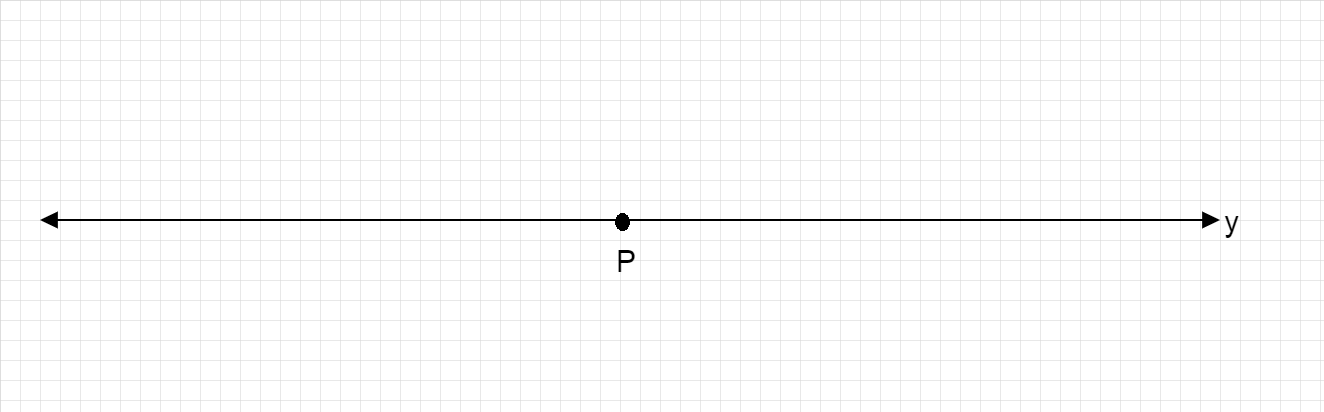
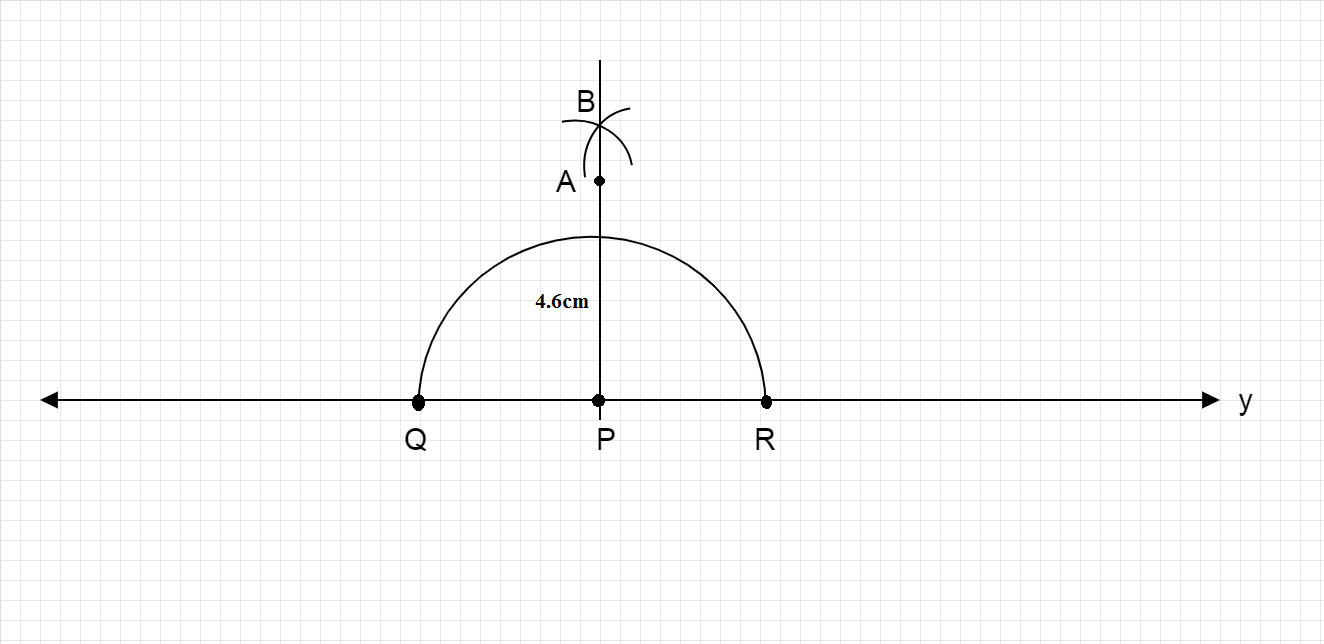
Draw a straight horizontal line $y$ using a scale and take a point P anywhere on the line.
STEP 2:
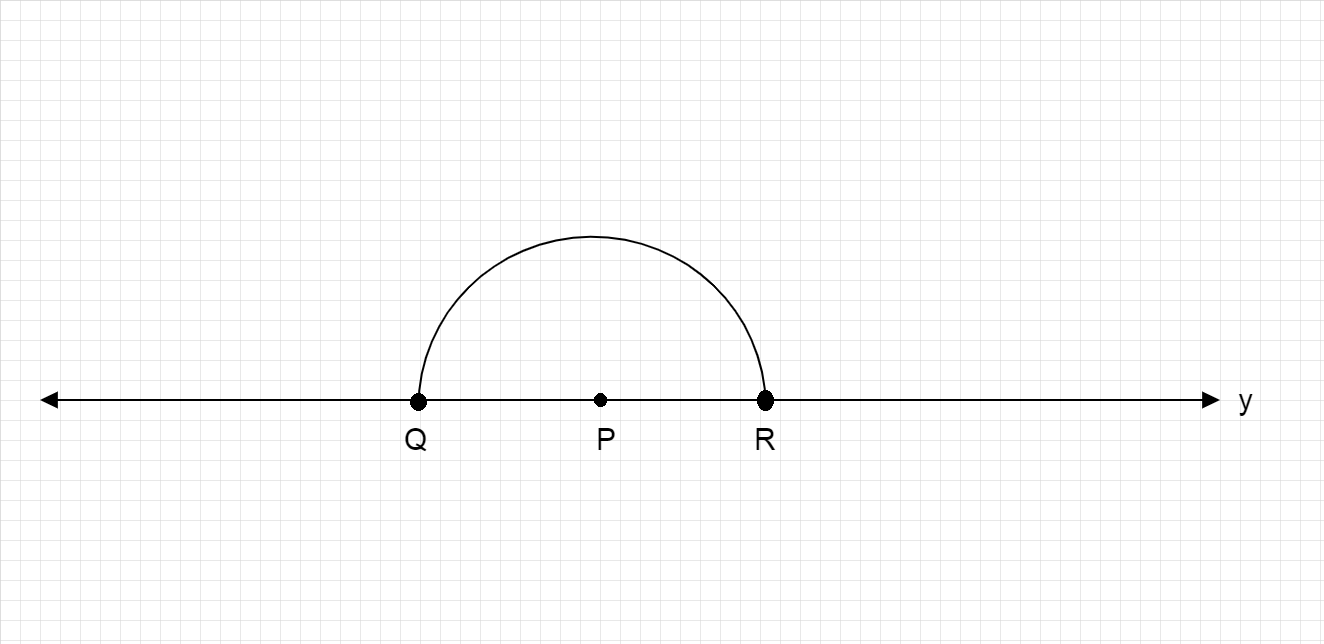
Draw a semicircle using a compass by fixing one end of the compass at point P and taking any radius.
STEP 3:
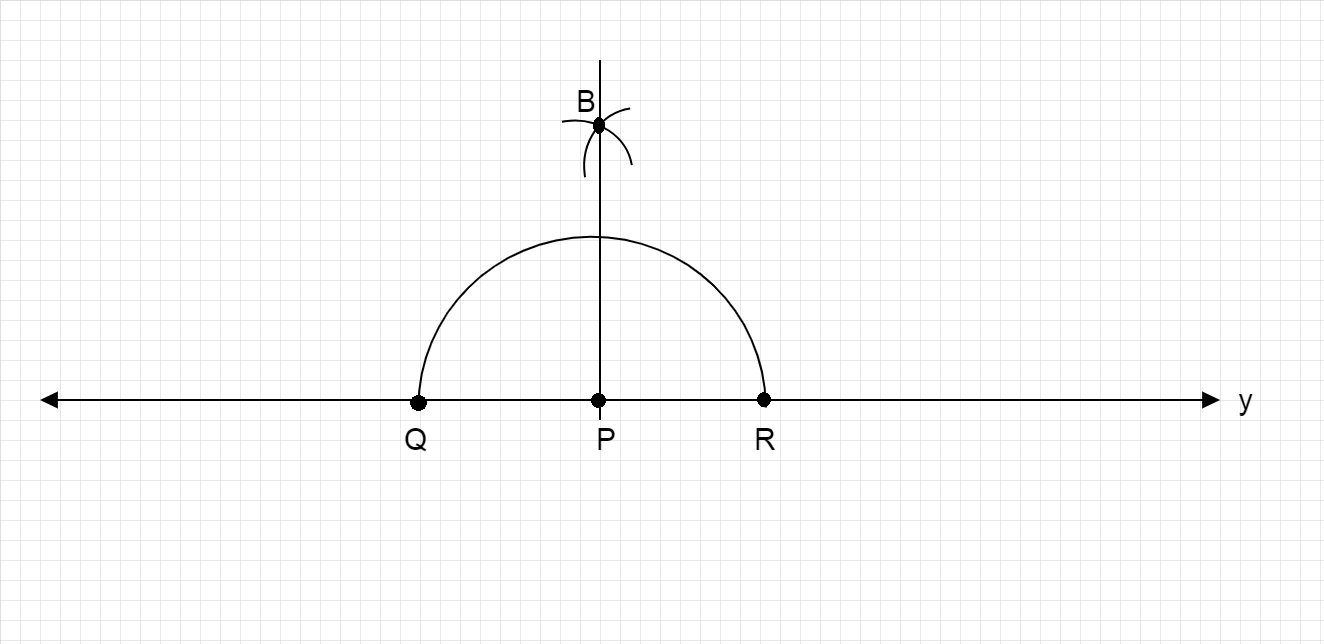
Take radius greater than the radius of the semicircle and draw two intersecting arcs by fixing one end of the compass at Q and R simultaneously. Let the point of intersection of arcs be B.
STEP 4:
Using a scale measure the distance 4.6 cm from point P on the perpendicular line PB and mark it A.
\[\therefore AP \bot QR\]
So, AP is the perpendicular line to the line y.
STEP 5:
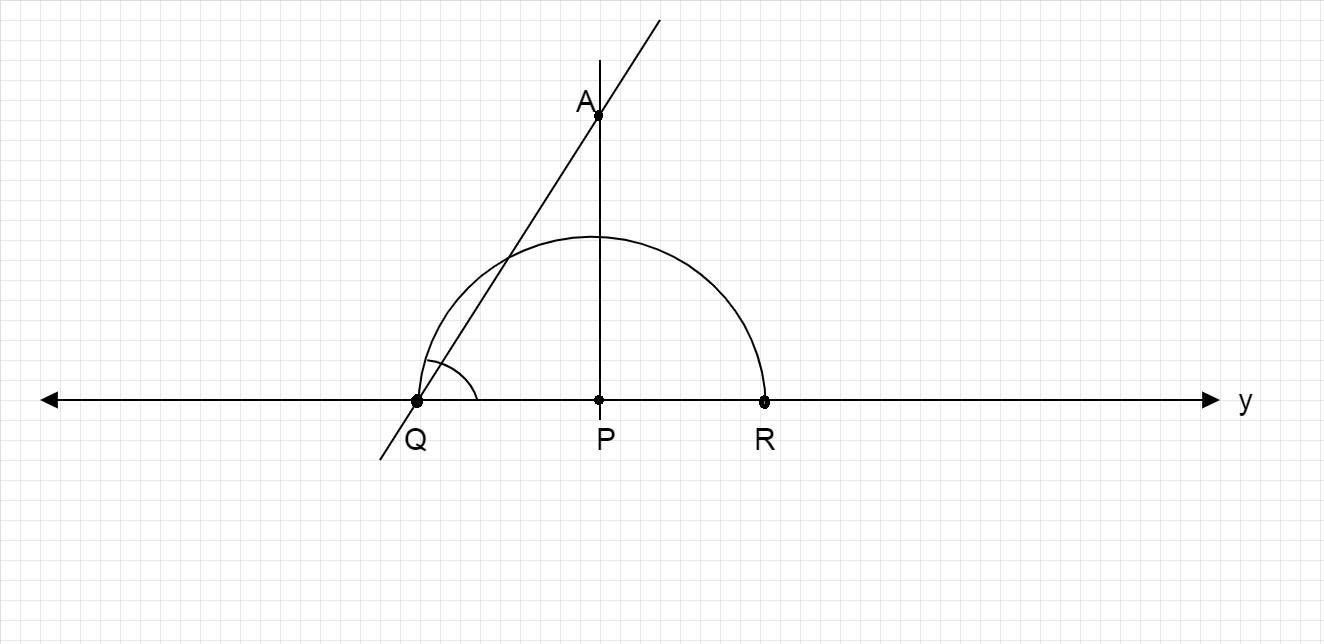
Let Q be any other point on the line y. Join points A and Q using scale.
STEP 6:
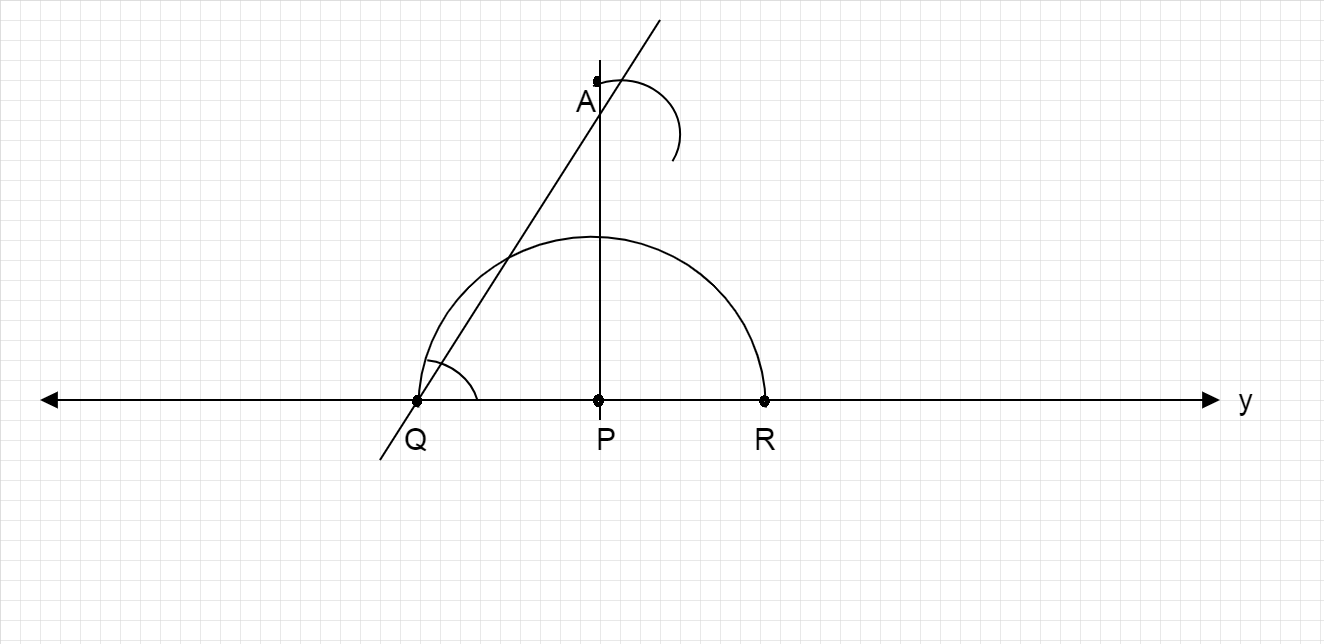
Take Q as center and with a small radius draw an arc using compass at point Q. Use the same radius to draw an arc at point A.
STEP 7:
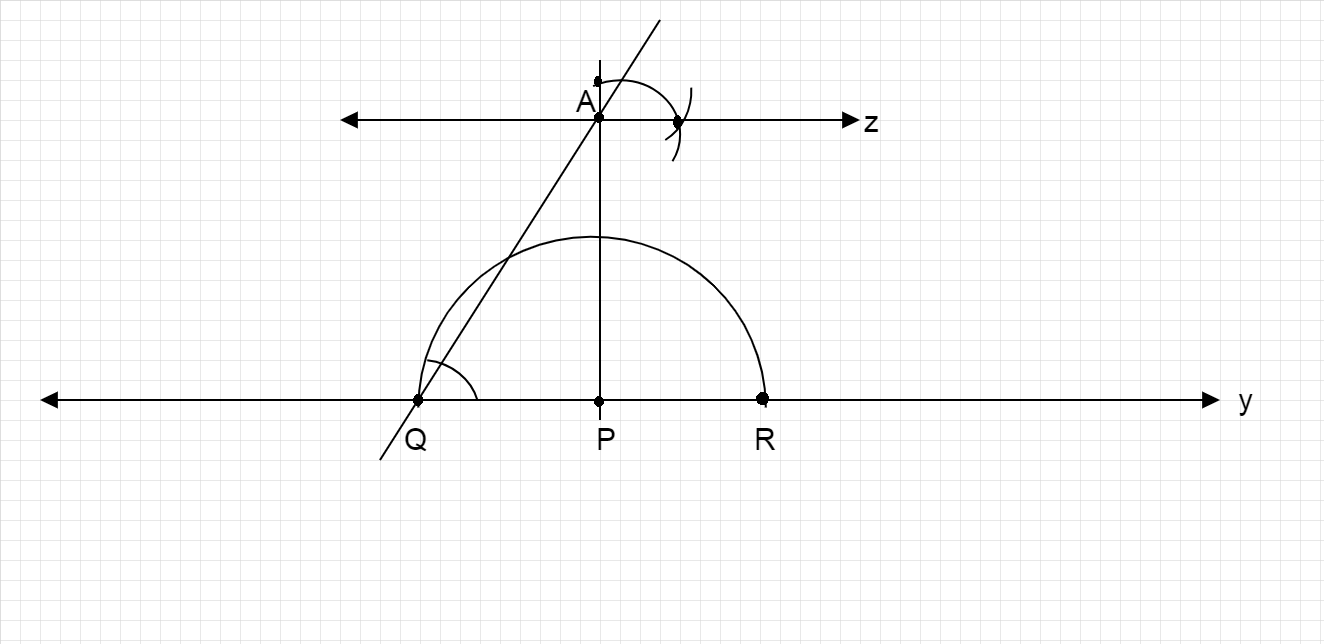
Measure the angle at point Q using compass and cut an arc of the same angle on the arc drawn from point A in the previous step. Join the point of intersection of arcs and point A using a scale.
\[\therefore z\parallel y\]
Therefore, the line parallel to the line y passing through the point A is z.
Note:
Students might make mistakes while constructing the parallel line as they might measure the angle from point A and cut then cut the arc, this is the wrong process. We have to cut the arc drawn with the same radius from the point where the arc meets the perpendicular other than point A. So we draw one arc from point A and another arc from the arc drawn at point A.
* Compass is an instrument to draw arcs and circles by fixing one end at a point and moving the other end as per requirement.
* A scale is a measuring device that helps us to measure lengths in different units like meters, centimeters etc.
Complete step by step answer:
STEP 1:
Draw a straight horizontal line $y$ using a scale and take a point P anywhere on the line.
STEP 2:
Draw a semicircle using a compass by fixing one end of the compass at point P and taking any radius.
STEP 3:
Take radius greater than the radius of the semicircle and draw two intersecting arcs by fixing one end of the compass at Q and R simultaneously. Let the point of intersection of arcs be B.
STEP 4:
Using a scale measure the distance 4.6 cm from point P on the perpendicular line PB and mark it A.
\[\therefore AP \bot QR\]
So, AP is the perpendicular line to the line y.
STEP 5:
Let Q be any other point on the line y. Join points A and Q using scale.
STEP 6:
Take Q as center and with a small radius draw an arc using compass at point Q. Use the same radius to draw an arc at point A.
STEP 7:
Measure the angle at point Q using compass and cut an arc of the same angle on the arc drawn from point A in the previous step. Join the point of intersection of arcs and point A using a scale.
\[\therefore z\parallel y\]
Therefore, the line parallel to the line y passing through the point A is z.
Note:
Students might make mistakes while constructing the parallel line as they might measure the angle from point A and cut then cut the arc, this is the wrong process. We have to cut the arc drawn with the same radius from the point where the arc meets the perpendicular other than point A. So we draw one arc from point A and another arc from the arc drawn at point A.

Recently Updated Pages
Master Class 7 Science: Engaging Questions & Answers for Success

Master Class 7 English: Engaging Questions & Answers for Success
Master Class 7 Maths: Engaging Questions & Answers for Success
Class 7 Question and Answer - Your Ultimate Solutions Guide
Master Class 12 Economics: Engaging Questions & Answers for Success
Master Class 12 English: Engaging Questions & Answers for Success
Trending doubts
100 million is equal to begingathered A 1 crore B -class-7-maths-CBSE
Full Form of IASDMIPSIFSIRSPOLICE class 7 social science CBSE
The HCF of 24721284 and a third number N is 12 If their class 7 maths CBSE
There are three types of tickets economy business and class 7 maths CBSE
List of coprime numbers from 1 to 100 class 7 maths CBSE
Write a short note on the great bath of MohenjoDar class 7 social science CBSE