



Differentiate between striated, un-striated and cardiac muscles on the basis of their structure and site/location in the body.
Answer
 Verified
574.3k+ views
Hint: Our body is made up of different muscles or tissue that functions together and gives strength and structure to our body. The muscles are of different shape and size and found in different parts of the body. Some muscles can be controlled by us and some functions are automatic.
Complete answer:
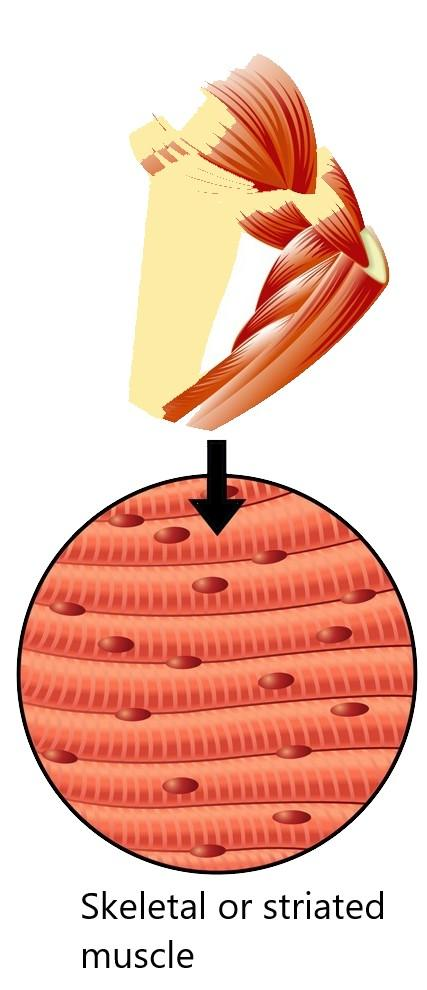
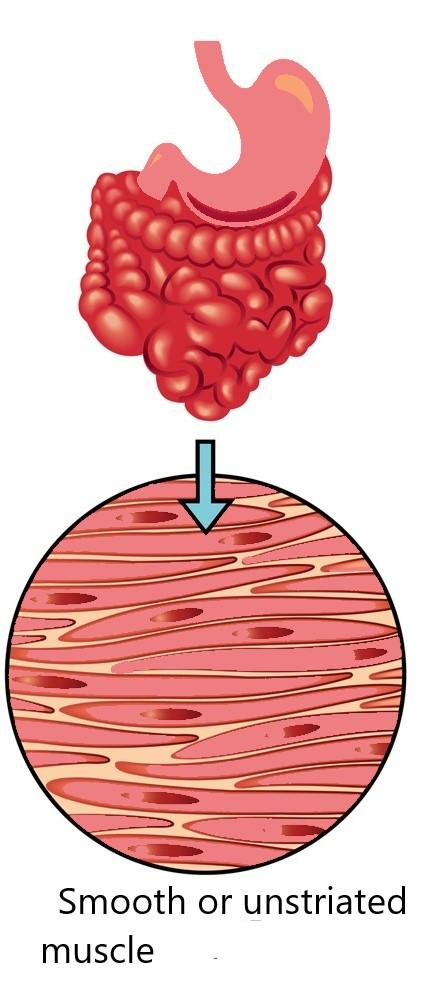
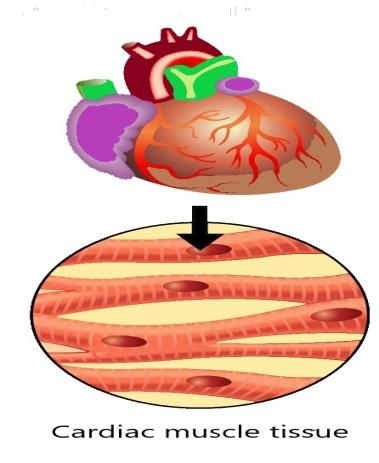
To answer this question, we have to first know about the muscles in the human body. There are approximately six hundred forty muscles inside a human body. Every muscle consists of one pair of identical bilateral muscles that present in both sides. The human body consists of three types of muscles; smooth, cardiac, and skeletal muscles. The smooth muscles form the wall of the intestine, blood vessels, uterus, and muscle of the inner eye. The cardiac muscles form the wall of the heart that controls the contraction of the heart, and the skeletal muscles attach the muscles to the bones.
Now, the difference between the striated, unstriated, and cardiac muscles are:
Note:The cardiac and the smooth or unstriated muscles are involuntary as they cannot be controlled by us; they work automatically. For example the heart muscle, we cannot control the heart according to our need but we can control our skeletal muscle that is found in the hand and legs, therefore, striated muscles are called voluntary muscle.
Complete answer:
To answer this question, we have to first know about the muscles in the human body. There are approximately six hundred forty muscles inside a human body. Every muscle consists of one pair of identical bilateral muscles that present in both sides. The human body consists of three types of muscles; smooth, cardiac, and skeletal muscles. The smooth muscles form the wall of the intestine, blood vessels, uterus, and muscle of the inner eye. The cardiac muscles form the wall of the heart that controls the contraction of the heart, and the skeletal muscles attach the muscles to the bones.
Now, the difference between the striated, unstriated, and cardiac muscles are:
| Striated muscle | Unstriated muscle | Cardiac muscle |
| The shape of the striated muscles are cylindrical and multinucleated. | The shape of the unstriated muscles are spindle and uninucleated. | The shape of the cardiac muscles are cylindrical and uninucleated. |
| The striated muscles are found in the hand and legs part of the body. | The unstriated muscles are found in the mouth, stomach, intestine, iris, etc part of the body. | The cardiac muscles are found in the heart. |
| 
| 
|
Note:The cardiac and the smooth or unstriated muscles are involuntary as they cannot be controlled by us; they work automatically. For example the heart muscle, we cannot control the heart according to our need but we can control our skeletal muscle that is found in the hand and legs, therefore, striated muscles are called voluntary muscle.
Recently Updated Pages
Master Class 11 Economics: Engaging Questions & Answers for Success

Class 11 Question and Answer - Your Ultimate Solutions Guide
Master Class 11 Biology: Engaging Questions & Answers for Success
Master Class 11 Maths: Engaging Questions & Answers for Success
Master Class 11 Social Science: Engaging Questions & Answers for Success
Master Class 11 English: Engaging Questions & Answers for Success
Trending doubts
One Metric ton is equal to kg A 10000 B 1000 C 100 class 11 physics CBSE
Draw a diagram of nephron and explain its structur class 11 biology CBSE
The actual molecular mass of chlorine is A 5893 times class 11 chemistry CBSE
Which one of the following is a modified leaf A Sweet class 11 biology CBSE
Bond order ofO2 O2+ O2 and O22 is in order A O2 langle class 11 chemistry CBSE
Derive the equation of motion by the calculus method class 11 physics CBSE