



Desert plants like opuntia are able to grow in extreme conditions. Suggest any two adaptations of this plant.
Answer
 Verified
570.3k+ views
Hint: Xerophytes are under persisting threats of water shortage, drought, heat, and desiccation. To tide over these adverse conditions, they are highly specialized. Their adaptive specializations are meant for three major purposes, namely drought avoidance, drought resistance, and water conservation. Opuntia is a succulent plant. Water conservation occurs in succulents which can store large quantities of water in their tissues.
Complete answer:
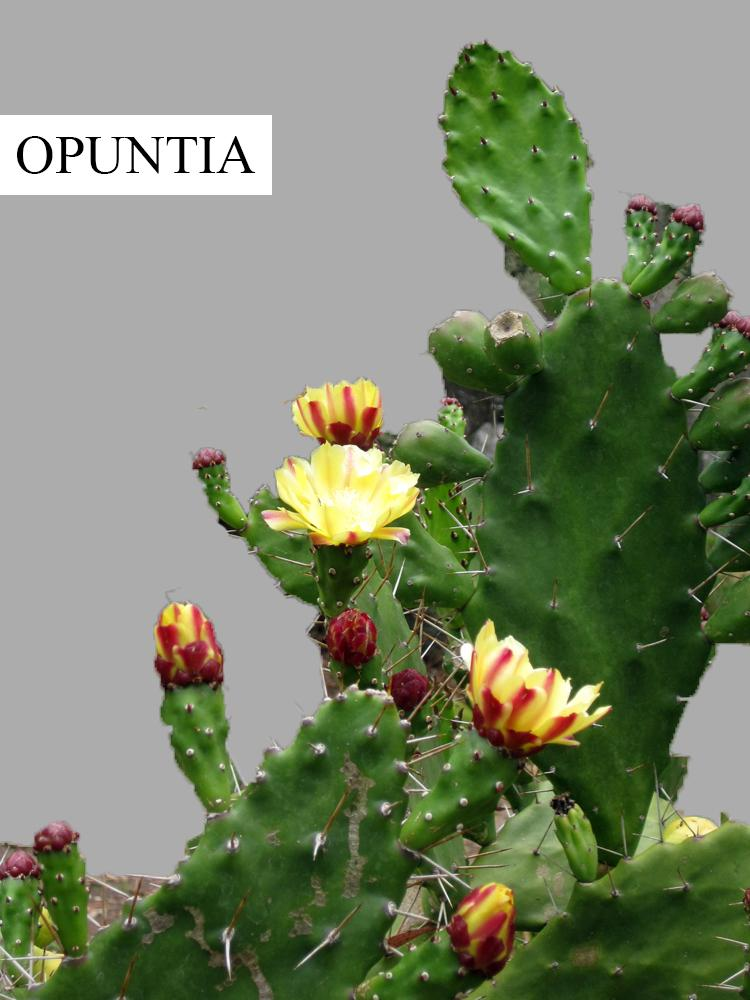
Adaptations of Opuntia cactus to its environment are its closeness to the ground. The stomata are closed during the day and open during the night. This considerably reduces transpiration and water loss during the hot day time. This plant differs from other plants in photosynthesis by gathering its carbon at night. The carbon collected at night is then converted to organic acid which is stored inside the cactus until the sun rises to provide the products of the light reactions. The leaves are called cladodes. The thickness of these structures is to prevent water loss. The stem also stores water. Inside the leaves and stem contain water and reserves of nutrients allowing the plants to survive in extreme conditions. Cacti have reduced their leaves to spines. It has circular pads arising from the thick, round trunk. These pads are fast-growing stems. The pads stick out at all angles of the trunk and it is covered with a barbed spine. The pads are used to store water for when they need it during a drought.
Additional Information:
-The way by which the opuntia cactus feeds is by capturing the available moisture. Roots have also got thick waxy skin to reduce moisture loss.
-The plant is close to the ground therefore there will be less water loss. Another adaptation that contributes to its survival is vegetative reproduction.
-Formation of seeds and flowers take up a lot of resources by doing asexual reproduction the plant is able to use the energy and resources else were for the survival. Vegetative reproduction also ensures the survival of the species because new seedlings are fragile and very susceptible to harsh environments.
Note:
-Xerophytes are plants growing in dry habitats or under xeric conditions. Xeric or dry habitats are the places where the soil is dry, water availability is very scarce and relative humidity is very low.
-Xerophytes are the characteristic plants of deserts and semi-desert regions, especially adapted to withstand extreme dry conditions, low humidity, and high atmospheric temperature.
-Xerophytes are generally classified into ephemeral, succulents, and non-succulent perennials.
Complete answer:
Adaptations of Opuntia cactus to its environment are its closeness to the ground. The stomata are closed during the day and open during the night. This considerably reduces transpiration and water loss during the hot day time. This plant differs from other plants in photosynthesis by gathering its carbon at night. The carbon collected at night is then converted to organic acid which is stored inside the cactus until the sun rises to provide the products of the light reactions. The leaves are called cladodes. The thickness of these structures is to prevent water loss. The stem also stores water. Inside the leaves and stem contain water and reserves of nutrients allowing the plants to survive in extreme conditions. Cacti have reduced their leaves to spines. It has circular pads arising from the thick, round trunk. These pads are fast-growing stems. The pads stick out at all angles of the trunk and it is covered with a barbed spine. The pads are used to store water for when they need it during a drought.
Additional Information:
-The way by which the opuntia cactus feeds is by capturing the available moisture. Roots have also got thick waxy skin to reduce moisture loss.
-The plant is close to the ground therefore there will be less water loss. Another adaptation that contributes to its survival is vegetative reproduction.
-Formation of seeds and flowers take up a lot of resources by doing asexual reproduction the plant is able to use the energy and resources else were for the survival. Vegetative reproduction also ensures the survival of the species because new seedlings are fragile and very susceptible to harsh environments.
Note:
-Xerophytes are plants growing in dry habitats or under xeric conditions. Xeric or dry habitats are the places where the soil is dry, water availability is very scarce and relative humidity is very low.
-Xerophytes are the characteristic plants of deserts and semi-desert regions, especially adapted to withstand extreme dry conditions, low humidity, and high atmospheric temperature.
-Xerophytes are generally classified into ephemeral, succulents, and non-succulent perennials.
Recently Updated Pages
Master Class 11 Social Science: Engaging Questions & Answers for Success

Master Class 11 Chemistry: Engaging Questions & Answers for Success
Master Class 9 General Knowledge: Engaging Questions & Answers for Success
Master Class 9 Maths: Engaging Questions & Answers for Success
Master Class 9 Science: Engaging Questions & Answers for Success
Master Class 9 English: Engaging Questions & Answers for Success
Trending doubts
One Metric ton is equal to kg A 10000 B 1000 C 100 class 11 physics CBSE
Difference Between Prokaryotic Cells and Eukaryotic Cells
Two of the body parts which do not appear in MRI are class 11 biology CBSE
1 ton equals to A 100 kg B 1000 kg C 10 kg D 10000 class 11 physics CBSE
10 examples of friction in our daily life
Name the Largest and the Smallest Cell in the Human Body ?