




Describe the structure of the fallopian tube in a human female.
Answer
 Verified
566.4k+ views
Hint: The uterine tube, also known as the Fallopian tube, connects the ovary to the uterus. It is found in female bodies and is a component of human beings. Every month, the Fallopian tube transports the ova from the ovary to the uterus in the female body.
Complete answer:
The fallopian tube is located in the stomach hole of females and is also known as the oviduct or uterine tube.
It is a long pair of narrow conduits that connects the ovary to the uterus.
The inside of the tube is held together by a layer of mucous membrane with numerous folds and papillae (little cone-moulded projections of tissue).
Three layers of muscle tissue cover the mucous membrane.
1. The deepest layer is composed of spirally arranged strands.
2. The centre layer is made up of round filaments.
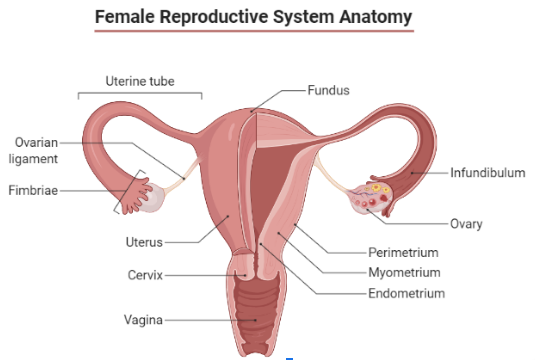
3. The peripheral layer contains longitudinal filaments that terminate in numerous finger-like branches called fimbriae close to the ovaries, which frame a pipe-shaped storehouse called the infundibulum.
The ampulla is a long focal part of the fallopian tube that extends from the infundibulum.
The ampulla and infundibulum are linked to the uterus by an area known as the isthmus.
The final location of the fallopian tube is known as the intramural or uterine part, and it is located in the top segment or fundus of the uterus.
This thin tube, which corresponds to the isthmus, propels it through the thick uterine wall to the uterine pit. The uterus causes the fallopian tubes to expand horizontally. The Fallopian tube is divided into four sections: the fimbriae, the infundibulum, the ampulla, and the isthmus. Fimbriae are ciliated projections that resemble fingers. It captures the ovum from the ovary's exterior.
The infundibulum is a pipe-like opening near the ovary that connects to the fimbriae. The ampulla is the section of the Fallopian tube where treatment is administered. It is the most extensive segment of the Fallopian tube. The isthmus connects the ampulla to the uterine cavity. This is a small section of the Fallopian tube.
Note:
It should be noted that the Fallopian tube is a female reproductive tract. It is made of J-shaped structure. It is located in the upper portion of the expansive tendon and opens into the stomach hole near the ovaries. In the Fallopian tube, treatment takes place in the presence of sperm.
Complete answer:
The fallopian tube is located in the stomach hole of females and is also known as the oviduct or uterine tube.
It is a long pair of narrow conduits that connects the ovary to the uterus.
The inside of the tube is held together by a layer of mucous membrane with numerous folds and papillae (little cone-moulded projections of tissue).
Three layers of muscle tissue cover the mucous membrane.
1. The deepest layer is composed of spirally arranged strands.
2. The centre layer is made up of round filaments.
3. The peripheral layer contains longitudinal filaments that terminate in numerous finger-like branches called fimbriae close to the ovaries, which frame a pipe-shaped storehouse called the infundibulum.
The ampulla is a long focal part of the fallopian tube that extends from the infundibulum.
The ampulla and infundibulum are linked to the uterus by an area known as the isthmus.
The final location of the fallopian tube is known as the intramural or uterine part, and it is located in the top segment or fundus of the uterus.
This thin tube, which corresponds to the isthmus, propels it through the thick uterine wall to the uterine pit. The uterus causes the fallopian tubes to expand horizontally. The Fallopian tube is divided into four sections: the fimbriae, the infundibulum, the ampulla, and the isthmus. Fimbriae are ciliated projections that resemble fingers. It captures the ovum from the ovary's exterior.
The infundibulum is a pipe-like opening near the ovary that connects to the fimbriae. The ampulla is the section of the Fallopian tube where treatment is administered. It is the most extensive segment of the Fallopian tube. The isthmus connects the ampulla to the uterine cavity. This is a small section of the Fallopian tube.
Note:
It should be noted that the Fallopian tube is a female reproductive tract. It is made of J-shaped structure. It is located in the upper portion of the expansive tendon and opens into the stomach hole near the ovaries. In the Fallopian tube, treatment takes place in the presence of sperm.
Recently Updated Pages
Master Class 11 English: Engaging Questions & Answers for Success

Master Class 11 Social Science: Engaging Questions & Answers for Success
Master Class 11 Maths: Engaging Questions & Answers for Success
Master Class 11 Chemistry: Engaging Questions & Answers for Success
Master Class 11 Biology: Engaging Questions & Answers for Success
Master Class 11 Physics: Engaging Questions & Answers for Success
Trending doubts
Explain the Treaty of Vienna of 1815 class 10 social science CBSE
Why is it 530 pm in india when it is 1200 afternoon class 10 social science CBSE
What is the full form of CNG A Complete Natural Gas class 10 social science CBSE
In cricket, what is a "Yorker" designed to do?
What is the full form of POSCO class 10 social science CBSE
Define Potential, Developed, Stock and Reserved resources