




Describe the process of fertilization in humans.
Answer
 Verified
547.2k+ views
Hint: Life starts from a single cell stage called the zygote, which will undergo further division to form the baby. The process includes ovulation, fertilization, zygote formation, blastomere formation, implantation in the uterus, and parturition.
Complete answer:
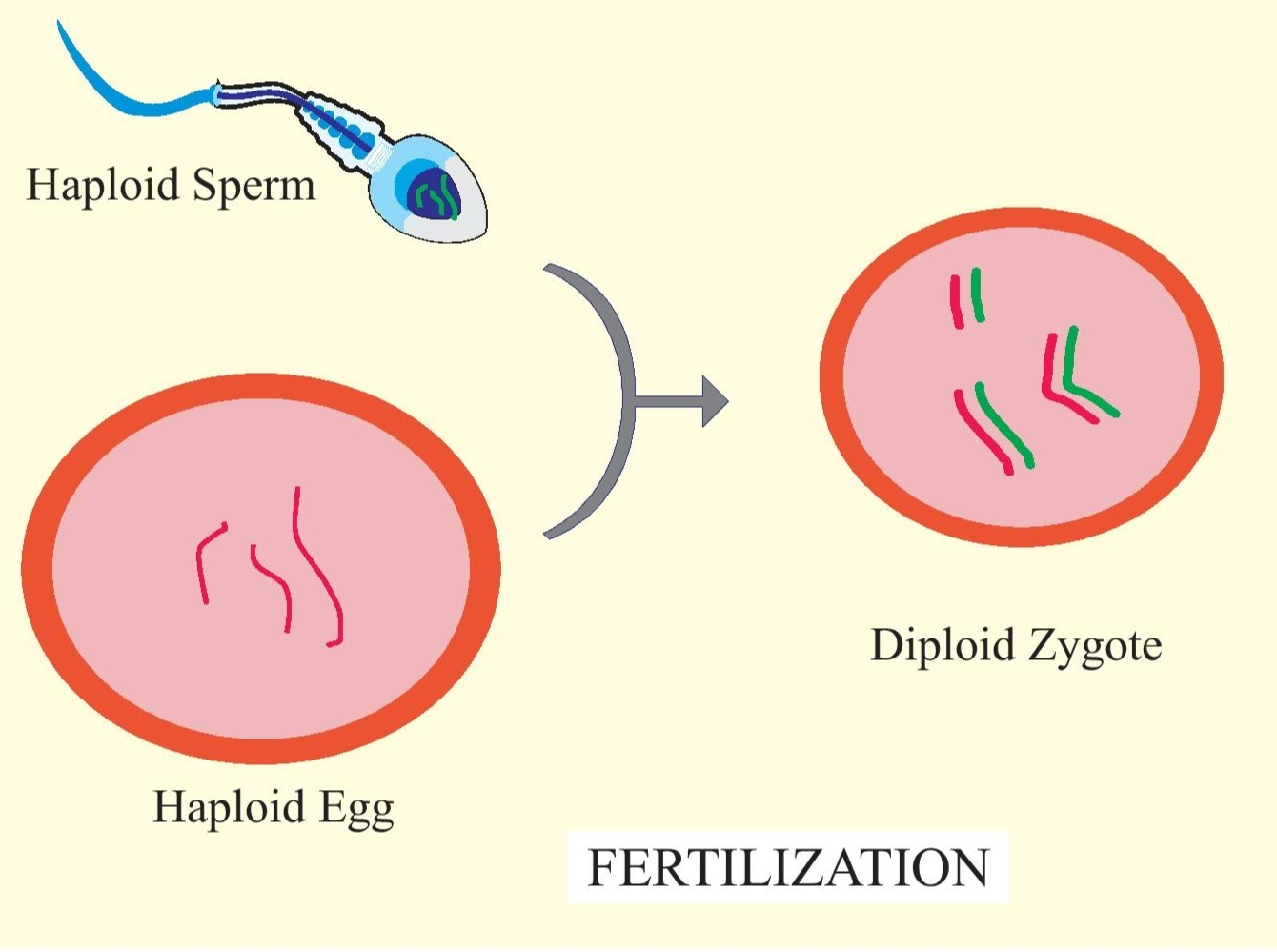
The fusion of sperm and ovum is known as fertilization.
-During copulation, the semen will reach the ampullary-isthmic junction of the fallopian tube.
-The ovum that gets released from the ovary will be transported to the ampullary-isthmic junction of the fallopian tube. When both the ovum and sperm simultaneously reach the ampullary-isthmic region, fertilization will occur.
-During fertilization, the sperm will come in contact with the ovum’s zona pellucida layer. This will alter the membrane and will prevent other sperms from fusing with the ovum.
-The acrosomal secretions of the sperm will facilitate the sperm to enter the ovum’s cytoplasm via the zona pellucida layer. Here, the meiotic division of the secondary oocyte gets completed.
-The meiotic division results in the formation of a haploid ovum and a second polar body.
-The fusion of the haploid nucleus of the sperm plus the haploid nucleus of the ovum fuse to form the zygote (single-cell stage of our life).
-The zygote after fertilization starts the mitotic division and then moves towards the uterus.
-During division, the single-celled zygote will form a blastomere i.e., 2, 4, 8, 16 celled stage.
-The blastomere forms an inner cell mass and an exterior trophoblast layer. The inner cell mass helps in the formation of an embryo while the trophoblast is attached to the endometrial layer of the uterus.
-The uterus will divide after it attaches and will cover the blastocyst. Now, the blastocyst will be attached to the endometrial layer of the uterus. This is known as implantation that leads to pregnancy.
Note:
Parturition is the process where the delivery of a baby is done. The mild uterine contraction when the fully developed fetus and the placenta sends a signal. This contraction will result in the release of the oxytocin hormone from the pituitary. Oxytocin will result in the forceful myometrium contraction leading to the birth of the baby.
Complete answer:
The fusion of sperm and ovum is known as fertilization.
-During copulation, the semen will reach the ampullary-isthmic junction of the fallopian tube.
-The ovum that gets released from the ovary will be transported to the ampullary-isthmic junction of the fallopian tube. When both the ovum and sperm simultaneously reach the ampullary-isthmic region, fertilization will occur.
-During fertilization, the sperm will come in contact with the ovum’s zona pellucida layer. This will alter the membrane and will prevent other sperms from fusing with the ovum.
-The acrosomal secretions of the sperm will facilitate the sperm to enter the ovum’s cytoplasm via the zona pellucida layer. Here, the meiotic division of the secondary oocyte gets completed.
-The meiotic division results in the formation of a haploid ovum and a second polar body.
-The fusion of the haploid nucleus of the sperm plus the haploid nucleus of the ovum fuse to form the zygote (single-cell stage of our life).
-The zygote after fertilization starts the mitotic division and then moves towards the uterus.
-During division, the single-celled zygote will form a blastomere i.e., 2, 4, 8, 16 celled stage.
-The blastomere forms an inner cell mass and an exterior trophoblast layer. The inner cell mass helps in the formation of an embryo while the trophoblast is attached to the endometrial layer of the uterus.
-The uterus will divide after it attaches and will cover the blastocyst. Now, the blastocyst will be attached to the endometrial layer of the uterus. This is known as implantation that leads to pregnancy.
Note:
Parturition is the process where the delivery of a baby is done. The mild uterine contraction when the fully developed fetus and the placenta sends a signal. This contraction will result in the release of the oxytocin hormone from the pituitary. Oxytocin will result in the forceful myometrium contraction leading to the birth of the baby.
Recently Updated Pages
Master Class 11 English: Engaging Questions & Answers for Success

Master Class 11 Social Science: Engaging Questions & Answers for Success
Master Class 11 Maths: Engaging Questions & Answers for Success
Master Class 11 Biology: Engaging Questions & Answers for Success
Master Class 11 Physics: Engaging Questions & Answers for Success
Master Class 11 Chemistry: Engaging Questions & Answers for Success
Trending doubts
Explain the Treaty of Vienna of 1815 class 10 social science CBSE
In cricket, what is a "Yorker" designed to do?
What is the full form of POSCO class 10 social science CBSE
Define Potential, Developed, Stock and Reserved resources
Identify the plural form of the word child from the class 10 english CBSE
Draw a circuit diagram showing the cell switch and class 10 physics CBSE