




Describe the physiology of the digestion of food in human beings.
Answer
 Verified
618.3k+ views
Hint: The physiology and mechanism involve various mechanical and chemical steps that are carried out by different organs of the digestive system. The secretions of the digestive glands also help digest food into smaller and simpler that can be easily absorbed.
Complete Step by Step Answer:
The digestion of the food starts in the buccal cavity where the food is broken into small bits by the teeth and made into a ball called bolus with the help of saliva. Chemical digestion also starts here as salivary amylase begins digesting starch.
This bolus then reaches the stomach where it is acted upon by the acidic gastric juice and mixed thoroughly by the muscular movements of the stomach wall. The food is now known as chyme. Proteins are digested here by the action of pepsin.
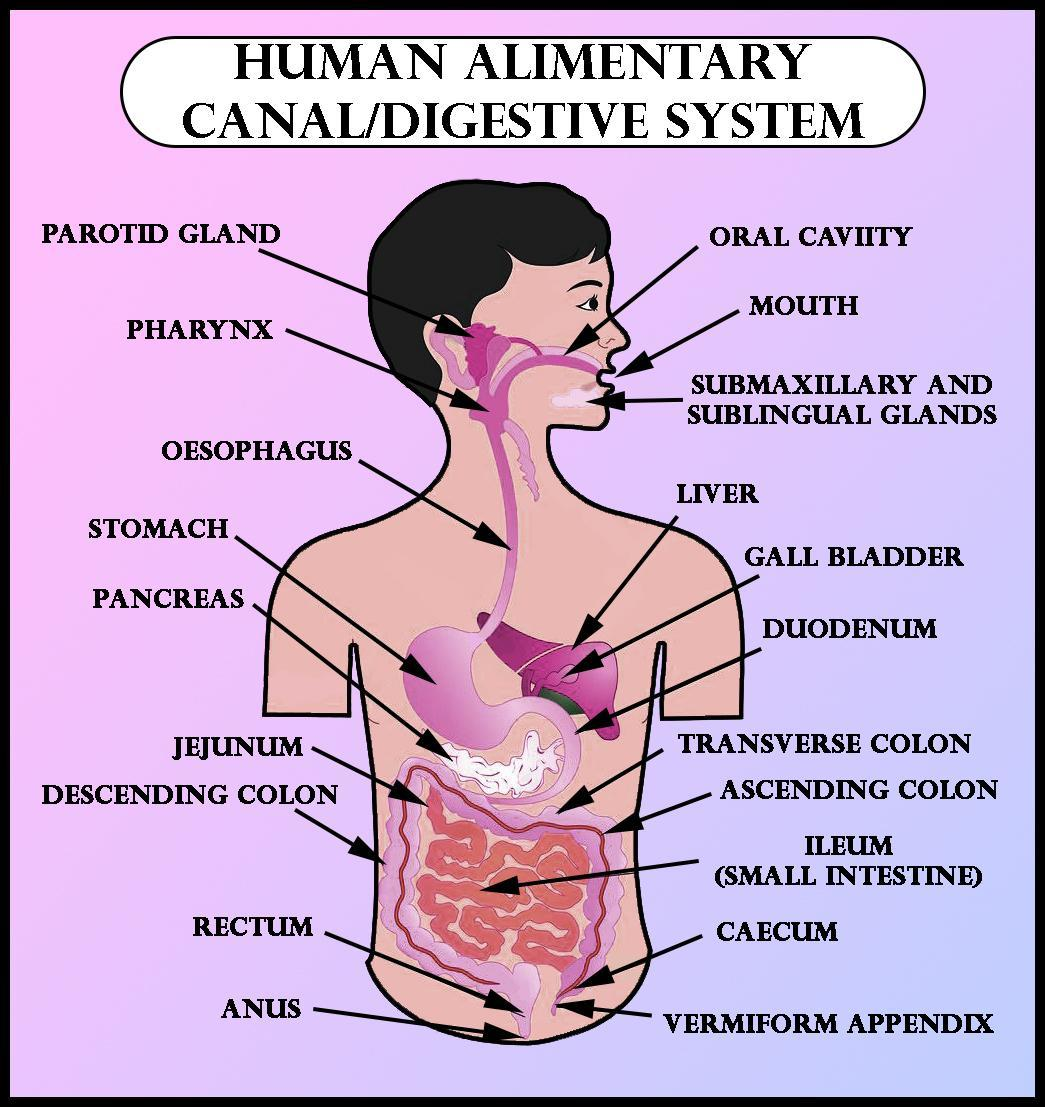
The food is then passed on to the duodenum portion of the small intestine where secretions from bile, pancreas, and intestine are also released. These juices have enzymes that help in the complete digestion of the food particles present.
Enzymes such as trypsin, chymotrypsin, and peptidases breakdown proteins. And enzymes such as amylase, lipases, and nucleases break down polysaccharides, fats, and nucleic acids respectively.
All these broken down simple substances are absorbed by the jejunum and ileum regions of the small intestine. The undigested and unabsorbed substances are passed on to the large intestine where absorption of water, minerals, and some drugs take place.
The remaining substances in the large intestine that were not absorbed are known as feces and they are temporarily stored in the rectum until defecation.
Note:
- The secretions of the intestine are combinedly known as succus entericus or intestinal juice. It is made up of secretions of goblets cells and brushes border cells.
- HCl is present in gastric juice to provide the optimum conditions for the working of the enzyme pepsin.
- Bile juice and the pancreatic juice are released from the hepato-pancreatic duct which is guarded by the Sphincter of Oddi.
Complete Step by Step Answer:
The digestion of the food starts in the buccal cavity where the food is broken into small bits by the teeth and made into a ball called bolus with the help of saliva. Chemical digestion also starts here as salivary amylase begins digesting starch.
This bolus then reaches the stomach where it is acted upon by the acidic gastric juice and mixed thoroughly by the muscular movements of the stomach wall. The food is now known as chyme. Proteins are digested here by the action of pepsin.
The food is then passed on to the duodenum portion of the small intestine where secretions from bile, pancreas, and intestine are also released. These juices have enzymes that help in the complete digestion of the food particles present.
Enzymes such as trypsin, chymotrypsin, and peptidases breakdown proteins. And enzymes such as amylase, lipases, and nucleases break down polysaccharides, fats, and nucleic acids respectively.
All these broken down simple substances are absorbed by the jejunum and ileum regions of the small intestine. The undigested and unabsorbed substances are passed on to the large intestine where absorption of water, minerals, and some drugs take place.
The remaining substances in the large intestine that were not absorbed are known as feces and they are temporarily stored in the rectum until defecation.
Note:
- The secretions of the intestine are combinedly known as succus entericus or intestinal juice. It is made up of secretions of goblets cells and brushes border cells.
- HCl is present in gastric juice to provide the optimum conditions for the working of the enzyme pepsin.
- Bile juice and the pancreatic juice are released from the hepato-pancreatic duct which is guarded by the Sphincter of Oddi.
Recently Updated Pages
Master Class 11 English: Engaging Questions & Answers for Success

Master Class 11 Social Science: Engaging Questions & Answers for Success
Master Class 11 Maths: Engaging Questions & Answers for Success
Master Class 11 Biology: Engaging Questions & Answers for Success
Master Class 11 Physics: Engaging Questions & Answers for Success
Master Class 11 Chemistry: Engaging Questions & Answers for Success
Trending doubts
One Metric ton is equal to kg A 10000 B 1000 C 100 class 11 physics CBSE
Difference Between Prokaryotic Cells and Eukaryotic Cells
Two of the body parts which do not appear in MRI are class 11 biology CBSE
Find the value of the expression given below sin 30circ class 11 maths CBSE
Draw a diagram of a plant cell and label at least eight class 11 biology CBSE
10 examples of friction in our daily life