




Describe symbiotic nitrogen fixation with the help of a diagram.
Answer
 Verified
616.5k+ views
Hint: When the nitrogen-fixing bacteria live in symbiotic relationships with the host then it is called symbiotic nitrogen fixation. It is used by plants such as legumes for fixing atmospheric nitrogen gas to ammonia. It is established broadly in nature and has very low economic and environmental costs.
Complete answer:
The biological nitrogen fixation process that converts atmospheric nitrogen into the nitrogenous compounds of living organisms is called symbiotic nitrogen fixation. For example – Rhizobium, Frankia, etc. Most of the microorganisms partner themselves with host plants to fix nitrogen symbiotically. By the process of photosynthesis, plants provide sugars that are utilized by nitrogen-fixing microorganisms for producing energy that is necessary for nitrogen fixation.
The common example of symbiotic nitrogen fixation is Azolla’s symbiosis with a cyanobacterium Anabaena azollae. In this process, specialized cells are called heterocyst formed by the particular amount of nitrogen that is fixed by cyanobacteria. In wetlands of Southeast Asia, this type of symbiosis has been used for the last 1000 years as a biofertilizer.
The most crucial symbiotic relationship takes place between legumes and Rhizobium and Bradyrhizobium bacteria. This symbiotic association is common in the worldwide ecology. Some examples of legumes that are used in symbiotic nitrogen fixation are alfalfa, beans, clover, lupines, peanuts, etc.
In the symbiotic relationship, the supply of nitrogen by bacteria directly takes place in the legume and it indirectly provides nitrogen to the adjacent grass plants.
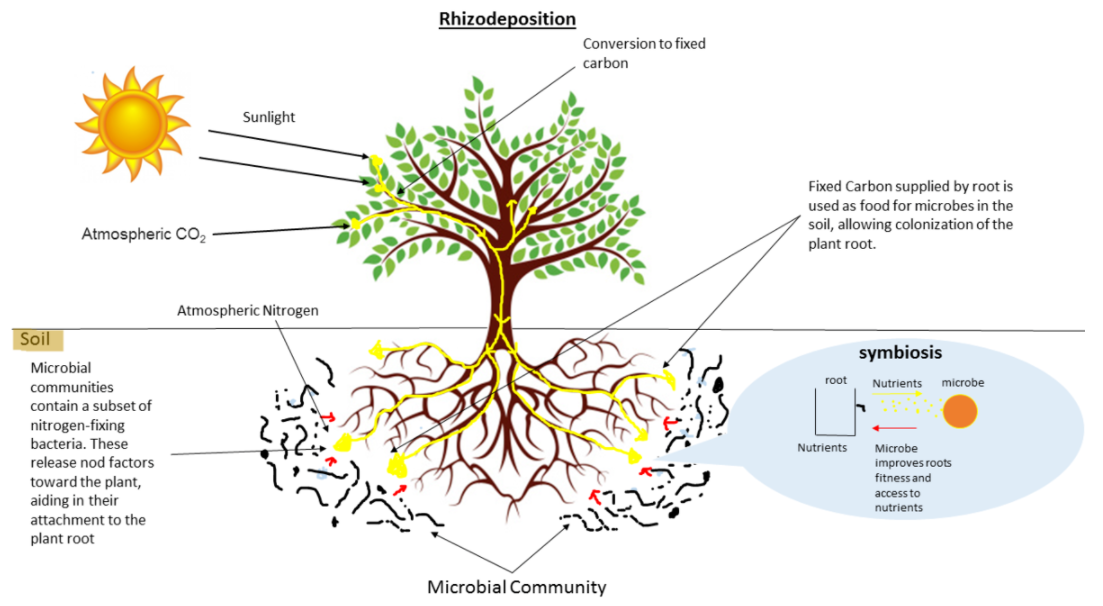
Note: Prokaryotes can fix nitrogen very easily and efficiently by the process of symbiotic nitrogen fixation. Thus, most plants are there that provide nutrients to one another by making a symbiotic relationship. In this way nutrient requirements of every plant complete. The plants will get the benefit and prevent them from getting dead.
Complete answer:
The biological nitrogen fixation process that converts atmospheric nitrogen into the nitrogenous compounds of living organisms is called symbiotic nitrogen fixation. For example – Rhizobium, Frankia, etc. Most of the microorganisms partner themselves with host plants to fix nitrogen symbiotically. By the process of photosynthesis, plants provide sugars that are utilized by nitrogen-fixing microorganisms for producing energy that is necessary for nitrogen fixation.
The common example of symbiotic nitrogen fixation is Azolla’s symbiosis with a cyanobacterium Anabaena azollae. In this process, specialized cells are called heterocyst formed by the particular amount of nitrogen that is fixed by cyanobacteria. In wetlands of Southeast Asia, this type of symbiosis has been used for the last 1000 years as a biofertilizer.
The most crucial symbiotic relationship takes place between legumes and Rhizobium and Bradyrhizobium bacteria. This symbiotic association is common in the worldwide ecology. Some examples of legumes that are used in symbiotic nitrogen fixation are alfalfa, beans, clover, lupines, peanuts, etc.
In the symbiotic relationship, the supply of nitrogen by bacteria directly takes place in the legume and it indirectly provides nitrogen to the adjacent grass plants.
Note: Prokaryotes can fix nitrogen very easily and efficiently by the process of symbiotic nitrogen fixation. Thus, most plants are there that provide nutrients to one another by making a symbiotic relationship. In this way nutrient requirements of every plant complete. The plants will get the benefit and prevent them from getting dead.
Recently Updated Pages
Master Class 12 Economics: Engaging Questions & Answers for Success

Master Class 12 English: Engaging Questions & Answers for Success
Master Class 12 Social Science: Engaging Questions & Answers for Success
Master Class 12 Maths: Engaging Questions & Answers for Success
Master Class 12 Physics: Engaging Questions & Answers for Success
Master Class 9 General Knowledge: Engaging Questions & Answers for Success
Trending doubts
One Metric ton is equal to kg A 10000 B 1000 C 100 class 11 physics CBSE
Difference Between Prokaryotic Cells and Eukaryotic Cells
Two of the body parts which do not appear in MRI are class 11 biology CBSE
1 ton equals to A 100 kg B 1000 kg C 10 kg D 10000 class 11 physics CBSE
Draw a diagram of nephron and explain its structur class 11 biology CBSE
10 examples of friction in our daily life