




Construct a parallelogram \[ABCD\] in which \[AB=6.5\text{ }cm,\text{ }AC=3.4\text{ }cm\] and the altitude \[AL\] from $ A $ is \[2.5\text{ }cm\] . Draw the altitude from $ C $ and measure it.
Answer
 Verified
616.8k+ views
Hint: For constructing a parallelogram first we need to draw a baseline and mark the 2 arcs respectively from the 2 end points of the base line with the radius equal to the required length and draw a ray joining the end point and the arc and mark the point of intersection on arc and join the both points on the arc.
Complete step-by-step answer:
For constructing a parallelogram \[ABCD\] in which \[AB=6.5\text{ }cm,\text{ }AC=3.4\text{ }cm\] and the altitude \[AL\] from $ A $ is \[2.5\text{ }cm\] , we have to follow the below steps one by one.
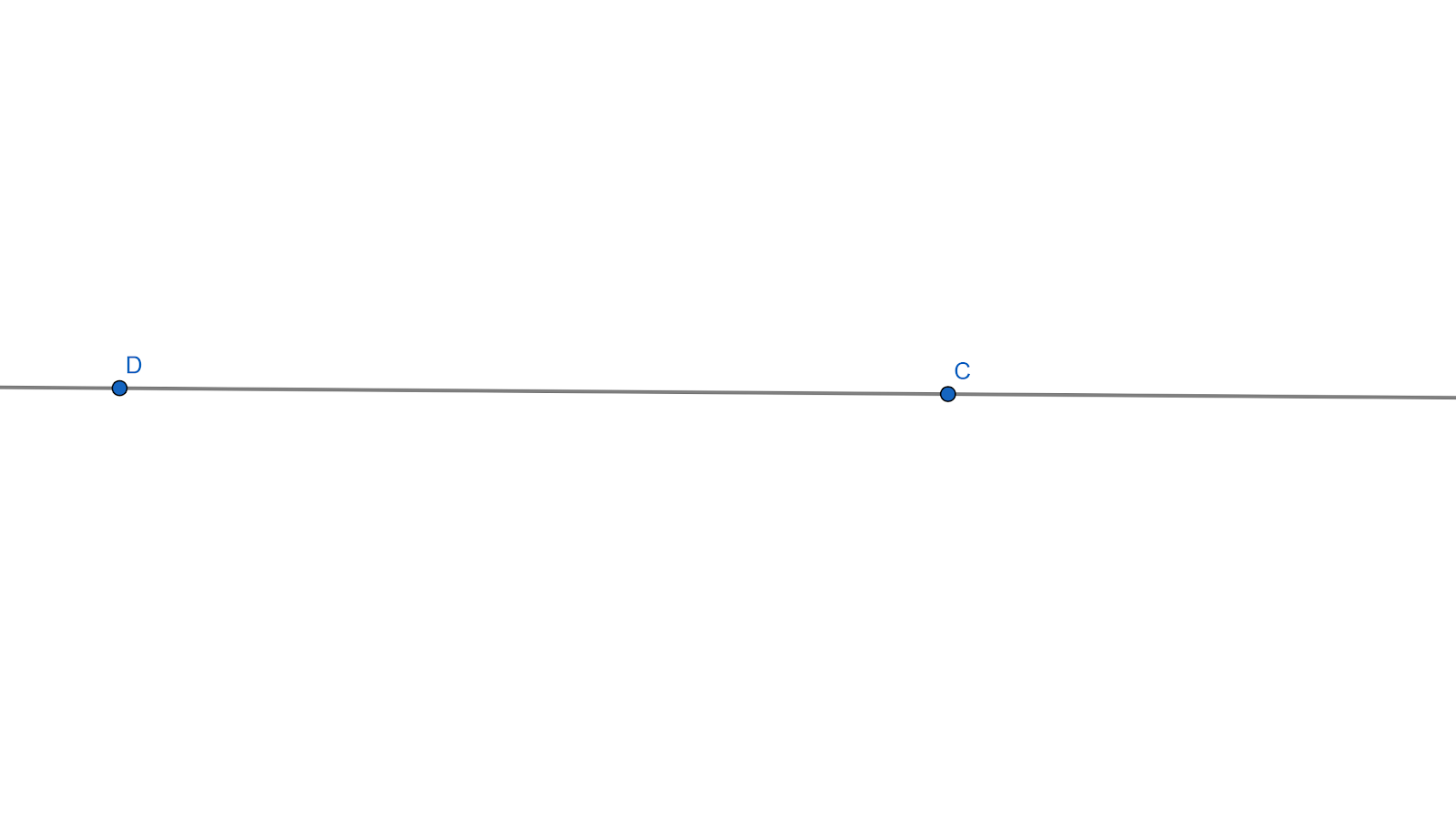
(1) Draw a line $ DC=6.5cm $ as a base line. Since, we know that parallelograms have parallel lines of equal lengths. Here, $ AB $ and $ DC $ are parallel and are of equal length.
(2) Now with the help of a compass with radius 3.4cm (since the length of \[\text{ }AC=3.4\text{ }cm\] and it will be parallel to the line $ BD $ with equal length), draw 2 arcs from points D and C respectively. Now from point D draw a ray cutting the previous arc and mark it as A and similarly draw a ray from point C and mark it as B. Now join B to C.
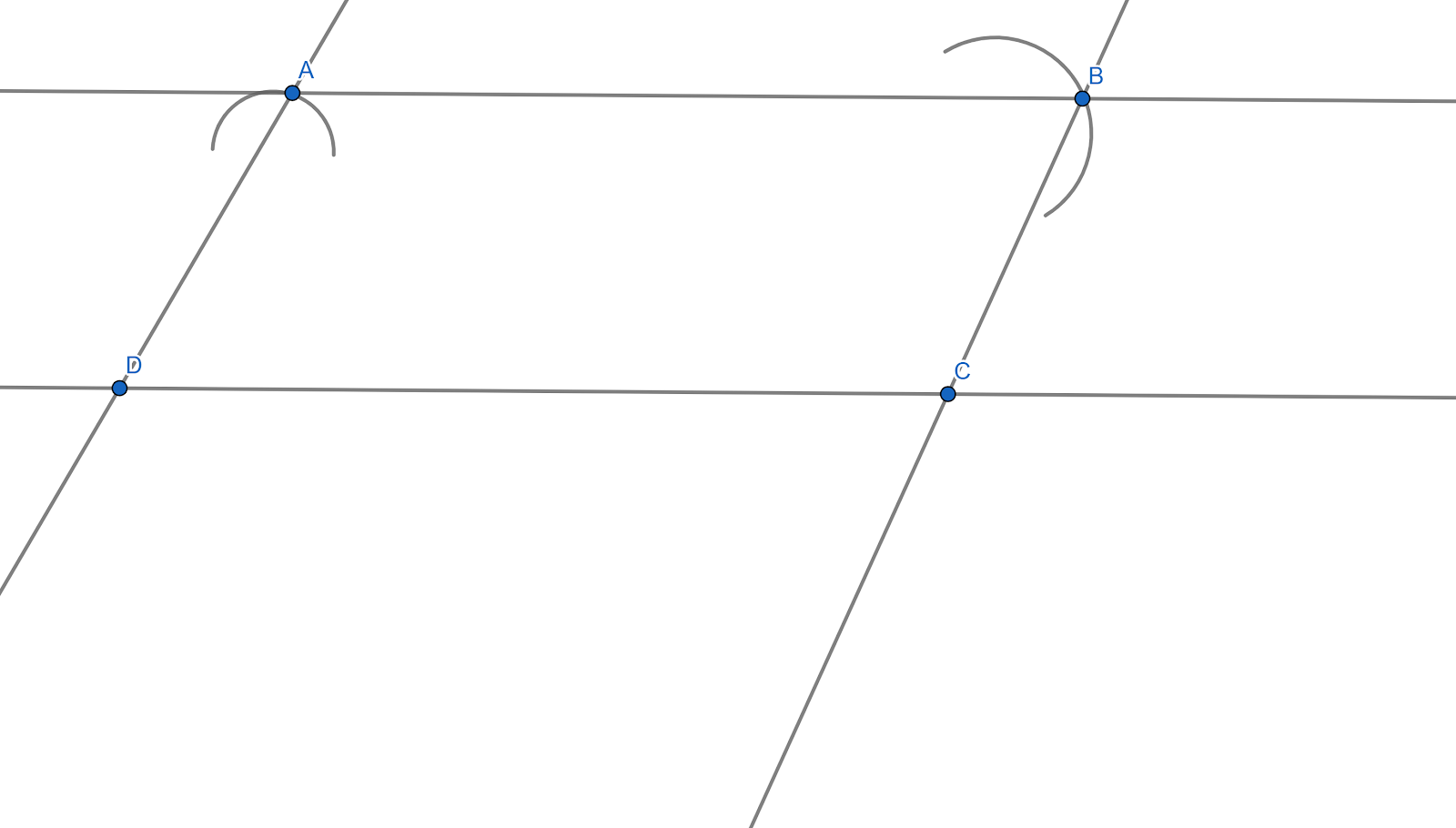
(3) Our parallelogram \[ABCD\] is completed.
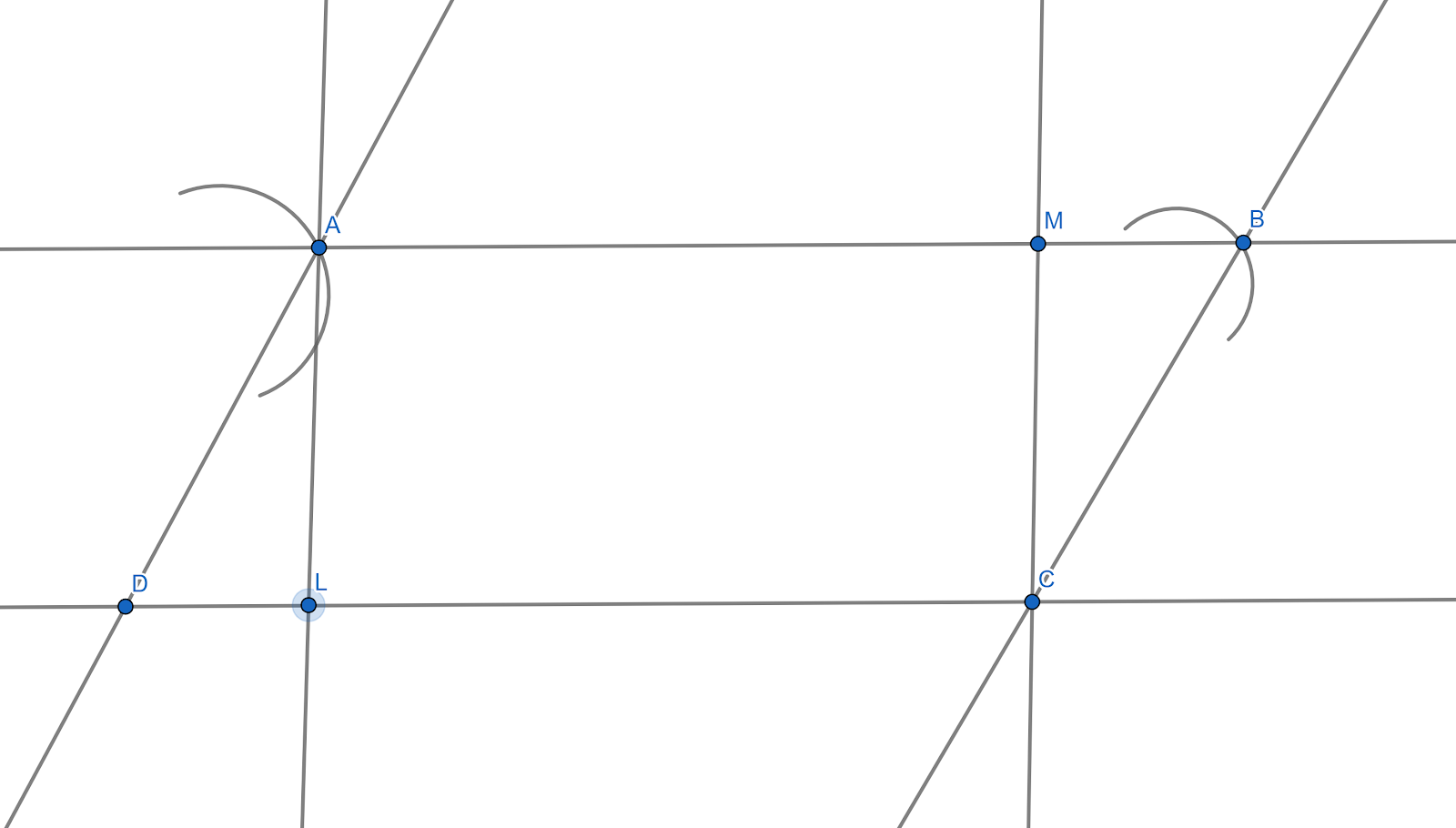
To find the measure of altitude $ CM $ . We should take a compass and a ruler and measure the line $ CM $ it will be equal to \[2.5\text{ }cm\] .
We know that altitudes in parallelograms are parallel and equal. In the question it is given that the altitude \[AL\] from $ A $ is \[2.5\text{ }cm\] .
Therefore, measure of altitude $ CM=2.5cm $ .
Note: Here while drawing the arc using the compass we should be taking the radius carefully. While answering these types of questions we should take care about the lengths given in the question and used during our construction, they should be accurate.
Complete step-by-step answer:
For constructing a parallelogram \[ABCD\] in which \[AB=6.5\text{ }cm,\text{ }AC=3.4\text{ }cm\] and the altitude \[AL\] from $ A $ is \[2.5\text{ }cm\] , we have to follow the below steps one by one.
(1) Draw a line $ DC=6.5cm $ as a base line. Since, we know that parallelograms have parallel lines of equal lengths. Here, $ AB $ and $ DC $ are parallel and are of equal length.
(2) Now with the help of a compass with radius 3.4cm (since the length of \[\text{ }AC=3.4\text{ }cm\] and it will be parallel to the line $ BD $ with equal length), draw 2 arcs from points D and C respectively. Now from point D draw a ray cutting the previous arc and mark it as A and similarly draw a ray from point C and mark it as B. Now join B to C.
(3) Our parallelogram \[ABCD\] is completed.
To find the measure of altitude $ CM $ . We should take a compass and a ruler and measure the line $ CM $ it will be equal to \[2.5\text{ }cm\] .
We know that altitudes in parallelograms are parallel and equal. In the question it is given that the altitude \[AL\] from $ A $ is \[2.5\text{ }cm\] .
Therefore, measure of altitude $ CM=2.5cm $ .
Note: Here while drawing the arc using the compass we should be taking the radius carefully. While answering these types of questions we should take care about the lengths given in the question and used during our construction, they should be accurate.
Recently Updated Pages
Master Class 12 Economics: Engaging Questions & Answers for Success

Master Class 12 English: Engaging Questions & Answers for Success
Master Class 12 Social Science: Engaging Questions & Answers for Success
Master Class 12 Maths: Engaging Questions & Answers for Success
Master Class 12 Physics: Engaging Questions & Answers for Success
Master Class 10 English: Engaging Questions & Answers for Success
Trending doubts
Explain the Treaty of Vienna of 1815 class 10 social science CBSE
Why is it 530 pm in india when it is 1200 afternoon class 10 social science CBSE
What is the full form of POSCO class 10 social science CBSE
Define Potential, Developed, Stock and Reserved resources
Which Country Has the Largest Border with India?
Complete the sentence with the most appropriate word class 10 english CBSE