




Cones are present in
A. Sclerotic
B. Retina
C. Cornea
D. None of the above
Answer
 Verified
603.6k+ views
Hint:Cones are one of the types of photoreceptor cells. Cones or cone cells are photoreceptor cells which are present in the vertebrate eyes including the human eye. The cones of the eye are responsible for color vision.
Complete answer:
Eyes are the organ responsible for the visual system in the human body. The eyes are the sight organ present in the human body due to which we can see things. The eyes react to light and product vision. The human eye is composed of three layers. The outer layer consists of the cornea and sclera. The front clear portion of the eye that transmits and focuses light is called the cornea. The remaining portion behind is called the sclera. Choroid, ciliary body, and iris are the three components that make up the middle layer of the eye. The dark muscular diaphragm which is present behind the cornea is called the iris. In the center of the iris, a small aperture called the pupil is present. The amount of light entering the eye is controlled by the pupil. The third layer which is the innermost layer is called the retina. The retina is a nerve layer that regulates the function of sensing the light and creating the electrical impulses that travel to the brain via the optic nerve. The cells’ rods and cones present in the retina are responsible for the perception of light and vision. Therefore, option B retina is the correct answer.
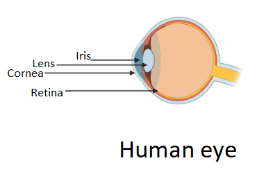
So, option B is the correct option.
Note: The cone cells react differently to different wavelengths of light. The functioning of cone cells is best in bright light. The rod cells of the retina work better in dim light. Damage to the retina of the eye causes loss of vision.
Complete answer:
Eyes are the organ responsible for the visual system in the human body. The eyes are the sight organ present in the human body due to which we can see things. The eyes react to light and product vision. The human eye is composed of three layers. The outer layer consists of the cornea and sclera. The front clear portion of the eye that transmits and focuses light is called the cornea. The remaining portion behind is called the sclera. Choroid, ciliary body, and iris are the three components that make up the middle layer of the eye. The dark muscular diaphragm which is present behind the cornea is called the iris. In the center of the iris, a small aperture called the pupil is present. The amount of light entering the eye is controlled by the pupil. The third layer which is the innermost layer is called the retina. The retina is a nerve layer that regulates the function of sensing the light and creating the electrical impulses that travel to the brain via the optic nerve. The cells’ rods and cones present in the retina are responsible for the perception of light and vision. Therefore, option B retina is the correct answer.
So, option B is the correct option.
Note: The cone cells react differently to different wavelengths of light. The functioning of cone cells is best in bright light. The rod cells of the retina work better in dim light. Damage to the retina of the eye causes loss of vision.
Recently Updated Pages
Master Class 11 English: Engaging Questions & Answers for Success

Master Class 11 Social Science: Engaging Questions & Answers for Success
Master Class 11 Maths: Engaging Questions & Answers for Success
Master Class 11 Chemistry: Engaging Questions & Answers for Success
Master Class 11 Biology: Engaging Questions & Answers for Success
Master Class 11 Physics: Engaging Questions & Answers for Success
Trending doubts
One Metric ton is equal to kg A 10000 B 1000 C 100 class 11 physics CBSE
Difference Between Prokaryotic Cells and Eukaryotic Cells
Find the value of the expression given below sin 30circ class 11 maths CBSE
1 ton equals to A 100 kg B 1000 kg C 10 kg D 10000 class 11 physics CBSE
Two of the body parts which do not appear in MRI are class 11 biology CBSE
Draw a diagram of nephron and explain its structur class 11 biology CBSE