




Chromomeres were discovered by
(a) Strasburger
(b) Van Beneden
(c) Pfitzner
(d) Winiwater
Answer
 Verified
629.1k+ views
Hint: Chromomeres are referred to as the structural subunit of a chromosome. The arrangement of chromosome structure can aid on top of things of gene expression. A chromomere, also known as an idiomere.
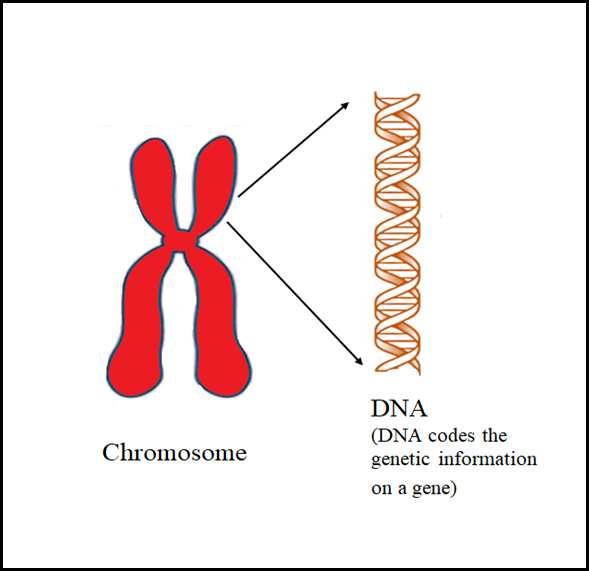
Complete answer: Chromomeres were discovered and narrated by Balbiani in 1876 and by Pfitzner in 1882. Chromomeres are bead-like or granular structures present on the eukaryotic chromosome which are formed by the coiling of a continuous DNA thread. In areas that are devoid of chromatin the transcription and condensing of DNA and protein complexes from the chromomeres. It is visible under the microscope during the prophase stage of meiosis and mitosis.
Maps of chromosomes are often made to be used in genetic and evolutionary studies. Chromomeric maps often want to locate the precise position of genes on a chromosome. Chromomeric maps often want to analyze chromosome aberrations and find correlations between the aberrations and their effects on genes near breakpoints. The appearance of a chromomeric organization examines the onset and intensification of transcription on lampbrush loops. Chromomeres display different properties and behaviors when associated with lampbrush chromosomes. Each chromosome can have up to many pairs of loops from lampbrush chromosomes originating from it, also as micro- loops that can't be detected with a light- weight microscope.
 So, the correct answer is ‘(c) Pfitzner’.
Note:
- It is unknown when chromosomes first appear on the chromosome. Chromomeres are often observed best when chromosomes are highly condensed. - The chromosomes are available during the leptotene phase of prophase I throughout meiosis. - There are quite 2000 chromomeres on 20 chromosomes of maize.
Complete answer: Chromomeres were discovered and narrated by Balbiani in 1876 and by Pfitzner in 1882. Chromomeres are bead-like or granular structures present on the eukaryotic chromosome which are formed by the coiling of a continuous DNA thread. In areas that are devoid of chromatin the transcription and condensing of DNA and protein complexes from the chromomeres. It is visible under the microscope during the prophase stage of meiosis and mitosis.
Maps of chromosomes are often made to be used in genetic and evolutionary studies. Chromomeric maps often want to locate the precise position of genes on a chromosome. Chromomeric maps often want to analyze chromosome aberrations and find correlations between the aberrations and their effects on genes near breakpoints. The appearance of a chromomeric organization examines the onset and intensification of transcription on lampbrush loops. Chromomeres display different properties and behaviors when associated with lampbrush chromosomes. Each chromosome can have up to many pairs of loops from lampbrush chromosomes originating from it, also as micro- loops that can't be detected with a light- weight microscope.
Note:
- It is unknown when chromosomes first appear on the chromosome. Chromomeres are often observed best when chromosomes are highly condensed. - The chromosomes are available during the leptotene phase of prophase I throughout meiosis. - There are quite 2000 chromomeres on 20 chromosomes of maize.
Recently Updated Pages
Master Class 11 English: Engaging Questions & Answers for Success

Master Class 11 Social Science: Engaging Questions & Answers for Success
Master Class 11 Maths: Engaging Questions & Answers for Success
Master Class 11 Biology: Engaging Questions & Answers for Success
Master Class 11 Physics: Engaging Questions & Answers for Success
Master Class 11 Chemistry: Engaging Questions & Answers for Success
Trending doubts
One Metric ton is equal to kg A 10000 B 1000 C 100 class 11 physics CBSE
What is cell theory Who formulated it class 11 biology CBSE
Phyllotaxy is the arrangement of ALeaflets BLeaves class 11 biology CBSE
Difference Between Prokaryotic Cells and Eukaryotic Cells
The symbiotic association of fungi and algae is called class 11 biology CBSE
Cell theory was formulated by A Schleiden and Schwann class 11 biology CBSE