




Cell organelles are embedded in
(a) Cytoplasmic membrane
(b) Protoplasm
(c) Cytoplasm
(d) None of the above
Answer
 Verified
630.3k+ views
Hint: Cell organelles are bodies composed of various biomolecules meant for carrying out functions to keep the cell alive. Hence, they must be kept or embedded in an environment where they can interact with each other and easily secrete and ingest various molecules and messengers.
Complete step by step answer:
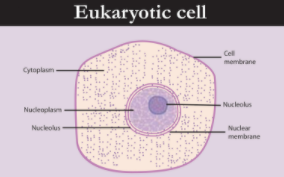
- The cytoplasm is the part of the cell in which all the organelles are present. It is a colorless matrix that is composed of $80\%$ water and other nutrients required by the cell.
- The cytoplasm consists of the cytosol that contains the cell organelles and inclusion bodies.
- The cytoplasm is the site for the various metabolic reactions involved in cellular respiration. Translation of proteins from mRNA also occurs in the cytoplasm.
So, the correct answer is ‘cytoplasm’.
Additional Information:
- The protoplasm is the living part of the cell, i.e., the cytoplasm and the nucleus that is surrounded by the plasma membrane.
- The cytoplasmic membrane, also known as the cell membrane or the plasma membrane, is a biological (usually phospholipid) membrane that separates the inner cellular environment from the exterior environment. It encloses the cytoplasm and the nucleus or the nucleoplasm.
- The organelles commonly present in a cell are mitochondria/chloroplast, peroxisome, ribosome, endoplasmic reticulum, nucleus, vacuole, centrosome, lysosome, and Golgi apparatus.
Note:
- The cytoplasm is supported by a number of fibrous structures that give shape to the cell and support cellular transport. It is known as the cytoskeleton.
- The cytoskeleton is composed of various structures that include microtubules, microfilaments, and intermediate filaments.
- In plants, cytoplasmic streaming occurs which is the movement of the cytoplasm around vacuoles.
Complete step by step answer:
- The cytoplasm is the part of the cell in which all the organelles are present. It is a colorless matrix that is composed of $80\%$ water and other nutrients required by the cell.
- The cytoplasm consists of the cytosol that contains the cell organelles and inclusion bodies.
- The cytoplasm is the site for the various metabolic reactions involved in cellular respiration. Translation of proteins from mRNA also occurs in the cytoplasm.
So, the correct answer is ‘cytoplasm’.
Additional Information:
- The protoplasm is the living part of the cell, i.e., the cytoplasm and the nucleus that is surrounded by the plasma membrane.
- The cytoplasmic membrane, also known as the cell membrane or the plasma membrane, is a biological (usually phospholipid) membrane that separates the inner cellular environment from the exterior environment. It encloses the cytoplasm and the nucleus or the nucleoplasm.
- The organelles commonly present in a cell are mitochondria/chloroplast, peroxisome, ribosome, endoplasmic reticulum, nucleus, vacuole, centrosome, lysosome, and Golgi apparatus.
Note:
- The cytoplasm is supported by a number of fibrous structures that give shape to the cell and support cellular transport. It is known as the cytoskeleton.
- The cytoskeleton is composed of various structures that include microtubules, microfilaments, and intermediate filaments.
- In plants, cytoplasmic streaming occurs which is the movement of the cytoplasm around vacuoles.
Recently Updated Pages
Basicity of sulphurous acid and sulphuric acid are

Master Class 11 English: Engaging Questions & Answers for Success
Master Class 11 Physics: Engaging Questions & Answers for Success
Master Class 11 Computer Science: Engaging Questions & Answers for Success
Master Class 11 Chemistry: Engaging Questions & Answers for Success
Master Class 11 Social Science: Engaging Questions & Answers for Success
Trending doubts
Difference Between Prokaryotic Cells and Eukaryotic Cells
Two of the body parts which do not appear in MRI are class 11 biology CBSE
One Metric ton is equal to kg A 10000 B 1000 C 100 class 11 physics CBSE
10 examples of friction in our daily life
Draw a diagram of nephron and explain its structur class 11 biology CBSE
What will happen if the mucus is not secreted by the class 11 biology CBSE