




What is camouflage? Give its significance.
Answer
 Verified
638.7k+ views
Hint: Organisms adopt various methods for their defense. It strongly depends on the behaviour of their predators which technique they have to adopt.
Complete answer:
Camouflage is a technique of defense that a particular organism adapts to blend itself with the surroundings so that it is not identified by the predator. This process of camouflage is also known as the cryptic coloration. Organisms are able to protect themselves by changing their appearance.
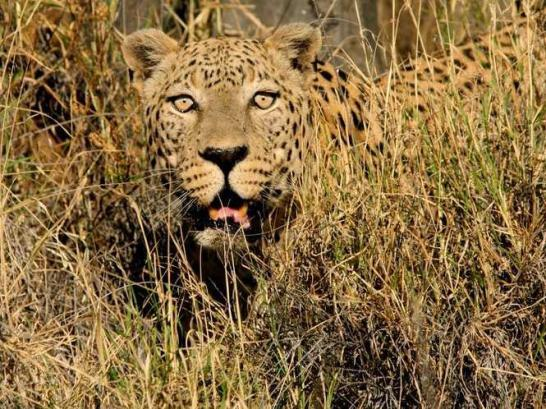
The process of camouflage is used to mask the identity, location and movement of the organisms from their predators and thus prey gets protected whereas predators of these animals having capability of camouflaging have to work hard.
The camouflage of the species is known to depend on various factors. Also, the physical features of the organism are considered to be very important.
For example - Animals having fur depends on different camouflage techniques than those animals which have either feathers or scales. Furs are known to take weeks or even months to grow whereas feathers or scales can be changed or shed regularly in a very short period of time. Animals with fur are more often camouflaged by season. For example, arctic fox; it is known to have white coat in the winter, whereas it changes to brown in the summer season.
The behavior and features of the predator species also affects the camouflage process. For example- in case of the color-blind predator, the prey species do not need to match their color with their surroundings. This is seen in case of the Lions, as they are color-blind. They are the main predator of zebras.
The process of camouflage provides the following advantages to the organisms:
- An organism's chance of survival is increased by hiding it from predators.
- It provides the type of coloration or pattern that is used by the animals to blend in with their surroundings.
- Sometimes, this process is also used by predators which help them in concealing themselves during stalking the prey.
Note: Camouflage should not be confused with mimicry or any defensive process and it highly increases the survival rate of the prey species.
Complete answer:
Camouflage is a technique of defense that a particular organism adapts to blend itself with the surroundings so that it is not identified by the predator. This process of camouflage is also known as the cryptic coloration. Organisms are able to protect themselves by changing their appearance.
The process of camouflage is used to mask the identity, location and movement of the organisms from their predators and thus prey gets protected whereas predators of these animals having capability of camouflaging have to work hard.
The camouflage of the species is known to depend on various factors. Also, the physical features of the organism are considered to be very important.
For example - Animals having fur depends on different camouflage techniques than those animals which have either feathers or scales. Furs are known to take weeks or even months to grow whereas feathers or scales can be changed or shed regularly in a very short period of time. Animals with fur are more often camouflaged by season. For example, arctic fox; it is known to have white coat in the winter, whereas it changes to brown in the summer season.
The behavior and features of the predator species also affects the camouflage process. For example- in case of the color-blind predator, the prey species do not need to match their color with their surroundings. This is seen in case of the Lions, as they are color-blind. They are the main predator of zebras.
The process of camouflage provides the following advantages to the organisms:
- An organism's chance of survival is increased by hiding it from predators.
- It provides the type of coloration or pattern that is used by the animals to blend in with their surroundings.
- Sometimes, this process is also used by predators which help them in concealing themselves during stalking the prey.
Note: Camouflage should not be confused with mimicry or any defensive process and it highly increases the survival rate of the prey species.
Recently Updated Pages
Master Class 11 Social Science: Engaging Questions & Answers for Success

Master Class 11 English: Engaging Questions & Answers for Success
Master Class 11 Maths: Engaging Questions & Answers for Success
Master Class 11 Chemistry: Engaging Questions & Answers for Success
Master Class 11 Biology: Engaging Questions & Answers for Success
Class 11 Question and Answer - Your Ultimate Solutions Guide
Trending doubts
Explain the Treaty of Vienna of 1815 class 10 social science CBSE
Why is it 530 pm in india when it is 1200 afternoon class 10 social science CBSE
What is the full form of POSCO class 10 social science CBSE
Define Potential, Developed, Stock and Reserved resources
Which Country Has the Largest Border with India?
Choose the feminine form of the given noun Fox AFoxess class 10 english CBSE