




What is \[{C_2}\], Cycle?
A) Glyoxylate cycle
B) Calvin cycle
C) Krebs cycle
D) TCA cycle
Answer
 Verified
545.7k+ views
Hint: In \[{C_2}\] cycle, two- carbon compound is the first secure substance i.e., phosphoglycolic acid is produced. It takes place in chloroplast, peroxisomes and mitochondria. It is also called photorespiration in which the sugars are oxidised to carbon dioxide in the presence of light.
Complete answer:
Photorespiration is the light dependent step in which the oxygen is taken in and the carbon dioxide is released. It takes place in the photosynthetic organisms. In this the carbohydrate is broken down to carbon dioxide. It is an unnecessary process that results in the depletion of carbon dioxide which was constant by using plants. It occurs as a result of the oxygenase production of the enzyme Now, let us discover the answer from the options-
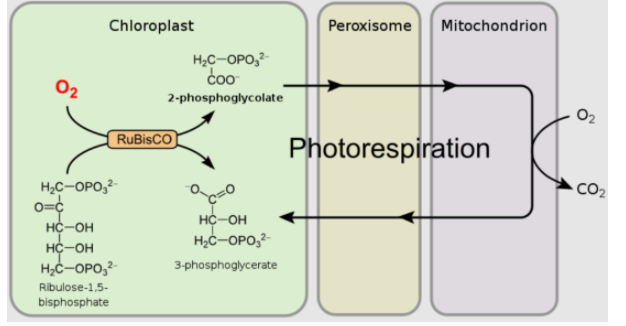
Photorespiration is the light dependent step in which the oxygen is taken in and the carbon dioxide is released. It takes place in the photosynthetic organisms. In this the carbohydrate is broken down to carbon dioxide. It is an unnecessary process that results in the depletion of carbon dioxide which was constant by using plants. It occurs as a result of the oxygenase production of the enzyme $RuBisCo$ present in \[{C_3}\] plants. In chloroplasts, peroxisomes and mitochondria, this system exists. The first stable end result of the photorespiration reaction is a 2-carbon compound called glycolate, so the photorespiration is also called the \[{C_2}\] cycle or glycolate metabolism.
The Calvin cycle is acknowledged as the light independent phase of photosynthesis in which the carbon dioxide is converted into glucose. The first stable product is a three-carbon compound and is the first stable product formed. (phosphoglyceric acid). Thus, the alternative B is incorrect.
The Kreb cycle is also known as TCA cycle or tri carboxylic acid cycle. This is a light dependent phase of photosynthesis in which the organisms release the energy stored. In this the oxidation of acetyl-CoA takes place which is obtained from carbohydrates, fats and proteins. Thus, the alternative C and D is incorrect.
Thus the correct answer is option ‘A’.
Note: Phosphoglycolate turns into glycolate by phosphate depletion. In chloroplast glycolate types and joins the peroxisome to shape glyoxylate and hydrogen peroxide. Glyoxylate is translated into glycine and moved into mitochondria. Two molecules of glycine bind to shape serine in the mitochondria. To shape hydroxy pyruvate, serine joins the peroxisome.
Complete answer:
Photorespiration is the light dependent step in which the oxygen is taken in and the carbon dioxide is released. It takes place in the photosynthetic organisms. In this the carbohydrate is broken down to carbon dioxide. It is an unnecessary process that results in the depletion of carbon dioxide which was constant by using plants. It occurs as a result of the oxygenase production of the enzyme Now, let us discover the answer from the options-
Photorespiration is the light dependent step in which the oxygen is taken in and the carbon dioxide is released. It takes place in the photosynthetic organisms. In this the carbohydrate is broken down to carbon dioxide. It is an unnecessary process that results in the depletion of carbon dioxide which was constant by using plants. It occurs as a result of the oxygenase production of the enzyme $RuBisCo$ present in \[{C_3}\] plants. In chloroplasts, peroxisomes and mitochondria, this system exists. The first stable end result of the photorespiration reaction is a 2-carbon compound called glycolate, so the photorespiration is also called the \[{C_2}\] cycle or glycolate metabolism.
The Calvin cycle is acknowledged as the light independent phase of photosynthesis in which the carbon dioxide is converted into glucose. The first stable product is a three-carbon compound and is the first stable product formed. (phosphoglyceric acid). Thus, the alternative B is incorrect.
The Kreb cycle is also known as TCA cycle or tri carboxylic acid cycle. This is a light dependent phase of photosynthesis in which the organisms release the energy stored. In this the oxidation of acetyl-CoA takes place which is obtained from carbohydrates, fats and proteins. Thus, the alternative C and D is incorrect.
Thus the correct answer is option ‘A’.
Note: Phosphoglycolate turns into glycolate by phosphate depletion. In chloroplast glycolate types and joins the peroxisome to shape glyoxylate and hydrogen peroxide. Glyoxylate is translated into glycine and moved into mitochondria. Two molecules of glycine bind to shape serine in the mitochondria. To shape hydroxy pyruvate, serine joins the peroxisome.
Recently Updated Pages
Master Class 11 Social Science: Engaging Questions & Answers for Success

Master Class 11 Physics: Engaging Questions & Answers for Success
Master Class 11 Maths: Engaging Questions & Answers for Success
Master Class 11 Economics: Engaging Questions & Answers for Success
Master Class 11 Computer Science: Engaging Questions & Answers for Success
Master Class 11 Chemistry: Engaging Questions & Answers for Success
Trending doubts
One Metric ton is equal to kg A 10000 B 1000 C 100 class 11 physics CBSE
There are 720 permutations of the digits 1 2 3 4 5 class 11 maths CBSE
1 Quintal is equal to a 110 kg b 10 kg c 100kg d 1000 class 11 physics CBSE
State and prove Bernoullis theorem class 11 physics CBSE
Difference Between Prokaryotic Cells and Eukaryotic Cells
Which among the following are examples of coming together class 11 social science CBSE