




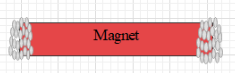
Boojho dipped a bar magnet in a heap of iron filings and pulled it out. He found that iron filings were stuck to the magnet in the figure. What are the ends of the magnet that have more iron filings sticking to it called?
Answer
 Verified
639.6k+ views
Hint: It is found the magnitude of the magnetic field is maximum near the poles and decreases as we go away from the poles. Higher the magnitude of the magnetic field, greater will the force of attraction towards other magnet or any other metal.
Complete answer:
A magnet is a substance that shows some magnetic properties. A magnet attracts metallic substances like iron. A magnet consists of two poles called magnetic poles – magnetic north and magnetic south pole. The magnetic poles are responsible for the magnetic field lines. The magnetic field lines are in the form of closed loops, passing through both the poles of the magnet.
In case of a bar magnet, the magnetic fields lines pass through the magnet and the magnetic poles are at the ends. They appear to be coming out of the north pole and going in through the south pole of the magnet. It is found the magnitude of the magnetic field is maximum near the poles and decreases as we go away from the poles. Higher the magnitude of the magnetic field, greater will the force of attraction towards other magnet or any other metal.Therefore, when we dip a bar magnet in iron filings, the poles of the magnet attract most of the irons filings.
Hence, the answer to the question is that the ends of the magnet that have more iron filings sticking to it are called magnetic poles.
Note: The magnetic poles of a magnet are similar to that of the charges on the dipole. The like poles attract each other and the opposite (unlike) poles repel each other. This means that a north will repel another north pole but it will attract a south pole of another magnet.
Complete answer:
A magnet is a substance that shows some magnetic properties. A magnet attracts metallic substances like iron. A magnet consists of two poles called magnetic poles – magnetic north and magnetic south pole. The magnetic poles are responsible for the magnetic field lines. The magnetic field lines are in the form of closed loops, passing through both the poles of the magnet.
In case of a bar magnet, the magnetic fields lines pass through the magnet and the magnetic poles are at the ends. They appear to be coming out of the north pole and going in through the south pole of the magnet. It is found the magnitude of the magnetic field is maximum near the poles and decreases as we go away from the poles. Higher the magnitude of the magnetic field, greater will the force of attraction towards other magnet or any other metal.Therefore, when we dip a bar magnet in iron filings, the poles of the magnet attract most of the irons filings.
Hence, the answer to the question is that the ends of the magnet that have more iron filings sticking to it are called magnetic poles.
Note: The magnetic poles of a magnet are similar to that of the charges on the dipole. The like poles attract each other and the opposite (unlike) poles repel each other. This means that a north will repel another north pole but it will attract a south pole of another magnet.

Recently Updated Pages
Master Class 10 Computer Science: Engaging Questions & Answers for Success

Master Class 12 Physics: Engaging Questions & Answers for Success
Master Class 12 Social Science: Engaging Questions & Answers for Success
Master Class 12 English: Engaging Questions & Answers for Success
Master Class 12 Maths: Engaging Questions & Answers for Success
Master Class 12 Business Studies: Engaging Questions & Answers for Success
Trending doubts
100 million is equal to begingathered A 1 crore B -class-7-maths-CBSE
List of coprime numbers from 1 to 100 class 7 maths CBSE
Full Form of IASDMIPSIFSIRSPOLICE class 7 social science CBSE
The plural of Chief is Chieves A True B False class 7 english CBSE
What is the use of kink in a clinical thermometer class 7 physics CBSE
What is BLO What is the full form of BLO class 8 social science CBSE