




Blood pressure in the mammalian aorta is maximum during
(a)Systole of the left ventricle
(b)Diastole of the right atrium
(c)Systole of the left atrium
(d)Diastole of the right ventricle
Answer
 Verified
629.1k+ views
Hint: The blood pressure is maximum when the oxygenated blood is pumped to the parts of the body through the aorta. In this situation, the heart shrinks and pushes loads of blood into the aorta, and the blood pressure is higher of the two blood pressures.
Complete step-by-step answer:
When the heart is actively beating, it pumps blood into the arteries in a dynamic manner. Due to the dynamic flow of blood into the arteries, there is a variation in the blood pressure in the arteries. When the blood pressure in the arteries is at its peak, it is called systolic blood pressure and occurs during the contraction of the ventricles i.e. the systole of the ventricles. The ventricular systole is a part of the cardiac cycle in which both the ventricles contract to pump the blood in respective arteries. In the form of electrical waves, the ventricular systole or depolarization is seen as a QRS complex in the ECG of the heart.
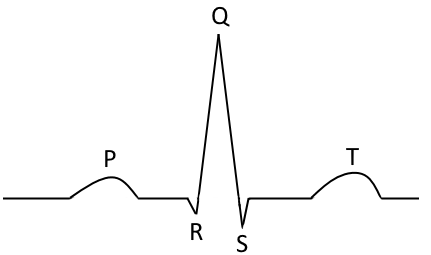
For a healthy individual sitting idle, the normal systolic blood pressure is around 120 mmHg. The typical systolic blood pressure ranges as per the American Health Association are as given below –
Normal - 120 mmHg
Elevated - 129 mmHg
High blood pressure stage 1 - 139 mmHg
High blood pressure stage 2- 180 mmHg
Hypersensitive crisis - 200 mmHg
So, the correct answer is ‘Systole of the left ventricle’.
Note: The term systole is used to denote the period of contraction of the ventricles that occurs between the first and second heart sounds while the term diastole indicates the part of the cardiac cycle in which the heart refills through the blood coming from veins. At this time the pressure in the arteries is minimum and called the diastolic pressure.
Complete step-by-step answer:
When the heart is actively beating, it pumps blood into the arteries in a dynamic manner. Due to the dynamic flow of blood into the arteries, there is a variation in the blood pressure in the arteries. When the blood pressure in the arteries is at its peak, it is called systolic blood pressure and occurs during the contraction of the ventricles i.e. the systole of the ventricles. The ventricular systole is a part of the cardiac cycle in which both the ventricles contract to pump the blood in respective arteries. In the form of electrical waves, the ventricular systole or depolarization is seen as a QRS complex in the ECG of the heart.
For a healthy individual sitting idle, the normal systolic blood pressure is around 120 mmHg. The typical systolic blood pressure ranges as per the American Health Association are as given below –
Normal - 120 mmHg
Elevated - 129 mmHg
High blood pressure stage 1 - 139 mmHg
High blood pressure stage 2- 180 mmHg
Hypersensitive crisis - 200 mmHg
So, the correct answer is ‘Systole of the left ventricle’.
Note: The term systole is used to denote the period of contraction of the ventricles that occurs between the first and second heart sounds while the term diastole indicates the part of the cardiac cycle in which the heart refills through the blood coming from veins. At this time the pressure in the arteries is minimum and called the diastolic pressure.
Recently Updated Pages
Master Class 12 Economics: Engaging Questions & Answers for Success

Master Class 12 English: Engaging Questions & Answers for Success
Master Class 12 Social Science: Engaging Questions & Answers for Success
Master Class 12 Maths: Engaging Questions & Answers for Success
Master Class 12 Physics: Engaging Questions & Answers for Success
Master Class 9 General Knowledge: Engaging Questions & Answers for Success
Trending doubts
One Metric ton is equal to kg A 10000 B 1000 C 100 class 11 physics CBSE
Difference Between Prokaryotic Cells and Eukaryotic Cells
Find the value of the expression given below sin 30circ class 11 maths CBSE
Two of the body parts which do not appear in MRI are class 11 biology CBSE
Draw a diagram of nephron and explain its structur class 11 biology CBSE
10 examples of friction in our daily life