




Bile juice is produced by
(a)Stomach
(b)Liver
(c)Gallbladder
(d)Pancreas
Answer
 Verified
612.6k+ views
Hint: Bile juice helps in the breakdown of fats or the emulsification of fats. It is stored in the gallbladder but it is produced in a different organ. It is produced by the organ which helps in the storage of glycogen and it is the largest gland in the human body.
Complete answer:
The bile juice helps in the emulsification of fats in the intestine and it is poured into the intestine from the gallbladder through the common bile duct. It is produced in the Liver.
Bile assists with fat digestion and absorption in the intestine and is also a means for the body to excrete waste from the blood. It forms the bile pigments that are later oxidized to form stercobilin and urobilin which give color to the excreta and urine respectively.
Additional Information:
-The liver is a pyramid-shaped gland present in the abdomen and it is the largest gland of the body.
-It is characterized by high regenerative capacity and can easily regrow itself even if a third of it is removed surgically.
-It is the main organ that performs the metabolism of drugs and detoxification of blood.
-It is the organ that acts as the glycogen reserve in the body which is the reserve food material in animals that can be broken down to form glucose through the process called glycogenolysis.
-It is closely associated with the gallbladder which is a bag-like structure that stores the bile secreted in the liver.
So, the correct answer is, “Liver”
Note:
-The liver only secretes the bile and then transfers to the gallbladder through the bile duct for storage.
-The cholesterol contained in bile occasionally forms lumps called gallstones, following which cholecystectomy or the removal of the gallbladder may be advised. In such cases, the patients have advised diet restrictions to some extent as the bile is still formed in the liver but there are no adequate storage and concentration measures.
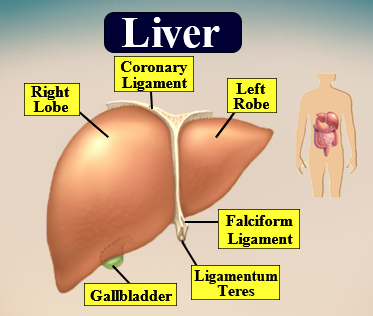
Complete answer:
The bile juice helps in the emulsification of fats in the intestine and it is poured into the intestine from the gallbladder through the common bile duct. It is produced in the Liver.
Bile assists with fat digestion and absorption in the intestine and is also a means for the body to excrete waste from the blood. It forms the bile pigments that are later oxidized to form stercobilin and urobilin which give color to the excreta and urine respectively.
Additional Information:
-The liver is a pyramid-shaped gland present in the abdomen and it is the largest gland of the body.
-It is characterized by high regenerative capacity and can easily regrow itself even if a third of it is removed surgically.
-It is the main organ that performs the metabolism of drugs and detoxification of blood.
-It is the organ that acts as the glycogen reserve in the body which is the reserve food material in animals that can be broken down to form glucose through the process called glycogenolysis.
-It is closely associated with the gallbladder which is a bag-like structure that stores the bile secreted in the liver.
So, the correct answer is, “Liver”
Note:
-The liver only secretes the bile and then transfers to the gallbladder through the bile duct for storage.
-The cholesterol contained in bile occasionally forms lumps called gallstones, following which cholecystectomy or the removal of the gallbladder may be advised. In such cases, the patients have advised diet restrictions to some extent as the bile is still formed in the liver but there are no adequate storage and concentration measures.
Recently Updated Pages
Master Class 11 English: Engaging Questions & Answers for Success

Master Class 11 Social Science: Engaging Questions & Answers for Success
Master Class 11 Maths: Engaging Questions & Answers for Success
Master Class 11 Chemistry: Engaging Questions & Answers for Success
Master Class 11 Biology: Engaging Questions & Answers for Success
Master Class 11 Physics: Engaging Questions & Answers for Success
Trending doubts
One Metric ton is equal to kg A 10000 B 1000 C 100 class 11 physics CBSE
Difference Between Prokaryotic Cells and Eukaryotic Cells
Find the value of the expression given below sin 30circ class 11 maths CBSE
1 ton equals to A 100 kg B 1000 kg C 10 kg D 10000 class 11 physics CBSE
Two of the body parts which do not appear in MRI are class 11 biology CBSE
What are hard magnetic materials class 11 physics CBSE