




Bhojpatra is got from the bark of
(a) Dalberia
(b) Cinchona
(c) Piper
(d) Betula
Answer
 Verified
618.3k+ views
Hint: Bhojpatra, the sacred ancient paper is usually obtained from the bark of the tree Himalayan birch. The Himalayan birch is a deciduous tree native to the Western Himalayas, growing at elevations up to 4,500 m. The specific epithet, utilis, refers to the many uses of the different parts of the tree. The white, paper- like bark was widely used in ancient times for writing Sanskrit scriptures and texts.
Complete step by step answer:
Betula utilis, which is commonly known as the Himalayan birch is widely used for writing in ancient times. It’s now been widely used for different purposes. It was the main source of paper until the paper was introduced. The Sanskrit word for the tree is bhûrja—sharing a similarity with other Indo- European words that provide the origin for the common name “birch”.
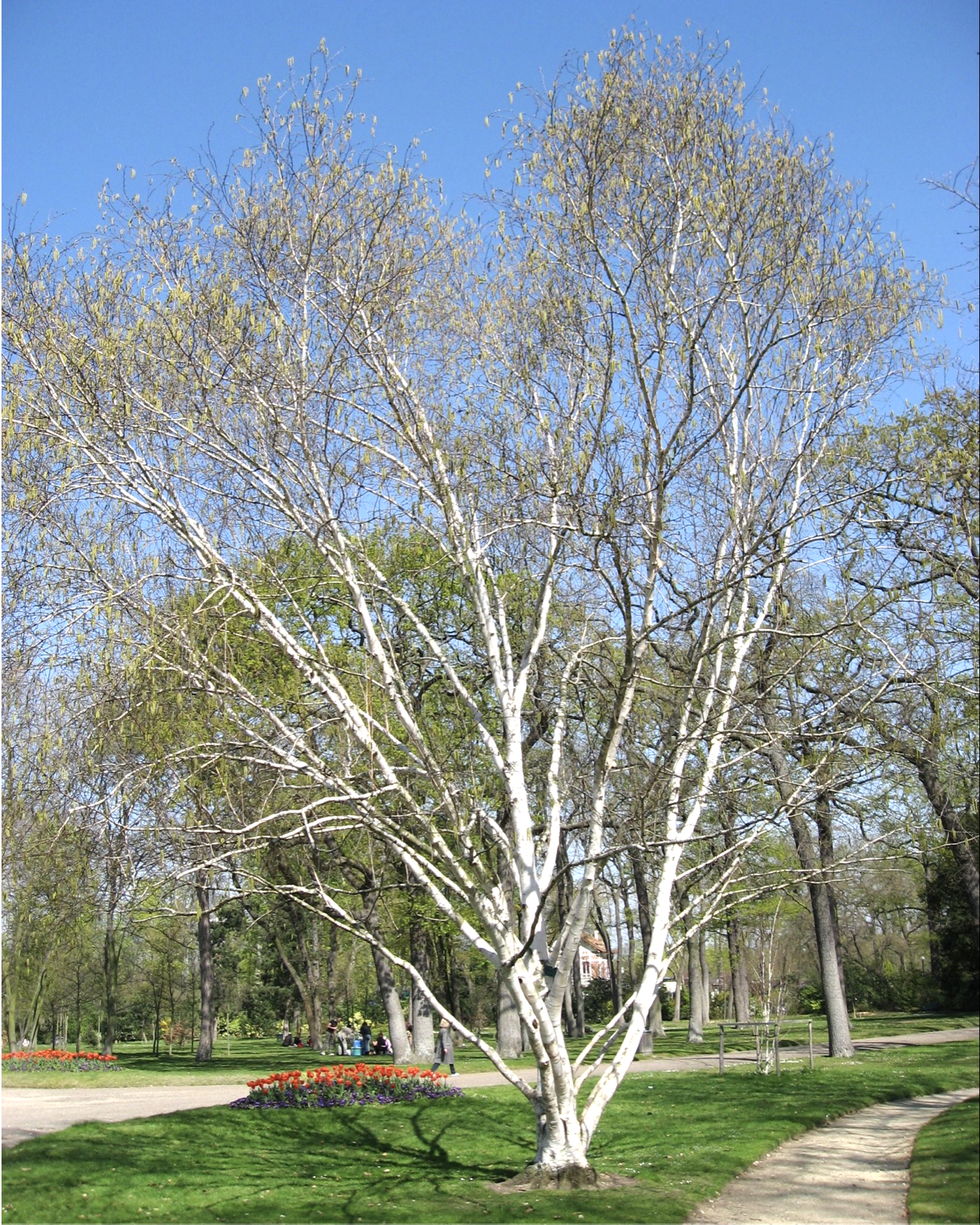
The bark is still used for writing sacred mantras, which are placed in an amulet and worn around the neck for protection or blessing. According to legend, the bark was also used as clothing by attendants of Lord Shiva. The thin, papery bark is very shiny, reddish- brown, reddish- white, or white, with horizontal lenticels. The bark peels off in broad, horizontal straps making it very useful for creating even large pages. Leaves are oval with serrated margins and hairy. Flowering occurs from May–July, with only a few male catkins, and short, single (sometimes paired) female catkins. The perianth has four parts in male flowers and is absent in the female flowers.
Additional information:
- The bark is widely used for packaging material (particularly butter), roof construction, umbrella covers, bandages, and more.
- The wood is used for bridge construction, and the foliage for fodder. The most widespread use is for firewood, which has caused large areas of habitat to be reduced.
- Parts of the plant, including the fungal growth have also long been used in local traditional medicine.
The wood is very hard and heavy, and quite brittle. The heartwood is pink or light reddish- brown.
So, the correct answer is ‘Betula’.
Note:
- The bark of Himalayan birch was used during ancient times in India as paper for writing scriptures and texts in Sanskrit and other scripts, particularly in historical Kashmir. Its use as paper for books is mentioned by early Sanskrit writers Kalidasa, Sushruta, and Varahamihira.
- In the late 19th century, Kashmiri pandits reported all of their books were written on Himalayan birch bark until Akbar was introduced to paper in the 16th century.
Complete step by step answer:
Betula utilis, which is commonly known as the Himalayan birch is widely used for writing in ancient times. It’s now been widely used for different purposes. It was the main source of paper until the paper was introduced. The Sanskrit word for the tree is bhûrja—sharing a similarity with other Indo- European words that provide the origin for the common name “birch”.
The bark is still used for writing sacred mantras, which are placed in an amulet and worn around the neck for protection or blessing. According to legend, the bark was also used as clothing by attendants of Lord Shiva. The thin, papery bark is very shiny, reddish- brown, reddish- white, or white, with horizontal lenticels. The bark peels off in broad, horizontal straps making it very useful for creating even large pages. Leaves are oval with serrated margins and hairy. Flowering occurs from May–July, with only a few male catkins, and short, single (sometimes paired) female catkins. The perianth has four parts in male flowers and is absent in the female flowers.
Additional information:
- The bark is widely used for packaging material (particularly butter), roof construction, umbrella covers, bandages, and more.
- The wood is used for bridge construction, and the foliage for fodder. The most widespread use is for firewood, which has caused large areas of habitat to be reduced.
- Parts of the plant, including the fungal growth have also long been used in local traditional medicine.
The wood is very hard and heavy, and quite brittle. The heartwood is pink or light reddish- brown.
So, the correct answer is ‘Betula’.
Note:
- The bark of Himalayan birch was used during ancient times in India as paper for writing scriptures and texts in Sanskrit and other scripts, particularly in historical Kashmir. Its use as paper for books is mentioned by early Sanskrit writers Kalidasa, Sushruta, and Varahamihira.
- In the late 19th century, Kashmiri pandits reported all of their books were written on Himalayan birch bark until Akbar was introduced to paper in the 16th century.
Recently Updated Pages
Master Class 12 Economics: Engaging Questions & Answers for Success

Master Class 12 English: Engaging Questions & Answers for Success
Master Class 12 Social Science: Engaging Questions & Answers for Success
Master Class 12 Maths: Engaging Questions & Answers for Success
Master Class 12 Physics: Engaging Questions & Answers for Success
Master Class 9 General Knowledge: Engaging Questions & Answers for Success
Trending doubts
One Metric ton is equal to kg A 10000 B 1000 C 100 class 11 physics CBSE
Difference Between Prokaryotic Cells and Eukaryotic Cells
Two of the body parts which do not appear in MRI are class 11 biology CBSE
Find the value of the expression given below sin 30circ class 11 maths CBSE
1 ton equals to A 100 kg B 1000 kg C 10 kg D 10000 class 11 physics CBSE
Draw a diagram of nephron and explain its structur class 11 biology CBSE