




Assertion- Sciophytes require higher light intensity than heliophytes
Reason- Sciophytes grow below the canopy of trees.
A. Both assertion and reason are correct and reason is the correct explanation for the assertion.
B. Both assertion and reason are correct but reason is not the correct explanation for assertion.
C. Assertion is correct but Reason is incorrect.
D. Assertion is incorrect but Reason is correct.
Answer
 Verified
586.5k+ views
Hint: Sciophytes are the type of plants which have quite a low rate of photosynthesis. The respiration rate is also less in comparison to the Heliophytes. These plants make the best out of the available sunlight to them. Most of the Sciophytes fall in the category of shrubs or herbs.
Complete answer:
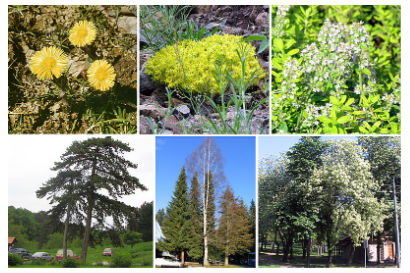
Sciophytes are plants that do not require much light intensity to survive. Sciophytes are also known as “shade-loving plants”. They grow below the canopy of the trees and they are almost every time covered in the shade of the trees above them, hence they are called so. They have a comparative lower photosynthetic and respiratory rate than Heliophytes. The leaves of these plants are thinner and weakly lobbed. The growth rate of these plants is also lower than Heliophytes. Also, the cuticle and epidermis of the plants are very thin. Hence the Reason is correct.
The assertion says that Sciophytes require higher light intensity. This assertion is wrong. Sciophytes do not require high light intensity but Heliophytes do. Hence the assertion is wrong but the reason is correct.
Hence, the correct answer is option (D).
Note: Sciophytes are the type of plants that can reach saturation at only twenty percent sunlight. Black pepper, cacao, ginger, are some examples of Sciophytes. These plants are not able to survive in high sunlight intensity as the degradation of chlorophyll is higher than the production of the same. The best use of available sunlight is done by these plants during photosynthesis. While halophytes possess thick leaves, most of the Sciophytes possess thin leaves that might or might not be broad.
Complete answer:
Sciophytes are plants that do not require much light intensity to survive. Sciophytes are also known as “shade-loving plants”. They grow below the canopy of the trees and they are almost every time covered in the shade of the trees above them, hence they are called so. They have a comparative lower photosynthetic and respiratory rate than Heliophytes. The leaves of these plants are thinner and weakly lobbed. The growth rate of these plants is also lower than Heliophytes. Also, the cuticle and epidermis of the plants are very thin. Hence the Reason is correct.
The assertion says that Sciophytes require higher light intensity. This assertion is wrong. Sciophytes do not require high light intensity but Heliophytes do. Hence the assertion is wrong but the reason is correct.
Hence, the correct answer is option (D).
Note: Sciophytes are the type of plants that can reach saturation at only twenty percent sunlight. Black pepper, cacao, ginger, are some examples of Sciophytes. These plants are not able to survive in high sunlight intensity as the degradation of chlorophyll is higher than the production of the same. The best use of available sunlight is done by these plants during photosynthesis. While halophytes possess thick leaves, most of the Sciophytes possess thin leaves that might or might not be broad.
Recently Updated Pages
Master Class 11 Social Science: Engaging Questions & Answers for Success

Master Class 11 Physics: Engaging Questions & Answers for Success
Master Class 11 Maths: Engaging Questions & Answers for Success
Master Class 11 Economics: Engaging Questions & Answers for Success
Master Class 11 Computer Science: Engaging Questions & Answers for Success
Master Class 11 Chemistry: Engaging Questions & Answers for Success
Trending doubts
One Metric ton is equal to kg A 10000 B 1000 C 100 class 11 physics CBSE
There are 720 permutations of the digits 1 2 3 4 5 class 11 maths CBSE
1 Quintal is equal to a 110 kg b 10 kg c 100kg d 1000 class 11 physics CBSE
State and prove Bernoullis theorem class 11 physics CBSE
Difference Between Prokaryotic Cells and Eukaryotic Cells
Which among the following are examples of coming together class 11 social science CBSE