




What are the different methods of contraception?
Answer
 Verified
559.8k+ views
Hint: Contraception results from the failure of zygote formation or implantation (if a zygote is formed) naturally or artificially. It is useful in family planning, birth control, and preventing sexually transmitted diseases.
Complete answer:
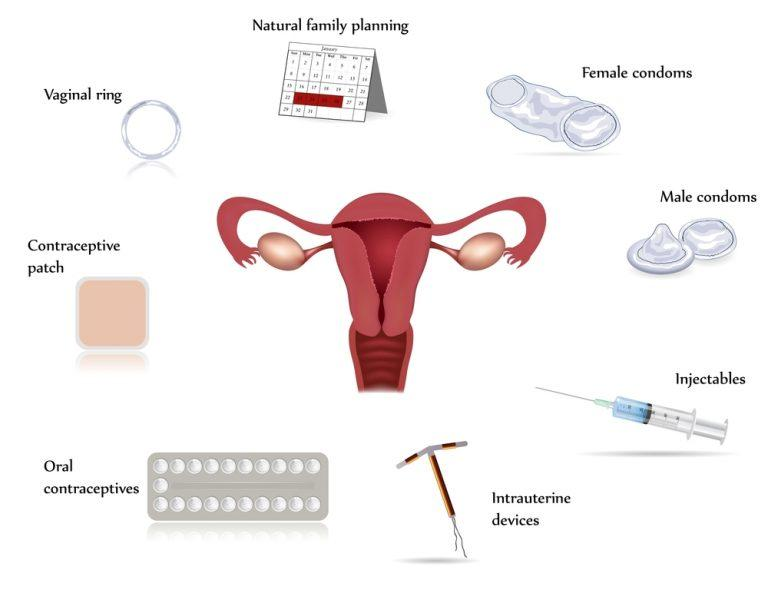
The different methods of contraception available are Natural/Traditional methods, Barriers, IUDs (IntraUterine Devices), Oral contraceptives, Implants, Injectables, and surgical methods.
Natural method-
- Periodic abstinence- In this method, the couples are advised to avoid coitus from the 10th to 17th day of the menstrual cycle when there is a high risk of ovulation.
- Withdrawal or coitus interruptus- It refers to the withdrawal of the penis from the vagina just before the ejaculation to avoid insemination.
- Lactational amenorrhea- It is a natural phenomenon. It can be described as the absence of a menstrual cycle during the initial phase of lactation after parturition.
Barrier method-
It is based on the principle of avoiding physical meeting of the sperms and ovum.
Example- Condoms made up of rubber or latex which can be inserted in the vagina or penis. Some other barriers used to prevent conception are Diaphragms, cervical caps, and vaults.
IUDs-
They are inserted into the uterus through the vagina and need expertise.
- Non-medicated IUDs- They are inert, and are made up of either plastic or steel. For example, the Lippes loop.
- Copper releasing IUDs- They release copper ions in the uterine cavity which increase the phagocytosis of sperms, decrease sperm motility, and its fertilizing capacity. Example- CuT, Cu7, Multiload-375, etc.
- Hormone releasing IUDs- They release certain hormones that render the uterus unsuitable for implantation and thicken the cervical mucus plug so that the sperm entry is blocked. Example- Progestasert, LNG-20, etc.
Oral contraceptives-
These are available in the form of ‘pills’ consisting of progesterone or the combination of estrogen and progesterone. The hormones send negative feedback to the hypothalamus and pituitary glands and thus inhibit ovulation, implantation, and alters the thickness of the cervical mucus plug.
Implants and Injectables-
They are the hormone-containing drugs that can be implanted or injected under the skin. The mechanism of action is the same as that of pills.
Surgical method-
It involves sterilization techniques like Vasectomy and Tubectomy.
Notes:
1. The most common method of contraception in India is sterilization.
2. In Vasectomy, the vas deferens is cut and tied to block the pathway of sperm while in Tubectomy, the fallopian tubes are tied or cut by giving an incision. This blocks the release of the ovum.
3. Saheli is a highly effective ‘once a daily' pill that was developed at the Central Drug Research Institute in Lucknow.
Complete answer:
The different methods of contraception available are Natural/Traditional methods, Barriers, IUDs (IntraUterine Devices), Oral contraceptives, Implants, Injectables, and surgical methods.
Natural method-
- Periodic abstinence- In this method, the couples are advised to avoid coitus from the 10th to 17th day of the menstrual cycle when there is a high risk of ovulation.
- Withdrawal or coitus interruptus- It refers to the withdrawal of the penis from the vagina just before the ejaculation to avoid insemination.
- Lactational amenorrhea- It is a natural phenomenon. It can be described as the absence of a menstrual cycle during the initial phase of lactation after parturition.
Barrier method-
It is based on the principle of avoiding physical meeting of the sperms and ovum.
Example- Condoms made up of rubber or latex which can be inserted in the vagina or penis. Some other barriers used to prevent conception are Diaphragms, cervical caps, and vaults.
IUDs-
They are inserted into the uterus through the vagina and need expertise.
- Non-medicated IUDs- They are inert, and are made up of either plastic or steel. For example, the Lippes loop.
- Copper releasing IUDs- They release copper ions in the uterine cavity which increase the phagocytosis of sperms, decrease sperm motility, and its fertilizing capacity. Example- CuT, Cu7, Multiload-375, etc.
- Hormone releasing IUDs- They release certain hormones that render the uterus unsuitable for implantation and thicken the cervical mucus plug so that the sperm entry is blocked. Example- Progestasert, LNG-20, etc.
Oral contraceptives-
These are available in the form of ‘pills’ consisting of progesterone or the combination of estrogen and progesterone. The hormones send negative feedback to the hypothalamus and pituitary glands and thus inhibit ovulation, implantation, and alters the thickness of the cervical mucus plug.
Implants and Injectables-
They are the hormone-containing drugs that can be implanted or injected under the skin. The mechanism of action is the same as that of pills.
Surgical method-
It involves sterilization techniques like Vasectomy and Tubectomy.
Notes:
1. The most common method of contraception in India is sterilization.
2. In Vasectomy, the vas deferens is cut and tied to block the pathway of sperm while in Tubectomy, the fallopian tubes are tied or cut by giving an incision. This blocks the release of the ovum.
3. Saheli is a highly effective ‘once a daily' pill that was developed at the Central Drug Research Institute in Lucknow.
Recently Updated Pages
Master Class 11 English: Engaging Questions & Answers for Success

Master Class 11 Social Science: Engaging Questions & Answers for Success
Master Class 11 Maths: Engaging Questions & Answers for Success
Master Class 11 Chemistry: Engaging Questions & Answers for Success
Master Class 11 Biology: Engaging Questions & Answers for Success
Master Class 11 Physics: Engaging Questions & Answers for Success
Trending doubts
Explain the Treaty of Vienna of 1815 class 10 social science CBSE
What is the full form of CNG A Complete Natural Gas class 10 social science CBSE
In cricket, what is a "Yorker" designed to do?
What is the full form of POSCO class 10 social science CBSE
Define Potential, Developed, Stock and Reserved resources
What were the majoritarian measures taken in Sri Lanka class 10 social science CBSE